For twenty years, this webmaster had been telling the world that
Alan Greenspan, possibly the smartest American but bedazzled by the "conundrum" of long term interest rates, does not know that this webmaster's countryside cousins, mostly women, had been going to Guam, Samoa and other Pacific islands for a decade as the export of labor: what is coming to the U.S. market is merely a tag stating something not "made-in-China" but made-by-the-Chinese in nature.
The smartest American turned out to be Professor Peter Navarro, and it might not be some coincidence that his books "The Coming China Wars" and "Death by China" are similar to what this website wrote about for the last 20 years.
What this webmaster does not know is that the Chinese were going to Italy as well, where they worked as coolies and slaves for the "Made in Italy [by Chinese]" brands, and spread the coronavirus in Italy today.
What a farce Communist China gave the world, and what a disaster Communist China caused to the world!
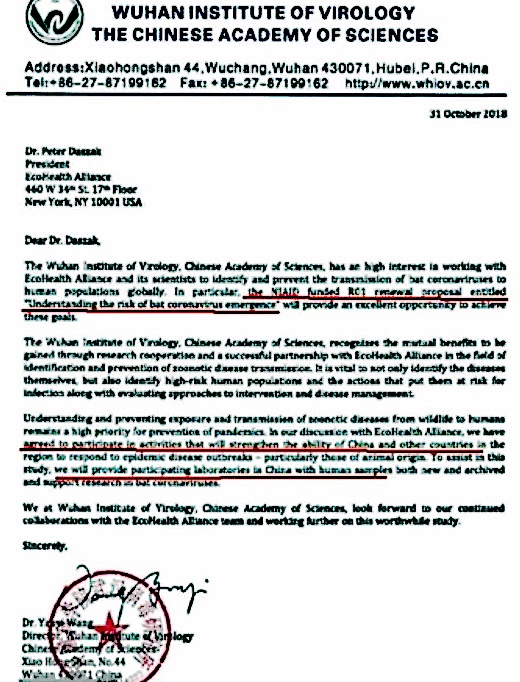
Don't forget that France (Alain Merieux of bioMerieux - sarcastically-related to Moderna, the other side of a coin) and the United States (Anthony Fauci of CDC & Peter Daszak of EcoHealth) acted as the 'enablers' in designing and constructing the P4 virus research center in Wuhan, as well as in providing the funds.
And don't forget what happened today was because the Americans served as the midwife who delivered China into the communist hands as i) Roosevelt, in collusion with Churchill and Stalin, sold out China at Tehran and Yalta; and ii) George Marshall forced three truces [Jan-10-1946, June-6-1946, & Nov-8-1946] onto the Republic of China and further imposed the 1946-47[48] arms embargo while the commies were equipped by the Stalin-supplied American August Storm weapons and augmented by the mercenaries including the Mongol cavalry, the Japanese 8th Route Army troops, the Soviet railway army corps, and the 250,000-strong [Kwantung Army-converted] Korean diehards.
(Refer to
"The Italian fashion capital being led by the Chinese";
"Coronavirus Hits Heart of Italy's Famous Cheese, Wine, Fashion Makers" for further reading.
Military Documents About Gain of Function Contradict Fauci Testimony Under Oath:
EcoHealth Alliance approached DARPA in March 2018 seeking funding to conduct gain of function research of bat borne coronaviruses...
According to the documents, NAIAD, under the direction of Dr. Fauci, went ahead with the research in Wuhan, China and at several sites across the U.S.)
How much betterment today's Chinese peasants have when compared with the coolies of the 19th century ??? Not any better whatsoever. The so-called international trade, in the form of trading the abstract 'labor' in lieu of physical flow of 'labor', had only thrived on the miseries of the Chinese peasants, i.e., the modern coolies in the caste society.
Bhagwati's immiseration growth theory, rarely mentioned these days, should provide the best argument against the so-called "free" trade.
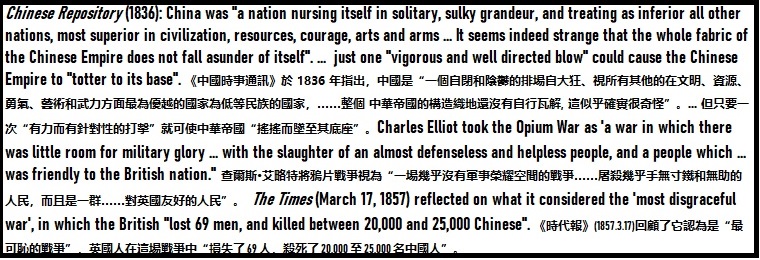
Scholar Yan Qinghuang [Yen Ching-hwang] of HK University had authored a book entitled Chinese Coolies Overseas & the Manchu Officials [i.e., Coolies and Mandarins] and pointed out that the British Opium War of 1839-1842 had coincided with the prosperity of slave-nature trafficking of the Chinese coolies overseas, a trade that was first started by the Dutch in the 17th century.
To understand how much miseries the Chinese coolies had encountered, just read the following 19th century commentary in a Peruvian newspaper "South Pacific Times":
"As well known to all of us, this country {Peru} had exhibited an extraordinary disparagement against the Chinese, no matter how upright their demeanor was and how respectable their appearance was. Those Chinese who could be ascribed to this category [slavery] should number no less in Peru. Should Peruvians be willing, those, who often exclaimed their hatred and disdain for the Chinese, could have learnt from the studious so-called coolies such qualities as simpleness, neatness, good behaviors, self respect, and benevolence. However, the popular view among the lower level society of [the Peruvian] cities would be like this: the Chinese social status was much lower than theirs, and the Chinese men were born just for sake of making them [the Peruvians] enjoy a privileged life style."
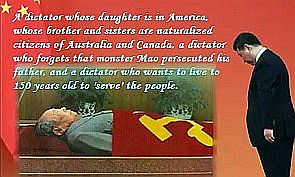
In the last 2-3 decades, the ludicrous and idiotic communist nation enslaved one billion humble Chinese peasants as coolies for the multinational corporations and international banksters, and moved the mountains of China to the United States in the form of rare earths (REE), marble and granite stones, at the cost of death of innumerable Chinese men from silicosis, and imported megatons of the American wastes to China, the beautiful and divine country, for recycling, burning or pure landfill, while resettling their wives, concubines, mistresses, and children [and bastards] to the U.S., Canada, Australia, and Europe.
At the same time, they began the process of Africanizing the Chinese continent with the import of Africans by hundreds of thousands and up to a million, under the idiotic "one road and one belt" program (i.e., a replica of Han China's bribery for the Huns), and made China the land of "Aids Danger Zone No. 1".
Mind you all 77 Belt & Road countries: Your ripping USD 1 trillion from Communist China, i.e., one third of China's 3T foreign exchange reserves [on paper], is equivalent to ripping the life and blood of one billion poverty-stricken Chinese people with monthly income of no greater than 2000RMB or US$300.
(Communist premier Li Keqiang claimed that 0.6 billion Chinese, i.e., this webmaster's humble peasant Chinese, had a monthly income of less than 1000RMB or $150, or de facto zero income.)
*** ARE YOU STILL GOING TO COMMUNIST CHINA TO "STUDY" WITH SCHOLARSHIPS [AND FREE MEDICARE/WOMEN] BUT WITHOUT ADMISSION TESTS, WITHOUT ENTRANCE EXAMS, WITHOUT QUIZZES, WITHOUT MIDTERM TESTS, WITHOUT EXAMS, WITHOUT SEMI-FINALS & WITHOUT FINALS ? ***
Note Barack Hussein Obama's half brother 'adopted' China or was adopted by communist China, setting an example for numerous Africans who came to China and worked as coyotes engaged in the operation of smuggling the illegal Africans to China --not knowing that China was prone to dynastic cycles of violence that could lead to death of 60-90% of the population, such as eradication of the Arab-Persian paramilitary regime and settlement in Canton in the 9th century
and
in Zalton in the 14th century.
(South Korea, Japan, Vietnam, Thailand, and the rest of Asian countries: Don't take this lightly.
The mingled Chinese-Africans, in less than 50 years, will spill over and sweep into your countries.
First, you need to guard against the "African Swine Fever" virus that is killing all the hogs and wild boars in mainland China now --an import from Russia again and a collateral casualty of Trump's trade war.)
The sinisterness of communist China lied in its bribing the world leaders, including the U.S. vice president Joe Biden (i.e., Lunch Bucket Joe -who ate free lunches on both the American people and the humble Chinese peasants), and in bribing the United Nations leaders.
For details, check out
Robert J. Wicks' video
Riding the Dragon: 10 Lessons for Inner Strength in Challenging Times; and
Google book.
Communist China, in addition to the work on the Obamas and the Bidens, set up illicit affairs for Neil Bush in Bangkok and Hongkong, that could have led to the latter's divorce.
(The Americans apparently forgot how the Chinese communists murdered the American missionaries in the 1920s and 1930s, such as John and Betty Stam.)
The Chicoms turned filthy rich, and became more barbaric towards their own people.
The capitalists (synarchists) of the West are now horrified that the Chi-coms [and the lewd female Chicoms] accumulated the same amount of wealth or more within the last 20-30 years, that took the capitalists (synarchists) of the West 300-500 years of Black slaves' trade, opium trade and the Chinese coolie trade, etc., to achieve; and that the Chi-com, who killed off the landlords, had unlimited land to sell to make more money and could easily surpass the wealth accumulated by the capitalists (synarchists) of the West in no time.
Even worse, the Chi-com dared to challenge the only superpower in this world with the building of more aircraft carriers and financially challenge the U.S. Dollar settlement system.
The consequence of the Chi-com's reckless behavior could cause even more disasters to the Chinese people who were bound to the communist war chariots.
(There is no "profound mystery [in Chinese]" ECON 101 as to the Chi-com's filthy richness and the "Crazy Rich Asians" but immiserizing growth and a replay of the Chicom's Soviet Bank scheme: The Chicoms enslaved one billion peasants as the slave labor of the world factories, the slave labor in the mines, and the slave labor in the construction of skyscrapers and ghost towns/cities across the country;
the Chicoms then forced the exporters to convert the "foreign exchange" trade gain into the worthless RMB, i.e., "people's dollars" that were printed on the astronomical scale;
then the Chicoms laundered the "foreign exchange" to the banks in HK, the U.S., Canada, Europe, and the Caribbeans, escaping the hell they created in the expectation that the billion slaves one day will rise up and smash the communist apparatus, i.e., the historical cycle of China's dynastic violence that saw 60-90% of the population killed;
and to absorb the overprinted "people's dollars", the Chicoms conducted the violent land acquisition and enclosure movements, reaped enormous profit in the land sale, and sold the real estate bubble to the city "accomplice" citizens [whose I.D. actually carried the print of residents with no jus soli rights].)
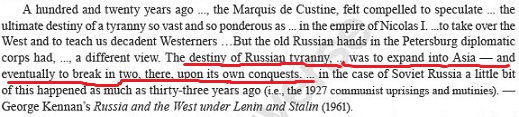
America, i.e., the United States, was and is still shortsighted today, not knowing that Korea, at one time paradise of the American Evangelicals, was delivered into the hands of the Japanese imperialists as a result of the Anglo-American confrontation against Czar Russia, and in this geopolitical process, China, the land of the Great Sinitic Civilization, was made into a piggy-backed sacrificial/funeral object -the land ruled by the most evil cult called 'communism' that was an 'import' or an 'export' of Soviet Russia.
America would not learn the lesson that the geopolitical actions it is taking today would yield the 'bad fruit' 50 years or 100 years down the road.
America, and their British cousins, must have forgot the twenty-year Anglo-Japanese military alliance that allowed Japan to develop the warplanes and aircraft carriers to invade mainland China, not to mention the post-WWI ten-year arms embargo against Republic China and George Marshall's post-WWII arms embargo against Republic China 1946-1948.
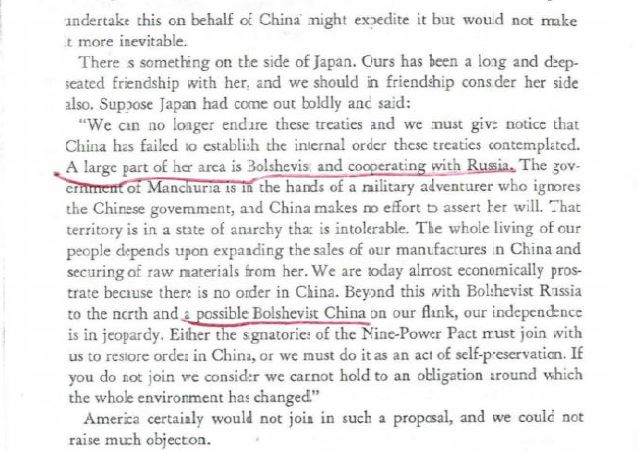
They forgot that in 1931, President Herbert Hoover gave Japan a free hand in the invasion of Manchuria on the pretext that Japan could not tolerate a half-Bolshevik China.
Earlier, President Hoover, who personally nipped the post-WWI communist uprisings in Germany and Hungary with the grains embargo, fed Lenin the ingenuity, i.e., the [worldwide communist revolution] road to Paris lay through Peking.
They of course forgot that
after the eruption of the 1937 Sino-Japanese War, the Americans, biased towards Japan and against China, adopted a policy of "neutrality" (what Utley called by "unpositive neutrality") against the 'belligerent' countries, namely, Japan and China, which was free and unrestrained arms sale to Japan and de facto arms embargo against China.
This neutrality, which William Christian Bullitt Jr. (1891-1967) felt bedazzled about,
was de factor arms embargo against China and free arms sale to Japan.
Note that the arms embargo would choke China since China did not have an industrial base to produce the basic weapons while Japan's factories could roll out the warships and airplanes on a wholesale scale.
Also note that in contrast with the Americans, the European powers, being constrained by the mediation role of the League of Nations, dared not openly sell arms to Japan.
Through 1940-1941, prior to the U.S. revocation of the 1911 U.S.-Japan Commerce Treaty, the Americans were the biggest supplier of raw material, oil, aviation oil, and weapons, to the extent that some U.S. senator called by Scott making a claim that out of one million Chinese killed by the Japanese, 544,000 Chinese were killed by the Americans.
Thirty-one U.S. congressional members made a joint declaration to the effect that the U.S., not NAZI Germany, nor Italy, was the best ally of Japan.
America, the 'stars' that engendered or heralded the rise of the [Japan] 'sun', long ago had the blueprint to make Japan into a stalwart against China and Russia, i.e., the source of the Yellow Peril and the source of the Half-Tartars [or the Russians], respectively, --whom the Americans could not assimilate according to George Kennan.
William Christian Bullitt Jr. (1891-1967) disclosed that the Americans' national policy or strategic aim was to see the Russians and Japanese' holding a balance of power against each other in China rather than seeing either the Russians or the Japanese overpowering the other party in taking control of China.
In making this geopolitical decision, you had victimized the 1 billion humble peasant Chinese.
(Note President Wilson's doctrine that the intactness of China was vital to the white civilization -- in the sense that the nation of China should be managed delicately, that is, should not be allowed to grow too powerful to pose threat to the white civilization, nor should it be allowed to be hijacked by a non-U.S. power since China's immense human labor could be turned against the white civilization.
The theme of China to the white civilization, morphing superficially into a ***hypocritical*** American national policy of engagement with Communist China for changing the Chinese communists' behavior, rested on the same underlying logic:
"The
China Exception: Russian Communism being wicked, the
Chinese are good communists", which is an inherent fear
of the Yellow Peril,
i.e., billion Chinese would actually enjoy real
democracy, go to college and develop their intelligence.
Now, President Biden, a stooge of Communist China, explicitly abandoned the
hypocritical American policy of engagement to change communist China to his imbecilic communist buddy and dictator Xi Jinping.)
Now you, as the midwife who delivered China into the communist hands, are morally obligated to take China [and North Korea {and Vietnam}] out of communism.
This time, you may feel your hands forced as North Korea, with its nuclear weapons, could become Communist China's cecal appendix in a repeat of history.
The Chicoms don't understand the urgency of Trump's trade war having the roots in nuclear North Korea, nor the domino effect on North Korea and Russia after the knock-out of communist China.
Putin thought he would reap profits by sitting on the fence of the U.S.-China trade war, i.e., the Zheltorossiya dream[, and India would not be satisfied with grabbing South Tibet (i.e., what India calls by Arunachal Pradesh), Bhutan and Sikkim alone].
Though, the Americans could be hoodwinked by the Chicoms again. The Chicoms might just sign any agreement just for sake of getting a red carpet at the White House in lieu of a visit to Mar-a-Lago, but won't change its sinister nature and will default on any trade agreement.
(Previously, this webmaster thought that the Americans could be hoodwinked by the Chicoms who might just sign any agreement just for sake of getting a red carpet at the White House in lieu of a visit to Mar-a-Lago.
With Trump's war with Communist China flaring up, this webmaster believed that China's dictator Xi Jinping would continue to commit blunders and became the tomb digger for the Chinese communist regime.
The thuggery communists, who would not allow the millions of the Hongkong people to have autonomy, could have caused the demise of the regime over the inevitable crackdown, not knowing that the communist ascension to power had its very roots in Churchill's collusion with Roosevelt in selling out the Republic of China for sake of retaining crown jewel Hongkong after hoodwinking Wellington Koo and Chiang Kai-shek that Britain would return Hongkong to China after Japan was to surrender so as not to damage the British wartime morale.
--What happened was that Putin first jumped off the fence ahead of communist China in launching an invasion of Ukraine.)
Should the American politicians follow the footsteps of Anson Burlingame (1820-1870),
Paul Samuel Reinsch (1869-1923)
and
Patrick Jay Hurley (1883-1963), i.e., three most prominent U.S. statemen who loved China and the Chinese people,
then the Chinese people could have a chance of salvation from the communist tyranny.
Note the historic recurrence and the repetition of similar events:
Anson Burlingame, in opposition to the anti-Chinese discriminatory whirlwinds rampant in the U.S. in the 19th century, authored the Burlingame Treaty for China and
died for China in 1870 in St. Petersburg
while still on the Manchu China's mission to the U.S. and Europe;
Paul Samuel Reinsch, who was disillusioned by President Wilson's betrayal of China over the division of WWI spoils at the Paris Peace Conference, quit the minister-to-China job to work for China and died for China in Shanghai in 1923;
and
Patrick Jay Hurley, who convinced President Roosevelt of the American moral blunders in selling out the Republic of China at Tehran and Yalta, personally travelled to Moscow and London for sake of averting and reverting China's fate of becoming a victim of WWII war spoils (i.e., the loss of Port Arthur and Hong Kong, etc.), but failed to make remedy to the secret Tehran and Yalta agreements in the aftermath of President Roosevelt's death in April 1945.
Yen Ching-hwang stated that Xiamen (Amoy), a port which had replaced the historical port city Quanzhou, would become the first port to see the Chinese coolies sold overseas.
The British, which stationed warships near Gulangyu of Amoy for protecting its interests extracted from the 1842 Nanking Treaty, engaged in the human trafficking no less notorious than the African slave trade.
As much as 50,000 Chines could have been abducted each year from the port of Amoy.
Rioting in Amoy first began in 1847 against the British smugglers. By November 24th, the British marines shot dead 10-12 Chinese.
The British and American merchants then turned to Shantou for trafficking the coolies. In 1855, angry Chinese detained an American captain for his trafficking activity. As a result of the British authority's desire for maintaining a good face in HK, the smugglers flocked to Macau instead.
Yen Ching-hwang stated that Macau would take the place of Amoy beginning from November 1852 onward when riots broke out as a result of the Chinese attacking a British smuggler for protecting a henchman.
Macau, which the Portuguese first swindled from Ming China in A.D. 1553, already became a spot of crime syndicates with prostitution, human trafficking, opium, and etc.
(Yen Ching-hwang stated that among Macau's population of 4,049 people in A.D. 1810, the White men counted 1,172 while the White women counted 1,846.
By A.D. 1830, Macau possessed 4,049 Portuguese, with the White men 1,202 and the White women 2,149, and 30,000 Chinese.
Yen Ching-hwang concluded that the abnormally high number of the White women in Macau exemplified the fact of prostitution in Macau.)
Macau was to replace Amoy as the next launching pad for trafficking the Chinese coolies.
From 1847 to 1875, 99,149 out of 150,000 Chinese coolies sold to Cuba departed from Macau.
The Portuguese specialized in selling the Chinese women and Chinese girls overseas as sex slaves throughout the latter half of the 19th century.
Shanghai would follow the next. The word 'shanghai' literally means going to the seas, namely, abduction.
The Manchu Qing Emperor did not realize the seriousness of coolie trafficking till the Shanghai Incident.
On July 29th, 1859, a French ship, Ge-te-lu-de (? Gertrude), sailed away with the abducted the Chinese coolies. Relatives of some of the coolies converged around the Yangjingbang (i.e., pidgin English river) area in the attempt of intercepting the ship. The Chinese attacked two British sailors, killing one, and later attacked a British doctor who tried to intervene together with a customs officer. The next day, angry Shanghaiians attacked 6 Thai tourists as a result of mistaking them as the British henchmen involved in the coolie abduction.
Also in 1859, the British, having removed Governor-general Ye Mingshen from Canton during the Second Opium War, pushed through the so-called "legal emigration" for the Chinese to go overseas.
From 1866 onward, the new Manchu Governor-general for Guangdong-Guangxi Provinces, Rui-ling, began to exert full efforts in cracking down on the coolie trafficking. From 1872 onward, Rui-ling enforced an approach of cutting off the supply of coolies to Macau in addition to destroying the coolie broker-smugglers.
Rui-ling campaigned against the foreign smuggler ships frequently, and by A.D. 1873, Macau's coolie shops were basically empty per an American emissary to Peking (i.e., Williams). Besides, Britain Governor Kennedy decreed a ban of the coolie ships from docking at Hong Kong beginning on Aug 23rd. By Dec 27th, Macau Governor Jie-liu-e-li reluctantly banned the coolie trading as well.
The Manchu government, beginning from 1872, dispatched diplomatic missions and personnel to Cuba and South America for investigating the Chinese slavery, marking an important step in exercising the right of protection of the overseas citizens who suffered under the European colonial yokes.
The British, Amoy & the Human Trafficking
The British, which stationed warships near Gulangyu of Amoy for protecting its interests extracted from the 1842 Nanking Treaty, engaged in human trafficking no less notorious than the African slave trade.
Departing from Amoy would be: a French shipment of the Chinese coolies to Liu-ni-wang Island in 1845 and a Spanish shipment of 800 Chinese coolies to Cuba in 1847. At Amoy, 5 the British firms and 1 German firm, often with governmental consuls acting as company executives, had sold 8,281 coolies from 1847 to 1853, and as much as 50,000 could have been abducted each year from the port of Amoy.
In 1847, the British governor claimed that the British revenues from Amoy was 72,000 pounds, about 3 times the combined value from all other ports, a manifestation of profiteering from the slave trade in trafficking the Chinese coolies to the British Guana, Trinidad and Jamaica.
Peru passed its law for importing the Chinese coolies in November 1849, and Australia imported 2,666 Chinese coolies from 1848 to 1852.
The French-controlled islands and the Spanish-controlled Philippines all imported the Chinese coolies from Amoy.
Peru, the Pacific Islands, the West Indies, the North Africa countries, South Africa, and Australia had all engaged in the Chinese coolie slave trade.
The Chinese coolies built the Panama Railway.
America was no exception. Per Ah Ying, the Chinese were first "shanghai'ed" to California in 1847 in the aftermath of the American annexation of the Mexican provinces.
The second wave of coolies came in 1865 when the U.S. constructed continental railways and highways.
The Chinese coolies built the U.S. railroads and highways across western US territories, with names of 'China Basin' and 'China Camp' dotted throughout the American West. (http://memory.loc.gov/ammem/award99/cubhtml/cicTitles12.html contained a dossier of files on "The Chinese in California, 1850-1925". The
"Chinese Exclusion Act" was based on an 1879 California state law which discriminated against the Chinese as scapegoats for the 1877 economic recession.
The Peking Treaty of 1880 buried inside such clauses as allowing the US government take measures against the Chinese coolies.
See cprr.org/Museum/Fusang.html for the Chinese Railroad Men working as coolies in America under White men's ferocious racial discrimination.
In California, the Chinese coolies dug the canal, built the dykes, and turned 400,000 acres of Sacramento marsh land into the agricultural land.
Also see SAN LUIS OBISPO'S CHINESE for the context of the 1882 Chinese Exclusion Act.
The U.S. government, after acquiring Hawaii in the summer of 1898 and Philippines in Dec 1898, applied the "Chinese Exclusion Act" to the Chinese on the two islands, and further, President Theodore Roosevelt signed into law to have the "Chinese Exclusion Act" applied throughout US-controlled islands and territories over the world, making the Chinese the lowest caste, a fundamental cause in the Chinese suffering in ethnic cleansing which occurred in the Philippines, Indonesia and Malaysia etc.
There had occurred an anti-American boycott in 1905 in reaction to the racially discriminating U.S. policies toward the Chinese coolie workers inside the United States.
Leftist writer Ah Ying pointed out that the anti-American boycott originated from China's opposition to 1904 American attempt at renewing the 1880 Peking Treaty, by citation of which the US had expanded excluding-Chinese constraints to as many as 61 clauses.
In 1943, CHINESE EXCLUSION ACT was repealed by the American Congress, with China awarded a yearly immigration quota of 102 persons.)
The Americans, bundling the Chinese with the Blacks as Mongrels, believed that only force worked with Manchu China.
The Democrats of the 19th century, not the political corrective party of the 20th-21st centuries, led the charge against the Chinese coolies, and even called Lincoln's Republican Party by the Mongrel Party.
The Democratic Party's World publication claimed that the only way to deal with China was force;
only force really worked since "it is not 'because the Western nations have reversed
their old doctrine of force' that she (i.e., Manchu China) responds, for it was by the assertion of
the Western nations of their 'old doctrine of force' that the presence of
Mr. Burlingame as an American Envoy in Pekin was made possible."
It would be in the 1860s when President Abraham Lincoln designated Burlingame minister to China, that the Americans began to restructure the Sino-Western relations on an equal footing.
Anson Burlingame, during his stay in China, came to like and love China and the Chinese people,
and accepted the Manchu emperor's invitation to be China's first envoy to the Western powers.
Should the American politicians follow the footsteps of Anson Burlingame (1820-1870),
Paul Samuel Reinsch (1869-1923)
and
Patrick Jay Hurley (1883-1963), i.e., three most prominent U.S. statemen who loved China and the Chinese people,
then the Chinese people could have a chance of salvation from the communist tyranny.
Note the historic recurrence and the repetition of similar events:
Anson Burlingame, in opposition to the anti-Chinese discriminatory whirlwinds rampant in the U.S. in the 19th century, authored the Burlingame Treaty for China and
died for China in 1870 in St. Petersburg
while still on the Manchu China's mission to the U.S. and Europe;
Paul Samuel Reinsch, who was disillusioned by President Wilson's betrayal of China over the division of WWI spoils at the Paris Peace Conference, quit the minister-to-China job to work for China and died for China in Shanghai in 1923;
and
Patrick Jay Hurley, who convinced President Roosevelt of the American moral blunders in selling out the Republic of China at Tehran and Yalta, personally travelled to Moscow and London for sake of averting and reverting China's fate of becoming a victim of WWII war spoils (i.e., the loss of Port Arthur and Hong Kong, etc.), but failed to make remedy to the secret Tehran and Yalta agreements in the aftermath of President Roosevelt's death in April 1945.
Rioting in Amoy first began in 1847 against the British and by November 24th, the British marines shot dead 10-12 Chinese.
Yen Ching-hwang stated that Macau would take the place of Amoy beginning from November 1852 when riots broke out as a result of the Chinese attacking a British smuggler for protecting a henchman.
The British and American merchants then turned to Shantou for trafficking coolie. In 1855, angry Chinese took custody of an American captain for his trafficking activity. As a result of the British authority's desire for maintaining a good face in HK, smugglers flocked to Macau instead.
The Portuguese & Macau
The Portuguese did not get their greedy ambition realized till after Manchu China lost the 1839-1842 Sino-British Opium War.
In A.D. 1514, i.e., 9th Year of Ming Emperor Wuzong's Zhengde Era, the first Portuguese ship arrived at Guangdong Prov coastline. More ships came to China thereafter. In A.D. 1517, Fernas Peresd Andrade and Thomas Pirez led eight warships to the Pearl River Mouth. Two ships sailed along the river to Canton where the two guys requested for a meeting with Ming Dynasty's governor-general in the name of Falangji [Folangji] Statelet. Local officials, unable to find the name of 'Folangji' in the list of alien statelets, requested with the emperor for disposal of the Portuguese 'tributes'.
An Arab who worked for the Portuguese as an interpreter would bribe Ming official Wu Tingju for approval to go to Peking.
Ming Dynasty ordered that Fernas Peresd Andrade return to Malacca while Thomas Pirez, i.e., the Portuguese emissary, was retained in Canton for three years. Ming Emperor Wuzong (Zhu Houzhao, r. 1506-1521) made a southern tour. The same Arab bribed a eunuch by the name of Jiang Bin to have Thomas Pirez meet with the emperor. Thomas Pirez was said to have taught Emperor Wuzong the language of the Portuguese. In A.D. 1518, Fernas Peresd Andrade's brother, Simao Addrade, led 4 ships to the river mouth where he erected fences, built houses, set up barracks, and lay a stone monument. Records from Xin'an-xian County stated that the Portuguese encircled the land of Dunmen, manufactured weapons, occupied islands, robbed ships, and killed the Chinese. Some descriptions claimed that the Portuguese, being cannibals, even ate little children for food.
In A.D. 1520, Ming Dynasty verified that Folangji (i.e., Portugal) had incorporated the land of Malacca that was considered a Ming vassal. Two Ming yu shi (censor) officials, Qiu Daorong and He Ao, submitted proposal for expelling the Portuguese from the coast for the Portuguese's bombarding Canton in prior year and disturbing markets of Canton. By 1521, Emperor Shizong (Zhu Houcong, r 1522-1566) issued the decree of expulsion right after enthronement. The Arabic interpreter was executed, while Thomas Pirez was driven to Guangdong coast from Peking. Thomas Pirez later died in prison in Guangdong Prov. Simao Addrade slipped away. Meantime, Portugal Governor for Malacca dispatched Diego Calvo to Canton with shiploads of sandalwood and pepper. However, Ming official Wang[1] Hong led an attack at Diego Calvo. Calvo fled during a night. The Portuguese then sent a fleet of 5 ships and 1000 men for another landing at Dunmen, and moreover built garrisons on Dayushan Island. Hence, the Sino-Portuguese War of 1521-1522 broke out.
During the Sino-Portuguese War, Wang Hong took advantage of the Portuguese ships' difficulty in manoeuvring the change of direction and attacked the Portuguese with fire materials fully loaded in small Chinese ships. Records from Ming Emperor Shizong's Factual Chronicles, per scholars Yuan Bangjian and Yuan Guixiu, stated that Ke Rong (Ming general against Japanese pirates), Wang Yingsi (hundred household official), and Pan-ding (a so-called 'cultivated or converted person of alien origin) climbed up two Portuguese ships, killed about 35 Portuguese, captured 43 Portuguese alive, caught about 10 men and women (non-military?), and caused numerous others fall off the ships and get drowned in the seas. Some confusion as to the punctuation of the wording: Ming Emperor Shizong's Factual Chronicles stated that 3 other Portuguese ships came to the relief; ? burnt the two ships caught earlier; Wang Yingsi sacrificed his life; and the Portuguese fled.
In A.D. 1522, Ming China re-asserted the old policy of 'sea ban', decreeing 1) that the ports of Quanzhou of Fujian and Ningbo of Zhejiang be closed down, 2) that only Canton port be allowed to operate, 3) that foreign merchants must present the proof of their government's submission of tribute before they could trade, 4) that foreign merchants of each country could only sail to China at pre-designated interval of years, on one ship, with maximum personnel capped at 100. Inside of Ming Dynasty appeared two factions, the con and pro as to 'sea ban' (with variant forms like 'seafaring ban' for the Chinese as well as 'iron export ban' for the Chinese merchants). By A.D. 1535, Ming court loosened the ban, with a coastal official by the name of Huang Qing taking bribes from foreigners and moving the 'trading & ships governing office' to Haojingao (i.e., Macao) from Dianbai-xian county. Ming China's "trading & ships governing office" was originally located at Canton, moved to Dianbai county during Zhengde Era, and finally relocated to Macao by Huang Qing in 1535. Historians speculated that among Huang Qing's annual surrender of 20,000 units of gold as taxes could be the Portuguese bribery.
After the defeat in Pearl River Mouth, the Portuguese sailed towards Fujian-Zhejiang coasts and colluded with Japanese pirates in engaging in "simultaneous commerce and piracy", killing coastal Chinese near Zhuangzhou of Fujian and Ningbo of Zhejiang. From 1547 to 1549, Ming Governor Zhu Wan, also the imperial commissioner for coastal defence of Fujian and Zhejiang provinces, launched three attacks at the Portuguese, wiping out the Portuguese strongholds at Shuangyu (Ningbo, Zhejiang), and killed and captured over 239 Portuguese at Wuyu (Zhuangzhou, Fujian) and Zoumaxi (Shaoan, Fujian). The Portuguese records stated that as many as 800 Portuguese might have died and 37 ships burnt during the war with Governor Zhu Wan for Zhejiang Prov.
The Portuguese, who were driven off from the Zhejiang and Fujian coasts, had returned to Guangdong coastline. They bribed local officials for rights to trading, and dwelled on an island called Langbaiao as temporary residency. In A.D. 1553, the Portuguese, claiming that their merchandise was wet due to a storm, requested with Deputy Coastal Magistrate Wang Bo for landing at Macao to dry their goods. (Deputy Coastal Magistrate had 1000 soldiers under him.) Once they landed, they refused to leave, and moreover built houses and castles. Yuan Jianbang and Yuan Guixiu, in their book Brief History of Macao (Zhongliu Publishing House, HK, 1988 edition), cited Huang Wenkuan's research that the Portuguese had bribed Wang Bo by means of a secret treaty, with clauses such as i) surrendering 1000 taels of silver to Wang Bo per year, and ii) changing the name to Pu-tao-li-a (Portugal) from Fo-lang-ji (Falangji), and etc.
By 1557, the Portuguese built permanent houses in Macao. Though, the Portuguese did not get to trade in lands.
In A.D. 1563, Macau possessed 4100 Chinese, 900 Portuguese and Malaysian/Blacks.
Ming Court did not check out the fake name of Portugal till A.D. 1565, by which time Ming court once again declined Portugal's "tributes".
In Macau, the Portuguese men first interbred with women they brought over from Africa, India and Malaysia, and then found the supply of the Chinese women.
By 1582, Ming China signed an official treaty with Portugal in regards to lease of Macao, stipulating that the Portuguese surrender 500 taels of silver to Xiangshan County per year. (The Portuguese additionally might have surrendered 20,000 taels of silver in taxation.)
Some officials inside Ming China still objected to Portugal's leasing Macao, especially after the Portuguese built a church on Qingzhoushan Mountain across the waters in 1606.
In 1608, Xiangshan County magistrate Cai Shanji stipulated ten rules for managing Macao.
In A.D. 1613, Guo Shangbin rebuked the Portuguese in front of the emperor. Xiangshan County magistrate Zhang Dayou petitioned for destroying the church. Later in 1621, official Feng Conglong dispatched people for destroying the church with no resistance from the Portuguese.
In A.D. 1618, Coastal Magistrate Yu Anxing stipulated 5 rules for managing the Portuguese under the system of 'bao jia' (i.e., collective household supervision and punishment), and inscribed the rules on stone monument.
By A.D. 1621, the Macau population reached 25,000.
On May 29th, 1622, two British ships joined fifteen Dutch warships in attacking Macao. In A.D. 1635, the British, who had assisted the Portuguese in shipping copper and metals to Goa one year ago but were refused entry into Macao, dispatched six warships to Macao for trading with China.
The British who
When the British moored near Macao on June 25th, 1637, the Portuguese refused entry to the British. The British, however, sailed along the Pearl River towards Canton, bombarded the Humen [tiger gate] Battery when the Chinese tried to stop them, and did not retreat till the Chinese allowed some of their goods to be transferred to Canton.
Thereafter, the British, pretending to provide cover to the Portuguese in passage through the Dutch-blockaded Malacca Strait, gained access to Macao. Only after the Chinese intervention did the British leave Macao.
Lovell cited Tan Chung's China and the Brave New World in pinpointing a British merchant by the name of John Weddell who forcefully forced his way up to Canton.
In A.D. 1623, the Portuguese, on the pretext of defending against the Dutch, built a highrise city wall with batteries on it, with a perimeter extending 1380 'zhang' (equiv to 10 Chinese feet).
Though Deputy Coastal Magistrate Xu Ruke destroyed the wall in A.D. 1624-1625, the remaining base had become a dividing line between Macao and Xiangshan County, till A.D. 1849.
By A.D. 1640, 40,000, among whom the Chinese numbered 20,000 and the Portuguese numbered 6000.
During the first half of 19th century, the Portuguese traded heavily with Japan as well as interbred with Japanese women. When Japan persecuted Catholics, they kicked out Japanese women who lived with the Portuguese men. Batches of Japanese women as well as Japanese Catholics fled to asylum in Macau.
The Portuguese found supply of the Chinese women again when Manchu took over control of China and drove lots of refugees into Macau.
Manchu China at first adopted the 20-mile "beachland clearance" policy in A.D. 1661, forcing the Chinese off the coastal areas of Guangdong, Fujian and Zhejiang for sake of cutting off Zheng Chenggong's anti-Manchu forces.
The Portuguese, together with the Chinese, were relocated away from Macau and Qianshan.
In A.D. 1668, Manchu Qing Emperor Kangxi decreed that the Portuguese could retain Macau as their dwelling place.
Emperor Kangxi did not revoke the "sea ban" till A.D. 1684, and coastal people returned to their home villages by then.
Emperor Kangxi, in A.D. 1685, opened four coastal cities for international trade, which included Macau, Zhuangzhou, Ningbo and Yuntaishan.
The locally-born mingle Portuguese, who possessed relatively less right and prestige versus the Lisbon-dispatched Portuguese, at one time joined the 1688-1704 Timor War, which caused a big population drop due to war-related death.
Manchu China inherited the old management system.
Guangzhou, i.e., Canton, was where the customs office was. Hence, foreigners must go to Canton to transact business and then return to Macau for the night stay. Macau became merely a residential quarter for the Chinese merchants and the Portuguese who worked in Guangzhou.
In A.D. 1725, Manchu prohibited non-Portuguese foreigners from dwelling in Macau.
In A.D. 1731, Xiangshan County established panels for managing Macao and moved the office to Qianshanzhai.
Elsewhere in Southeast Asia, the colonialists racked up their conquest.
In A.D. 1740, there was a Dutch massacre of more than 10,000 Chinese in Batavia.
The Manchus did not give a damn about overseas Chinese whom the Manchus took as anti-Manchu refugees.
In 1743, Xiangshan County moved the office to Wangxiachun, next to Macao. In this year, the Portuguese had killed some Chinese merchant.
In A.D. 1743, Macau population recovered to 5,500, among whom 3,500 were the Portuguese.
In A.D. 1746, the Portuguese king issued a decree that the non-Portuguese westerners could not stay or do businesses in Macau, causing those westerners relocate to Canton. Xiangshan county magistrate reported this event to provincial official, and Manchu court notified Macau authority that those westerners who received Manchu approval could dwell in Macau.
In 1748, the Portuguese had killed some Chinese again. The Portuguese culprits were punished by the Chinese party. Twelve new rules were made and inscribed on the stone by magistrate Zhang Rulin.
Scholar Yan Qinghuang [Yen Ching-hwang] of HK University stated that among Macau's population of 4049 in A.D. 1810, White men counted 1172 while White women counted 1846.
By A.D. 1830, Macau possessed 4,049 Portuguese (White men 1202 and White women 2149) and 30,000 Chinese.
Yen Ching-hwang concluded that the abnormally high number of White women in Macau exemplified the fact of prostitution in Macau.
Macau already became a spot of crime syndicates with prostitution, human trafficking, opium, and etc. Macau was to replace Amoy as the next launching pad for trafficking the Chinese coolie.
Yen Ching-hwang had authored a book entitled Chinese Coolies Overseas & Manchu Officials and pointed out that the British Opium War of 1839-1842 had coincided with the prosperity of slave-nature trafficking of the Chinese coolies overseas, a trade that was first started by the Dutch in 17th century.
Yen Ching-hwang stated that Xiamen (Amoy), a port which had replaced historical Quanzhou, would become the first port to see the Chinese coolies sold overseas.
(Departing from Amoy would be: a French shipment of the Chinese coolies to the Liu-ni-wang [La Reunion] Island in 1845 and a Spanish shipment of 800 Chinese coolies to Cuba in 1847. At Amoy, 5 British firms and 1 German firm, often with governmental consuls acting as company executives, sold 8281 coolies from 1847 to 1853, and as much as 50000 could have been abducted each year from the port of Amoy. In 1847, the British governor claimed that the British revenues from Amoy was 72,000 pounds, about 3 times the combined value from all other ports, a manifestation of slave trade in trafficking the Chinese coolies to the British Guana, Trinidad and Jamaica.
Peru passed its law for importing the Chinese coolies in November 1849, and Australia imported 2666 Chinese coolies from 1848 to 1852.
The French controlled islands and the Spanish-controlled Philippines all imported the Chinese coolies from Amoy.
Rioting in Amoy first began in 1847 against the British and by November 24th, the British marines shot dead 10-12 Chinese. The British stationed warships near Gulangyu for protecting its interests extracted from the 1842 Nanking Treaty.)
Yen Ching-hwang stated that Macau would take the place of Amoy beginning from November 1852 when riots broke out as a result of the Chinese attacking a British smuggler for protecting a henchman.
The British and American merchants then turned to Shantou for trafficking coolie. In 1855, angry Chinese took custody of an American captain for his trafficking activity. As a result of the British authority's desire for maintaining a good face in HK, smugglers flocked to Macau instead.
More, the Portuguese specialized in selling the Chinese women and Chinese girls overseas as sex slaves throughout the latter half of 19th century. (One Jesuit's 1563 account stated that he had taught Christianity to two batches of 450 and 200 Chinese women slaves before they were sold to the Portuguese merchants and officials in Goa as sex slaves; Archbishop at Goa, Dom Ignacis De Sama Terez, stated in 1725 that the Chinese women slaves were often cruelly killed by the wives of the Portuguese merchants and officials; and in 1855, a British ship, Englewood, carried over 40 Chinese girls around age 7-8 [abducted from Ningbo area] for transfer to a Portuguese called Martinez in Amoy port. Note that White males have a sick & clandstine opinion even today: the Chinese women are good for sex !
(The prosperity of sex slave trafficking could perhaps been vindicated by the huge population of the Chinese-looking Indians in Goa of India.)
The Portuguese did not get their greedy ambition realized till after Manchu China lost the 1839-1842 Sino-British Opium War.
In A.D. 1839, imperial commissioner Lin Zexu toured Macau for banning opium trading and made a census check which showed that Macau had 727 households or 5612 Portuguese as well as 1772 households or 7033 Chinese.
After China lost the Opium War, Macau became a lawless portal for illegal human & drug trafficking.
In A.D. 1846, the newcomer Portuguese Governor F de Amarabl began to encroach on the Chinese territories.
Beginning from 1849, Portugal no longer paid China rent for Macau.
From 1847 to 1875, 99,149 out of 150,000 Chinese coolies sold to Cuba departed from Macau.
Human trafficking firms increased to 300 in A.D. 1872 from 5 in 1856.
Yen Ching-hwang estimated that about 15000 to 20000 coolies were sold overseas each year from 1856 to 1964, till the trade was banned in 1874.
In Macau, the Portuguese specialized in selling the Chinese women and the Chinese girls.
Zheng Guanying (1842-1922), a reformist, once blasted over 200 coolie trafficking firms of Macau, accusing the Portuguese government of making one dollar for tax and giving two dollars for bribery with each Chinese coolies abducted and sold overseas. Zheng Guanying pointed out that numerous coolies had died of illness and bad treatment and that some coolies had deliberately burned the ship in the attempt of dying with the ship rather than be sold to remote lands.
Zheng Guanying authored 14 volumes of admonition book entitled Sheng Shi Wei Yan (i.e., precarious talks in a prosperous world), in which he advocated parliament, military apparatus and industry-commerce development for China.
Later in the century, both the British in HK and Manchu government interfered in Macau's coolie trafficking. Though coolie trading stopped, Macau population remained at about 70,000 to 80,000 by 1920.
In A.D. 1887, the Portuguese obtained the right of permanent residency in Macau from Manchu government. Macau did not get to return to China till Dec 20th 1999.
The 1924 Canton Foreign Merchant Corps Rebellion would lead to an influx of people to Macau to as much as 200,000. When Canton and HK were sacked by Japanese in 1939 and 1941 consecutively, Macau population reached 400,000.
Further details would be seen at macau.htm
TO BE CONTINUED !
Written by Ah Xiang
Copyright reserved 1998-2025:
This website expresses the personal opinions of this webmaster (webmaster@republicanchina.org, webmaster@imperialchina.org, webmaster@communistchina.org, webmaster@uglychinese.org: emails deleted for security's sake, and sometime deleted inadvertently, such as the case of an email from a grandson of Commander Frank Harrington, assistant U. S. naval attache, who was Mme Chiang Kai-shek's doctor in the 1940s). In addition to this webmaster's comments, extensive citation and quotes of the ancient Chinese classics (available at http://www.sinica.edu.tw/ftms-bin/ftmsw3) were presented via transcribing and paraphrasing the Classical Chinese language
into the English language. Whenever possible, links and URLs are provided to give credit and reference to the ideas borrowed elsewhere.
This website may be used or reproduced in any form or by any means, with or without the prior written permission, on the pre-condition that an acknowledgement or a reciprocal link is expressively provided. This acknowledgment was for preventing future claims against the authorship when the contents of this website are made into a book format.
For validation against authorship, https://archive.org/, a San Francisco-based nonprofit digital library, possessed snapshots of the websites through its Wayback Machine web snapshots.
All rights reserved.
WARNING: Some of the pictures, charts and graphs posted on this website came from copyrighted materials. Citation or usage in the print format or for the financial gain could be subject to fine, penalties or sanctions without the original owner's consent.
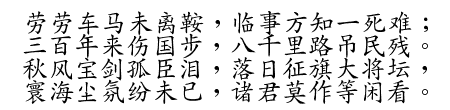
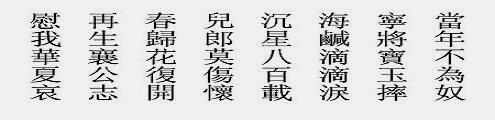
This snippet is for sons and daughters of China:
Heed the sons & ministers' agony and sorrow of our ancestors who died or lived through the Mongol,Manchu andSoviet-Chicom conquestand
theYongjia,Jingkang andJiashen cataclysms !
Jeanne d'Arc of China:
Teenager girl Xun Guan breaking out of the Wancheng city to borrow the relief troops in the late Western Jinn dynasty;
Liu-Shao-shi riding into the barbarian army to rescue her husband in the late Western Jinn dynasty;
teenager girl Shen Yunying breaking into Zhang Xianzhong's rebels on the horseback to avenge on father's death in the late Ming dynasty.
China's Solitary and Lone Heroes:
Nan Jiyun breaking out of the Suiyang siege and charging back into the city in the Tang dynasty;
Zhang Gui & Zhang Shun Brothers breaking through the Mongol siege of Xiangyang in the Southern Soong dynasty;
Liu Tiejun breaking through three communist field armies' siege of Kaifeng in the Republican China time period;
Zhang Jian's lone confrontation against the communist army during the June 3rd & 4th Massacre of 1989.
For this webmaster, only the ancient history posed some puzzling issues that are being cracked at the moment, using the watershed line of Qin Emperor Shihuangdi's book burning to rectify what was the original history before the book burning, filtering out what was forged after the book burning, as well as filtering out the fables that were rampant just prior to the book burning, and validating against the oracle bones and bronzeware.
There is not a single piece of puzzle for this webmaster concerning the modern Chinese history.
This webmaster had read Wellington Koo's memoirs page by page from 2004-2007, and read General Hu Zongnan's biography in the early 1990s, which was to have re-lived their lives on a day by day basis.
Not to mention this webmaster's complete browsing of materials written by the Soviet agents as well as the materials that were once published like on the George Marshall Foundation's website etc., to have a full grasp of the international gaming of the 20th century.
The unforgotten emphasis on "Republican China", which was being re-outlined to be inclusive of the years of 1911 to 1955 and divided into volumes covering the periods of pre-1911 to 1919, 1919 to 1928, 1929 to 1937, 1937 to 1945, and 1945-1955, will continue.
This webmaster plans to make part of the contents of "Republican China, A Complete Untold History" into publication soon. The original plan for completion was delayed as a result of broadening of the timeline to be inclusive of the years of 1911-1955.
For up-to-date updates, check the RepublicanChina-pdf.htm page.
Due to constraints, only the most important time periods would be reorganized into some kind of publishable format, such as the 1939-1940, 1944-1945, and 1945-1950 Chinese civil wars, with special highlight on Kim Il Sung's supplying 250,000 North Korean mercenaries to fighting the Chinese civil war, with about 60,000-70,000 survivors repatriated to North Korea for the 1950 Korea War, for example --something to remind the readers how North Korea developed to threaten the world with a nuclear winter today.
Note the fundamental difference between the 250,000 ethnic-Korean Japanese Kwantung Army diehards and the ethnic-Korean Chinese living in China.
The communist statistics claimed that altogether 65,000 ethnic-Korean Chinese minority people, or the Korean migrants living in China, joined the communist army, with approximately
60% coming from the Jirin subprovince,
21% from the Sungari subprovince, and
15% from the Liaodong subprovince.
The objectives of this webmaster's writings would be i) to re-ignite the patriotic passion of the ethnic Chinese overseas; ii) to rectify the modern Chinese history to its original truth; and iii) to expound the Chinese tradition, humanity, culture and legacy to the world community.
Significance of the historical work on this website could probably be made into a parallel to the cognizance of the Chinese revolutionary forerunners of the 1890s: After 250 years of the Manchu forgery and repression, the revolutionaries in the late 19th century re-discovered the Manchu slaughters and literary inquisition against the ethnic-Han Chinese via books like "Three Rounds Of Slaughter At Jiading In 1645", "Ten Day Massacre At Yangzhou" and Jiang Lianqi's "Dong Hua Lu" [i.e., "The Lineage Extermination Against Luu Liuliang's Family"].
Revolutionary forerunner Zhang Taiyan (Zhang Binglin), a staunch anti-Manchu revolutionary scholar, invoked Xin Shi (The History [Book] of Heart, a book written by Soong loyalist Zheng Sixiao who sank it in a tin-iron box into a well in the late 13th century A.D., and rediscovered about three and half centuries later), for rallying the nationalist movements against the Manchu rule.
Additionally, revolutionaries in Sichuan often invoked 17-year-old prodigy-martyr Xia Wanchun's Xia Jiemin [Quan-]Ji (Complete anthology of Xia Wanchun's poems and prose) for taking heart of grace in the uprisings against the Manchus.
This webmaster intends to make the contents of this website into the Prometheus fire, lightening up the fuzzy part of China's history.
It is this webmaster's hope that some future generation of the Chinese patriots, including the to-be-awoken sons and grandsons of arch-thief Chinese Communist rulers [who had sought material pursuits in the West], after reflecting on the history of China, would return to China to do something for the good of the country.
This webmaster's question for the sons of China: Are you to wear the communist pigtails for 267 years?
And don't forget that your being born in the U.S. and the overseas or your parents and grandparents' being granted permanent residency by the U.S. and European countries could be ascribed to the sacrifice of martyrs on the Tian-an-men Square and the Peking city in 1989.
(If you were the Chi-com hitting this site from the Bank of China New York branch or from the party academy in Peking, spend some time reading here to cleanse your brain-washed mind.)
 ***
***

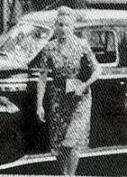
![Though, Anna Wang [Anneliese Martens], in her memoirs, expressed jealousy over Gong Peng by stating that the Anglo-American reporters had flattered the Chinese communists and the communist movement as a result of being entranced with the goldfish-eye'ed personal assistant of Zhou Enlai](GongPeng.jpg)