Sinitic Civilization-Book 1
Sinitic Civilization-Book 2
Tribute of Yu

Heavenly Questions
Zhou King Muwang's Travels
The Legends of Mountains & Seas
The Bamboo Annals - Book 1
The Scourge-of-God-Tetralogy:
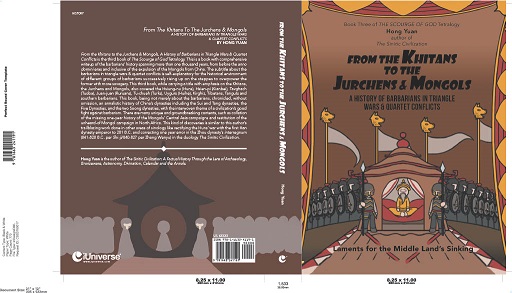
From the Khitans to the Jurchens & Mongols: A History of Barbarians in Triangle Wars and Quartet Conflicts
(available at iUniverse;
Google;
Amazon;
B&N)
|
|
The National Humiliation - Peking
The Boxers & the Invasion by the Eight Allied Nations
In the Hollywood entertainment area, there existed the movie entitled "Fifty Five Days In Peking"
starring by Charlton Heston. Recently, Jack Chan's new movie "Shanghai Knights",
in the trite style of exhibiting the skills of martial arts, crookedly assigned a contingent of Boxers as assassins of the British royal house under the Big Ben.
Jack Chan, in the name of patriotism, had only served the interests of the Hollywood by vilifying the Boxers.
More ludicrous would be Huayi Brothers's
45 million U.S.dollars shot of "The Legend of Sai Jinhua [Choi Gum Fa]" to praise the prostitute as a "patriotic".
Mark Twain, in 1900, wrote a satirical article "I Am a Boxer Too", stating that "We do not allow Chinamen to come here (i.e., America), and I say in all seriousness that it would be a graceful thing to let China decide who shall go there...The Boxer is a patriot...I am a Boxer too, for I believe in driving him (Chinaman) out of our country (i.e., America)."
From the Burlingame mission to Manchu China of the 1850s, to the Burlingame China Mission to the U.S. and Europe of the 1860s, to the 1900 Boxers' invasion, Mark Twain, a friend of Anson Burlingame (1820-1870), always harbored sympathy with the Chinese the same way as he was with the Black slaves, as seen in
The Adventures of Tom Sawyer
and Huckleberry Finn, similar works to Harriet Beecher Stowe's Uncle Tom's Cabin (1852).
Note it that there was no 'political correctness' of the 20th-21st centuries in the 19th century.
The Americans, bundling the Chinese with the Blacks as Mongrels, believed that only force worked with Manchu China.
The Democrats of the 19th century, not the political correct party of the 20th-21st centuries, led the charge against the Chinese coolies, and even called Lincoln's Republican Party by the Mongrel Party.
The Democratic Party's World publication claimed that the only way to deal with China was force;
only force really worked since "it is not 'because the Western nations have reversed
their old doctrine of force' that she (i.e., Manchu China) responds, for it was by the assertion of
the Western nations of their 'old doctrine of force' that the presence of
Mr. Burlingame as an American Envoy in Pekin was made possible."
It would be in the 1860s when President Abraham Lincoln designated Burlingame minister to China, that the Americans began to restructure the Sino-Western relations on an equal footing.
Anson Burlingame, during his stay in China, came to like and love China and the Chinese people,
and accepted the Manchu emperor's invitation to be China's first envoy to the Western powers.
|
Should the American politicians follow the footsteps of Anson Burlingame (1820-1870),
Paul Samuel Reinsch (1869-1923)
and
Patrick Jay Hurley (1883-1963), i.e., three most prominent U.S. statemen who loved China and the Chinese people,
then the Chinese people could have a chance of salvation from the communist tyranny.
Note the historic recurrence and the repetition of similar events:
Anson Burlingame, in opposition to the anti-Chinese discriminatory whirlwinds rampant in the U.S. in the 19th century, authored the Burlingame Treaty for China and
died for China in 1870 in St. Petersburg
while still on the Manchu China's mission to the U.S. and Europe;
Paul Samuel Reinsch, who was disillusioned by President Wilson's betrayal of China over the division of WWI spoils at the Paris Peace Conference, quit the minister-to-China job to work for China and died for China in Shanghai in 1923;
and
Patrick Jay Hurley, who convinced President Roosevelt of the American moral blunders in selling out the Republic of China at Tehran and Yalta, personally travelled to Moscow and London for sake of averting and reverting China's fate of becoming a victim of WWII war spoils (i.e., the loss of Port Arthur and Hong Kong, etc.), but failed to make remedy to the secret Tehran and Yalta agreements in the aftermath of President Roosevelt's death in April 1945.
|
|
For better understanding the head-on collision between the United States and Communuist China,
refer to
the U.S.-China fatalistic conjunction through the hands of the Japanese firepower during WWII, that derived from the American unpositive neutrality;
the U.S.-China fatalistic conjunction through the hands of communist army's firepower during the 1945-1950 civil war, that derived from American-supplied Soviet August Storm weapons; and
the U.S.-China fatalistic conjunction through Joseph Stalin, Kim Il Sung and Mao Tse-ting's hands during the 1950-1953 Korean War.
|
|
|
|
Quite a few people had recently re-examined the Boxers' Movement of 1900 and the subsequent invasion by the 'Eight Allied Nations'.
A noteworthy person would be Bei Ming of 'Radio Free Asia'. The main spirits of this kind of research would be to point out that the United States had acted fairly before, during and after the crack-down on the Boxers. Further, it was said that the United States, in 1908, had acted as the most altruistic of all in voluntarily refunding [half of] the overcharged 'war compensation' from damages caused by the Boxers, in the form of scholarships for supporting the talented Chinese' overseas studies in America.
It was said that
Rev. Arthur H. Smith, who was one of the besieged missionaries in the legation quarter of Peking, persuaded President Theodore Roosevelt into refunding the Boxers' indemnity funds back to China in the form of helping Manchu China in establishing higher education institutions, such as Tsing Hwa University, and sponsoring the overseas studies in America.
Bei Ming, in description of the Boxers' arson of the adjacent Imperial Library and the British Legation, unscrupulously commented that the British prized the Chinese classics' books more than the Chinese themselves, the same way as today's foreigners giving more love to tens of thousands of baby girls whom the Chinese government sell to the west for an adoption fee of US$5,000 to $20,000. (Increasing interest in the Chinese baby girls had encouraged a new form of human smuggling business in China, with a Chinese news report of interception of a truck carrying 28 baby girls wrapped up in cloth. Note that in the U.S., the revenue services would offer as much as $10k as kind of annual adoption tax exemption.)
|
Liu Xiaobo, late Nobel Prize winner and last Chinese dissident, at one time claimed that China needed to be colonized by the West for three hundred years to reach the stage of democracy as seen in Hongkong [which was colonized about 150 years].
This was Liu Xiaobo's lack of understanding about what the West was and is after in China.
Liu Xiaobo should know that when the eight allied nations invaded China and sacked Peking, they never intended to topple Dowager-Empress Ci-xi (Tzu Hsi) and the Manchu rule to install a lenient government that was good for the enslaved Chinese people.
The West, from the Jesuits of the 17th century, knew that China was conquered by the Tungusic barbarians or the Tartars --who disguised themselves as descendants of the Jurchens.
They had no interest in liberating China from the barbarians' rule.
Will they invade Peking again to topple the Chinese Communists whom George Marshall and Dean Acheson helped to install in the Forbidden City, and help Liu Xiaobo and the Chinese people to realize democracy?
Maybe this time is different.
This time, the Americans may feel the hands forced as North Korea, with its nuclear weapons, could become Communist China's cecal appendix in a repeat of history.
Nowadays,
the Chicoms turned filthy rich, and became more barbaric towards their own people.
The capitalists (synarchists) of the West are now horrified that the Chi-com had accumulated the same amount of wealth or more within the last 20-30 years, that took the capitalists (synarchists) of the West 300-500 years of Black slaves' trade, opium trade and the Chinese coolie trade etc., to achieve; and that the Chi-com, who killed off the landlords, had unlimited land to sell to make more money and could easily surpass the wealth accumulated by the capitalists (synarchists) of the West in no time.
Even worse, the Chi-com dared to challenge the only superpower in this world with the building of more aircraft carriers and financially challenge the U.S. Dollar settlement system.
The consequence of the Chi-com's reckless behavior could cause even more disasters to the Chinese people who were bound to their war chariots.
(The Americans, as the midwife who delivered China into the communist hands, are morally obligated to take China [and North Korea {and Vietnam}] out of communism.)
|
|
Per Ding Zhongjiang, Zhou Ziqi, a graduate of Beijing's "Tong Wen Guan" interpreter school and later a Manchu Qing emissary to the U.S., had been responsible for negotiating with the U.S. in regards to refunding the 12,000,000 U.S. dollars.
Alternatively speaking, Rev. Arthur H. Smith was responsible for persuading President Theodore Roosevelt into refunding half of the Boxers' indemnity funds back to China in the form of helping Manchu China in establishing higher education institutions and sponsoring the overseas studies in America -- which started under the Burlingame Treaty and was aborted after the passing of the Chinese Exclusion Act.
Rev. Arthur H. Smith
was on par with
Rev. Elliot Heber Thomson (?-1917) who founded St. Luke’s Hospital
(Shanghai) [and partially founded the later Saint John’s University], where this author’s great-grandfather
studied at the male nurse school before becoming a doctor himself.
According to Diana Preston's The Boxer Rebellion, Michael Hunt of Yale University in May 1972 concluded in an Journal of Asian Studies article that U.S. Secretary Hay knew at the beginning that the American claims for the Boxers' indemnities were exaggerated and excessive; that Roosevelt ignored the Chinese claim for refunding the surplus and procrastinated the refund for as long as possible; and that Roosevelt approved the partial refund only after the Chinese side softened the positions to allow the refund to be used according to the American wish, namely, the Chinese side proposed the usage of funds for educating the Chinese studies in America.
(Japan, out of the Boxer indemnity, established an annual sole-quota scholarship for the Chinese on the precondition that the recipient swore allegiance or express gratitude to Hirohito. In the late 1920s, Hu Qiuyuan yielded the Japanese Imperial Scholarship in preference for a Hubei Provincial scholarship for attending the Waseda University. Later in 1932, Benito Amilcare Andrea Mussolini offered to pay the Italian aviation advisers with money from the overcharged Boxer-related war damages in exchange for China's purchasing the Italian airplanes in the amount of several millions of of U.S. dollars. The Italians, taking advantage of the delayed declaration of war on Germany and Austria by China during WWI, had confiscated quite some money that Germany and Austria were supposed to surrender to China.)
The U.S. government, often cited as a 'friend' of Manchu China, actually pushed the anti-China agenda one step further: after acquiring Hawaii in summer of 1898 and the Philippines in December of 1898, the Americans applied the "Chinese Exclusion Act" to the Chinese on the two islands, and further, President Theodore Roosevelt signed into law to have the "Chinese Exclusion Act" applied throughout the U.S.-controlled islands and territories over the world.
The United States at the turn of 1900 was more properly called the American Empire, with its war of suppression against the Philippine independence fighters being similarly notorious as the other powers of the jungle.
Note that George Kennan
took the Chinese as a group
of people whom the Americans should not take on in the first place for what appeared to be more a logistic issue of what Kennan termed the limited capacity for “assimilation” as well as
downplayed one hundred years of American missionaries of work in China as "patronizing in this
attitude of ours (i.e., American)". Kennan's limitation apparently referred to the Chinese Exclusion Act
(1882).
(Among the U.S. presidents who sympathized with China would be a few like President Lincoln and his minister-envoy Anson Burlingame (1820-1870), Secretary of State John Milton Hay under President William McKinley (1897– 1901), and President Wilson and his minister Paul Samuel Reinsch (1869-1923).
Also see century-long American hypocrisy towards China &
American manipulation of the Chinese politics [e.g., Stilwell's instigating General Bai Chongxi, Stuart's instigating Li Zongren, and McArthur's instigating General Sun Liren].)
Empress Dowager Ci-xi's Attempt at Deposing Emperor Guangxu
 Empress Dowager Ci-xi placed puppet Emperor Guangxu (Kuang Hsu) under the house arrest after the crack-down on the 'Hundred Day Reformation' of June-September 1898 (Gregorian).
Emperor Guangxu initiated the reform measures after reading Reverend Timothy Richard's translation of Robert Mackenzie's The Nineteenth Century: A History, and took Kang You-wei (Kang Yu-wei)'s persuasion after being told of stories of the Japanese Mikado's Meiji Reform and Peter the Great's Russian reform.
Ci-xi, who took regency for son-emperor Tongzhi (Tung Chih) till 1873 and then again for nephew-emperor Guangxu till 1889, held the actual power, and thwarted the 1898 reform by winning over the loyalty of military strongman Yuan Shikai (Yuan Sih-kai).
Manchu "zhong tang" Rong-lu was said to have instigated Yang Chongyi in petitioning for Empress Dowager Ci-xi's return to politics and governance.
Though Emperor Guangxu was deprived of his rights, Empress Dowager Ci-xi and Emperor Guangxu did attend the daily imperial sessions together.
Empress Dowager Ci-xi placed puppet Emperor Guangxu (Kuang Hsu) under the house arrest after the crack-down on the 'Hundred Day Reformation' of June-September 1898 (Gregorian).
Emperor Guangxu initiated the reform measures after reading Reverend Timothy Richard's translation of Robert Mackenzie's The Nineteenth Century: A History, and took Kang You-wei (Kang Yu-wei)'s persuasion after being told of stories of the Japanese Mikado's Meiji Reform and Peter the Great's Russian reform.
Ci-xi, who took regency for son-emperor Tongzhi (Tung Chih) till 1873 and then again for nephew-emperor Guangxu till 1889, held the actual power, and thwarted the 1898 reform by winning over the loyalty of military strongman Yuan Shikai (Yuan Sih-kai).
Manchu "zhong tang" Rong-lu was said to have instigated Yang Chongyi in petitioning for Empress Dowager Ci-xi's return to politics and governance.
Though Emperor Guangxu was deprived of his rights, Empress Dowager Ci-xi and Emperor Guangxu did attend the daily imperial sessions together.
Ci-xi intended to replace Emperor Guangxu with a Manchu prince called Pu-juan (Pu-jun, i.e., Emperor Guangxu's cousin, Empress Dowager Ci-xi's nephew, and a great grandson of Emperor Daoguang and son of King Duan-jun-wang Zai-yi). For making his son into an emperor, Zai-yi asked Chongqigong, some ministers ("da xueshi" Xu Tong and "shang shu" Qi-Xiu), and his wife to maneuver about deposing Emperor Guangxu and erecting a new emperor. Qi-Xiu went to see Rong-lu (zhong tang" or prime minister) for assisting Zai-yi in the enthronement of the new emperor, and Qi-Xiu hinted at the consequence of the rise of a dethroned Emperor Guangxu should Ci-xi pass away. Rong-lu declined Qi-Xiu's request and refused to see Qi-xiu and Chongqigong again. Qi-xiu, et al, submitted a petition to Empress Dowager Ci-xi in regards to erecting a new emperor.
Ci-xi asked her ministers whether she could change the emperor via citation of Ming Emperor Jingtai-di's return of throne to his brother. Xu Tong concurred by saying that Emperor Guangxu could be downgraded to Duke Hunde-gong (duke who lost the virtues) via citation of the Jurchens' downgrade of the Soong Dynasty's emperor. Sun Jia'nai, "da xueshi" and "junji dachen", objected to the sudden change, claiming that it might stir up trouble in southeastern China. Ci-xi got enraged, saying that the change of emperor was her familial matter, nothing to do with Han-ethnic ministers.
Ci-xi spread a rumor about Emperor Guangxu getting seriously ill.
Foreign embassies expressed their opposition to Ci-xi's intention to dethrone Emperor Guangxu.
When the news spread that Emperor Guangxu was ill, the foreign legation ministers jointly went to see Yi-kuang (King Qingmi-qin-wang/King Ching, 1838-1917) for inquiring about the emperor's health. The British minister Sir Claude MacDonald sent a French doctor to seeing Guangxu. The French doctor's health report enraged Ci-xi. Further enraging Ci-xi would be the 'Hundred Day Reformation' fugitives' being offered protection by the foreign powers, i.e., asylum for Kang You-wei, that was granted by Britain, and the asylum for Liang Qi-chao, that was granted by Japan.
On January 24th (Gregorian) of 1900, which was after the murder of Anglican missionary S. M. Brooks, the Qing court announced that Emperor Guangxu, for illness and inability to beget a son, implored the empress dowager to select a worthy heir apparent, which led to selection of Pu-juan (Pu-jun/Pu Chun).
At the advice of Rong-lu, Ci-xi decided to change the throne via two steps and asked Emperor Guangxu decree that Prince Pu-juan (Pu-jun/Pu Chun) be conferred the title of a crown prince or crown brother ("da a ge" or the elder brother) for inheriting the line of Qing Emperor Tongzhi (Qing Muzong, r. 1862-1874). (Emperor Guangxu, before enthronement in 1875, had agreed to erect his to-be-born son as heir of Emperor Tongzhi should he bear a son.) Prince Pu-juan was assigned to the Palace of Hongde-dian inside of the Forbidden City.
(Prince Pu-juan or Pu Chun could be the same person as a Manchu prince who worked as an underground agent for spymaster Dai Li in the Yellow Flood Zone in the late 1930s and early 1940s, who claimed to have been an emperor for a short duration.)
In Shanghai, Jing Yuanshan and Cai Yuanbei submitted a letter with 2000 signatures against the crown prince erection. King Duan-jun-wang (i.e., Prince Tuan) and Empress Dowager Ci-xi held a celebration party, with invitation extended to the wives of foreign minister-envoys, but the foreign embassies did not show any appreciation. Ci-xi was recorded to have thrown her jade tea pot to the floor when a Manchu official sent in a letter claiming that the British intended to send in the armed forces to help return power to Emperor Guangxi.
Empress Dowager Ci-xi hence secretly supported the Boxers in their attacks on the foreigners and embassies in and around Peking (Beijing), leading to the year 1900 invasion by the 'Eight Allied Nations'.
The Foreign Partition Scheme Engendering the Boxer Movement
The Russians, after extracting the Amur-Ussuri territories from China and the southern Sakhalin Island [which used to belong to Manchu China] from Japan, continued the course of expansion in Asia and embarked on building the Trans-Siberian Railway in 1891. Manchu China, after the debacle in the 1894-5 Sino-Japanese War, wrongly looked to the Russians as the balance of power against the Japanese instead of self-reflection and conducting reform. In March of 1896, Li Hongzhang (Li Hung-chang) was invited to St. Petersburg for attending Nicholas II's coronation. To counter the Japanese threat, Li Hongzhang, i.e., Manchu China’s viceroy (Senior Grand Secretary of State), was induced into striking a deal with Russian foreign minister Alexey Lobanov-Rostovsky and finance minister Sergey Witte on June 3, 1896 in Moscow to build the Chinese Eastern Railway, a purportedly defensive alliance treaty that pledged mutual support in case of a Japanese attack. The railway allows the Russians to extend the Siberian Railway to Vladivostok [Haishenwai] via the Chinese northeastern provinces of Heilongjiang & Jilin and to moor the warships in all Chinese ports.
In late 1897, the Russians, having engendered the German occupation of Jiaozhou-wan Bay with its 1896 treaty with China, further attempted to swindle the port of Lüda [i.e., Lüshun] by playing the card of mediating over the German aggression against China. The subsequent Russian gunboat diplomacy, with demand of the Liaodong Peninsula through demonstration of force via a naval fleet in December 1897, resulted in the signing of the March 1898 Treaty on the Lyuishun Lease, followed by the May 1898 Supplementary Treaty on the Lyuishun Lease and the July 1898 "Sino-Russian follow-through contract on the railway company of Northeastern Provinces", which gave the Russians permission to build a southbound branch railway extending to Dalnii (Dalian or Dairen) and Lyuishun (Port Arthur) on top of the west-to-east Manzhouli-Harbin-Suifenhe trunk line. The 1898 treaties, with extracted privileges greatly exceeding the 1896 limitation on China’s right to rebuy the railway no earlier than 1932, granted the Russians a lease of Lüda (Lüshunkou) for 25 years, where the Russian naval base Port Arthur (a natural ice-free port) was to be built, and the right of operation of the Chinese Eastern Railway for 80 years. The Russians, other than swallowing up Manchu China’s railway investment at the Russo-Chinese Bank that could total 5 million teals of silver, encroached on China’s sovereignty with extraction of right of deployment of an Independent Border Guard Corps that later expanded to 15-30,000 men along the railway stations.
This in turn led to a chain effect of the various powers grabbing the Kiaochow Bay, Kwang-Chou-Wan Bay, and Weihaiwei from China.
Only the Italian demand for the Sanmen-wan Bay was thwarted by China in 1899.
Francis Younghusband, a British colonel who later invaded Lhasa by taking advantage of the 1904 Russian-Japanese War, wrote to the Times that the earth was too small "to permit the Chinese keeping China to themselves".
As George Kennan stated, "at the end of 1897 and the beginning of 1898 there was a real and justifiable fear that China would be partitioned."
Li Hongzhang, in regards to China's possible fate of being carved up like in Africa, stated that China's confrontation with 'red-hair devils' (i.e., the British, et al.) was an extraordinary 'bian ju (profound alterations)' event not foreseen by China for 3000 years.
(The powers, while competing against each other, also attempted to control the rivalries and the disasters to be rendered by wars, with czar Nicholas II proposing an international conference at The Hague in 1898, which led to a convention on voluntary arbitration of international disputes as well as another convention on the customs of war among belligerents, such as ban of dumdum bullets.)
The German Invasion & Robbery on the Shandong Peninsula
In Shandong, the Vatican in 1891 assigned the Germans the task of protecting the Catholic churches and clergymen in the area, i.e., that of Societas Verbi Divini [Divine Word Missionaries].
Several religious disputes occurred between the Chinese and the German clergymen, including the Caozhou Incident of 1897 and the Juye Incident, namely, two German Verbites killed by the Chinese on Gregorian 1 November, 1897.
In October 1898, some German warships docked at Shijiu-shuo (i.e., former stone [rice] grinding garrison from the Ming Dynasty), on the Rizhao [sunshine shower] coastline of Shandong, and threatened the local Chinese government and people with force.
On November 9, the Rizhao Priest Incident occurred when some German clergymen were caught by the locals. Lü Bingyuan, the county magistrate, intervened to get the Germans released and escorted to Qingdao, and settled the matter with compensation of 25,000 taels of silver and the construction of church buildings.
In 1899, the German minister sent a memorandum to the Qing government for cracking down on the Broad Sword Society activities in the Rizhao [sun shower] and Juzhou area. On February 19, 1899, John Baptist Anzer successfully instigated the German governor for Qingdao and the German minister to China for taking the military action against China.
From December to March, Anzer continuously instigated the German Army in attacking the Rizhao County and Yizhou-fu Prefecture.
In late March of 1899, a German reconnaissance team, being encircled by the Chinese en route to the Yizhou-fu Prefecture, opened fire and killed numerous Chinese. The German government subsequently approved the military campaign against Shandong. For two months of April and May, the German troops occupied the Rizhao County, with one incident of killing a Chinese called Yu Wende who attempted to protect a woman of their family from being raped by a German soldier.
The Germans occupied the magistrate office, and displayed terror throughout the villages around Rizhao, and on the coast, the German marines took over Andongwei and Shijiushuo etc. The Germans withdrew the troops after the Manchu government settled the loan matter on the Tientsin-Pukow Railway on May 25, 1989.
In June, Anzer released the Chinese hostage and concluded the Rizhao Incident after China agreed to a compensation of additional 80,000 taels of silver.
The Germans looted China's treasures prior to evacuation, including, among others, three ancient stone monuments at the coastal Mt Tiantaishan in Rizhao County, i) the Ju-guo ancestral reverence monument at the Wangxianjian (fairy seeking) Creek (possibly erected by the sun-worshipping Ju-guo people from the Shang-Zhou dynasty time period), ii) the reconstruction monument for the Shifeng-shi (stone phoenix) Monastery of Tanggu (spring valley), which was first built by Monk Huishen as the Tiantai-min-shi [pity of the heavenly terrace] Monastery in the mid-5th century prior to his overseas trip to Fu-sang (?ancient Mexico), was rebuilt a second time by Silla monk Zhi-yin as the Silla Monastery in the early Tang Dynasty, and was revamped by the Qin Dynasty descendants as the Shi-feng-shi Monastery during Ming Dynasty; and iii) the stone monument bearing three characters of "Ri Zhao Xian" (Rizhao County) that was erected by Korean Confucian Zheng Mengzhou when visiting the Silla settlement on the Shandong coast during First Ming Dynasty Emperor Hongwu's era.
Origin of the Boxer Movement
The Boxers, i.e., Yihe-quan (I Ho Quan, righteous and harmonious fists [boxing]) in Chinese, also named Meihua-quan [plum blossom fists], originated in Shandong (Shantung) in 1898 as a secret society. The names before Yihe-quan would be 'yi shi dang' (the temple of righteous warriors) and 'da dao hui' (big blade [broad sword] society) of 1897. Governor Li Bingheng (Li Peng-heng) was deprived of his post when 'da dao hui' killed two German Catholic missionaries of the Society of the Divine Word (a sect upholding religious vows of poverty, chastity and obedience) in October 1897 and on the night of All Saints' Day (Gregorian 1 November). Succeeding governor (Yu-xian/Yu Hsien) would rename Yihe-quan to Yihe-tuan (I Ho Tuan). The foreign embassies protested the atrocious acts of the Boxers.
The springing-up of militant societies could be linked to the Japanese invasion of 1894-1895, similar to the Heavenly Kingdom rebels' similar origin in the militia armies organized against the British during the 1839-1842 Opium War.
Violence against the foreign missionaries were often after aggressive preaching started in China after the opening-up of China's ports and hinterlands in the aftermath of the Second Opium War of 1856-1860, with the most notable incident being the rape and massacre of sixteen nuns of the French Catholic Sisters of Charity in Tientsin in 1870.
Cai Dongfan claimed that Yihe-quan was an off-shoot of the White Lotus Society; Ding Zhongjiang claimed it was an off-shoot of the ancient 'Ba Gua Jiao' (i.e., the milfoil divination religion of eight trigrams). In 1899, famine erupted over northern China, which was related to the breaching of the Yellow River
in the 24th year of Emperor Guangxu (1898), on which occasion the flood broke the dykes at Licheng, Shouzhang, Jiyang, Dong'e and other places, with water on the north and south sides feeding into the Tuhai River and Xiaoqing-he Rivers, after earlier breaches of the river in
1887 at Xiaxun-shibu of Zhengzhou and in 1855 at Tongwaxiang.
The Boxers first propagated the idea of 'destroying the foreigners' (i.e., mie Yang) by utilizing the masses' anti-foreign fermentation as a result of foreign invasion and exploitation as well as the bullying from the Christian converts [i.e., rice Christians] or broker-dealers associated with the foreign merchants or Christian/Catholic churches. It was recorded that priests, for sake of expanding the membership, had offered the 'Thanksgiving-day' kind of free meals and fringe benefits to the street rascals, and those rascal-turned Christian converts were often resented by the peasants for their resorting to the extrateritoriality laws for staying above Chinese laws in disputes with the non-Christian Chinese heathens as well as over their abolition of ancestor worshipping.
Per Preston, by the end of the 19th century there were over 700,000 Catholic converts ministered to by 850 nuns and priests, and 85,000 Protestant Chinese under some 2,800 missionaries.
The Boxers termed the foreigners as 'da mao zi' (big hairy son) and termed the Chinese Christian followers as 'er mao zi' (secondary hairy son).
For sake of obtaining the Manchu support, the Boxers proclaimed the idea of 'Sustaining the Manchu Dynasty' (i.e., fu Qing).
The Boxers claimed that they had the protection of divine spirits, practiced an animistic magic of rituals and spells, and believed they were impervious to bullets, swords and firearms. The Boxers grew in strength in Shandong with the acquiesce of Governor Li Bingheng and Governor Yu-xian (Yu Hsien), consecutively. The male Boxers practiced a karate-kind of fist arts (shadow boxing) called Jinzhongzhao (golden bell protection), and the women practiced the art of Hongdengzhao (red lantern shining). Governor Yu-xian, a disciple of King Duan-jun-wang Zai-yi, praised the skills of the Boxers to Zai-yi and suggested that the Boxers could be sent to the Forbidden City to protect the new crown prince.
Zai-yi recommended the Boxers to Ci-xi, and when Ci-xi expressed doubts about the Boxers' divine powers, Zai-yi suggested that Governor-general Yu-lu for Zhili (Chihli, i.e., Hebei including Beijing) Province and Governor Yu-xian for Shandong (Shantung) Province send in some Boxers to the capital for the in-person demonstration of magic. Yu-lu and Yu-xian approved of the establishment of Tuan-lian-ju (i.e., 'boxer training centers'), with the flag carrying the three characters of 'Yi (righteous) He (harmonious) Tuan (civilian brigade)'.
Empress Dowager was also credited with reviving the Peking Opera which based most of the dramas on the ancient divine stories like "Feng Shen Bang" (The List of Conferred Gods) etc. Empress Dowager, with the surname of Yehe-Nala-shi, liked to be called "Lao Fo Ye" (i.e., the Elderly Buddha Ancestress). Impressed by the superman capabilities of drama characters in the Peking Opera, Empress Dowager hence believed that the anti-foreign sentiment among the Boxers could be utilized and that this secret society, with its divine spirits, could be the vanguard in expelling the Europeans (nicknamed the 'foreign devils').
'Yi He Tuan' swooned to 100,000 in membership, with such masters as Wang Decheng, Cao Futian and Zhang Decheng, in the order of brothers as depicted by the novel "Water Margin". A street woman would be made into the chieftain in charge of women's Hongdengzhao branch. The Boxers' movement spread to the neighboring provinces of Shandong-Zhili-Shanxi (Shantung-Chihli-Shansi), with burning of churches and killing of the Christians everywhere.
The Boxer chieftains, in the name of boxing training, took over the Hongdengzhao women as their concubines without regard for laws. The Boxers took over various monasteries as their camps and forced every household into setting up the boxing altars. The Tientsin Boxers gradually spread out. Several times, Rong-lu failed to dissuade Ci-xi from getting intoxicated by the magic of the Boxers. Ci-xi ordered that King Duan-jun-wang and Qi-xiu be in charge of the foreign affairs office (i.e., "zongli yamen") and that King Zhuang-wang (Zhuang-qin-wang) Zai-xun (1853-1901) and Gang-yi (1837-1900) be in charge of leading the Boxers for an oncoming fight with the foreigners. The Boxers flocked to the nation's capital thereafter.
The Boxers Entering Peking the Capital
Yu-xian (Yu Hsien) was sacked by the Qing court after foreigners raised protests about the Boxers' atrocities in Shandong.
In October (lunar calendar) of 1899, Rong-lu dispatched Yuan Shi-kai's "wuwei you jun" (i.e., 'martial defending rightside army') to Shandong (Shantung) for restoring order. Yuan Shi-kai was assigned the post of backup governor-general in November and took over the post of governor-general in February of 1900.
Per Preston,
American minister Edwin Conger in late 1899 acquired two secret decrees of the Manchu court, which were about authorization for the Chinese maritime and Yangtze officials to make war against foreign countries in cases of foreign aggression and a declaration of indignation over the foreign powers' seizure of concession territories.
Around this timeframe, Anglican missionary S. M. Brooks was slain by the 'Big Blade Society' in Shandong.
Per Preston, on the last day of 1899 (Gregorian), the Reverend Sidney Brooks, an English who just spent time at the Ta Kuang Chuang church in Ping Yin (Pingyin County, near Tai'an) on the Christmas Day, was captured and murdered while returning from the visit to the church, which was initially capture by the Boxers and then an escape and re-capture by Meng Guangwen's Boxers from the Zhangjiadian Village of Feicheng County.
After news of Brooks' death reached the Peking legation quarter,
American minister Edwin Conger
alerted to Washington D.C. of the two Manchu documents.
Whereas British minister Sir Claude M. McDonald, not showing particular sympathy with Brooks for the victim's careless travels in the disturbed country, nevertheless lodged a complaint with the Manchu Zongli Yamen ('Tsungli Yamen') or foreign ministry equivalent, and then filed a report with London through snail mail.
The Qing court first promised to punish the culprits but then issued an edict in support of armed self-protection by the villagers (i.e., Boxers).
McDonald weeks later joined the other legations in sending a protest in demand of suppression of the Boxers.
About this time, in late January (Gregorian) of 1900, the empress dowager and her crony King Duan-jun-wang (Prince Tuan) spread words of selection of a new heir, i.e., Prince Pu-jun (Pu Chun).
After the turn of the year, missionaries sounded alarm about the Boxers' menaces to the respective countries' legations.
More demands were raised by the foreign legations against the Boxers.
In Tientsin, British Methodist Frederick Brown wrote to New York Christian Advocate about his district overrun by the Boxers and expressed grave danger,
and Charles Scott, bishop of North China and chaplain to the British Legation, cautioned about the danger.
North-China Herald warned on February 10th (Gregorian) of a rising [of tension] and a coming "blaze of insurrection" from the Yellow River to the Great Wall.
In March (Gregorian), ministers telegrammed their countries about the danger posed by the Boxers, with Britain, America and Italy sending over warships to the Dagu (Taku) forts.
Germany sent a squadron to Jiaozhouwan.
The foreign embassies sent letters to the Manchu foreign affairs' office demanding the suppression of the Boxers and threatening with invasion should the Manchu court fail to quell the Boxers within two months.
Yuan Shi-kai's crackdown on the Boxers caused the mobsters to flee to the Hebei and Shanxi provinces, with Zhili (Chihli) being the most heavily missionized province of over 100,000 Christians per Preston.
When Times correspondent George Morrison returned to Peking in April (Gregorian), he found the Boxers everywhere in evidence.
On April 10 (Gregorian), a new Manchu edict convinced McDonald that the crisis was over, which led to British warships Hermione and Brisk withdrawing from the Dagu forts according to Preston.
About 250 foreign missionaries from close to a dozen European and American churches, cathedrals, and mission headquarters in Peking realized their vulnerability for their localities' distance from the Legation Quarter, with the Russian Church and American Presbyterian located to the far north side of the Tongji-men (Tungchihmen) gate.
In late April (Gregorian), Boxers' placards were posted everywhere in Peking with incitation against foreigners.
On May 1st (Gregorian), in Tientsin, Herbet Hoover decided to call off the scheduled geological expeditions which were about anthracite.
By early May (Gregorian), the Qing court was debating whether to incorporate the Boxers into official militia per Preston, which was King Duan-jun-wang (Zai-yi)'s manipulation for sake of making his son into an emperor replacing Emperor Guangxu.
North China Daily News warned on May 10th (Gregorian) that high-level Chinese officials sympathetic to foreigners had disclosed that the Boxers had official sanction from the dowager empress.
Sir Robert Hart, i.e., inspector general of the Imperial Maritime Customs, who took in a young Chinese girl Ayaou and born three children and claimed to know about the Chinese, thought the cataclysmic events could come in the eighth month of the lunar year 1900 (Gregorian September).
Per Preston, people in the foreign legations were trapped in a web of "evasion and apology" via citation of William Bainbridge's writings, and went on with balls and parties in the Legation Quarter, polo or tennis in the various courts recently launched in Peking, vacations in the Western Hills or Beidaihe (Peitaho), and excursions to the Great Wall and the Ming dynasty's mausoleums.
Around the capital, the imperial guarding forces were composed of four columns (equivalent to brigades) led by Soong Qing, Nie Shicheng, Ma Yukun and Dong Fuxiang (Tung Fu-hsiang), respectively.
The four columns of army, plus Yuan Shi-kai's colum, were trained with instruction of foreign military advisers and equipped with the Western weapons, which was a product of military reform in the aftermath of the Qing defeat in the 1894-1895 Sino-Japanese War. Dong Fuxiang, previously a Gansu Province bandit, was pacified by General Zuo Zongtang during the crackdown on the Muslim rebellion of Shen-Gan (Shenxi-Gansu), was later assigned the post of a general in Gansu, and was relocated to Jizhou, near Peking the capital. At the order of King Duan-jun-wang, Dong Fuxiang led his Gansu bandit-converted army to the City-gate of Zhengyang-men (to the west of Hatamen (Chongwen-men) and Tungpienmen (Dongbian-men), and surrounded the foreign legations (embassies) in the Dongjiaominxiang area.
Dong Fuxiang purportedly became a sworn brother of Boxer leader Li Laizhong.
In mid-May (Gregorian), news reached the French Legation that "some sixty Chinese Catholic men, women, and children had been slaughtered at Kaolo, a village some ninety miles from Peking" per Preston.
Then, there was news that the Boxers attacked and killed the Chinese preacher of a London Misson chapel only forty miles from Peking.
McDonald was told by the Manchu foreign office that an imperial edict was issued ordering the suppression.
McDonald was busy making preparations for Queen Victoria's 81st birthday party, about the time the British rendered relief to the 217-day siege of Mafeking by the Boers.
On May 19th (Gregorian), bishop Favier warned that the Boxers' accomplices in Peking were ready to take out the churches first and second the legations.
The next day, ministers dismissed the grave warning after a meeting, and decided to lodge another complaint with threat to summon troops and marines to Peking.
In Peking, only Russian minister M. de Giers had some Cossack guards stationed at the legation under the 1689 Treaty of Nerchinsk.
George Morrison and William Pethick (i.e., Li Hongzhan's purported aid) checked out the Boxers' activities at the imperial Manchu army's barracks and Manchu princes' places.
The Boxers and soldiers, together, destroyed the railroads, cut the telephone lines, and burnt down the foreign residences.
The Boxers even destroyed the empress dowager's special rail coach.
At the Laishui County, some villagers, hating the Christians, invited the Boxers for an attack at the church on May 15th (Gregorian). The Church followers contacted the county magistrate for protection. Magistrate Zhu Fei reported to the province but was asked not to crack down on the Boxers.
Before the government troops arrived, the Boxers already sacked the church, killed all Christians (i.e., Christian converts) and burnt down the building.
When some priest contacted the foreign consulate for assistance, the Manchu provincial army intruded into the Gaoluo-cun Village to have the Boxers' base destroyed on the 15th (Gregorian).
More conflicts resulted in the capture of the Boxers, while the Boxers agitated for rescuing their pals.
Hearing that three thousand Boxers gathered at the Shiting-zhen (stony pavilion) Town in northern Laishui
deputy general Yang Futong took seventy soldiers for cracking down on the Boxers on May 22nd (Gregorian).
Yang Futong fought with the Boxers and died in the hands of the Boxers.
On the 25th (Gregorian), Nie Shicheng sent 'tong-ling' Yang Mushi and three camps of troops to Gaopaidian of Baoding to arrest two culprits responsible for 'fu jiang' Yang Futong's death.
Governor-general Yu-lu for Zhili Province then dispatched "da xueshi" (grand scholar) and 'libu shang-shu' Gang-yi and "Shuntian-fu fu yi" Zhao Shuqiao for the Shuntian-fu Prefecture (Zhuozhou area) on a pacification mission. Gang-yi and Zhao Shuqiao, who visited Zhuozhou, colluded with the Boxers and then petitioned with Ci-xi for using the Boxers against the foreigners. Chief Eunuch Li Lianying also praised the Boxers in front of Ci-xi.
The Boxers killed Western railroad engineers.
Per Preston, on May 28th (Gregorian), Morrison was visited by someone who escaped from Changxindian (Changsintien) with a claim that the Belgian engineers and their families were besieged at the Belgian construction staff's compound.
Morrison's houseboy claimed that 8 million spirit soldiers would descend on Peking.
By mid-April (lunar; Gregorian May) of 1900, Boxers of the Lai-shui County burnt down the Baoding Railroad.
Morrison, after receiving reports of massacre from Chocow, galloped to Fengtai with two companions, observed the burning of train engine sheds, and continued towards the Western Hills for retrieving friends Harriet Squiers (wife of Herbet Squiers, first secretary of the American Legation) and Polly Condict Smith, et al., whose Taoist temple-converted mountain villa was protected by a column of soldiers sent by the Manchu foreign office.
Meanwhile, Pethick was said to have attempted to use connection with Li Hongzhang (who was not in Peking) to obtain a regiment of the Qing troops to rescue the Western Hill vacationers.
As to the Belgians at Changxindian, Auguste Chamot of the Hotel de Pekin organized an armed rescue mission with four Frenchmen and Australian Willie Dupree, and successfully plucked the party stranded there.
Hotel de Pekin was situated in the middle of German, French and Japanese legations.
On May 28th (Gregorian), ministers argued over requesting for armed guards to be sent to Peking before the rail link was to be cut. When French minister Monsieur Pichon and Russian minister M. de Giers disclosed that they already asked for guards, Sir Claude MacDonald also telegraphed to Vice-Admiral Sir Edward Seymour for sending in British guards.
The rest of ministers included Italian Marquis Salvago,
Spanish Senor Cologan,
Dutch M. Knobel,
American Edwin Conger,
Japanese Baron Nishi, et al.
The foreign embassies sent urgent messages to the Manchu foreign affairs' office, but King Duan-jun-wang ignored them all and gave conflicting statements as to support or suppression of the Boxers.
navyandmarine.org/ondeck/1900boxerrebellionmarines.htm stated that "on 30 May (Gregorian) ... Chinese authorities allowed the Americans, British, French, Italians, Japanese, and Russians to augment their embassy guard forces. The next day, 337 men arrived from foreign naval ships anchored off Taku (Dagu). Included in the contingent were 50 U.S. Marines, led by Captains John Myers and Newt Hall. Over the next few days ...foreign ministers called for additional reinforcements."
Per Preston,
The Manchu foreign office gave in to the ministers' demand to send in guards on May 31st (Gregorian).
Per Preston, 350 men from the U.S., Britain, Russia, France, Italy and Japan came to Peking, including three British officers, seventy-six men of the Royal Marine Light Infantry and three Royal Navy men, who debarked the train at the Machiapu station and paraded into the Legation Quarter, i.e., what Sir Claude MacDonald took as a "salutary lesson" taught to the Chinese.
The troops brought over three machine guns and one artillery.
The American marines came from flagship Newark which sailed from Nagasaki.
More guards from Germany and Austria arrived from Tientsin on June 3rd (Gregorian) before the rail line was to be ripped up.
At about the same time the Boxers attacked Changxindian, about thirty Belgians, French and Italians were stranded at Baodingfu (Paotingfu). With the telegraph line cut and train travel not possible, the party on May 31st (Gregorian) travelled over land under the protection of a small band of Qing soldiers for sail to Tientsin by boat.
Running aground in a narrow river channel, the party was obstructed by the Boxers and had to push the boat to the opposite bank for escaping overland.
Four persons, Swiss Assent, his sister, plus an Italian, and a Turk returned to Baoding where they were killed. The rest forced their way to Tientsin on June 3rd (Gregorian).
Fifty miles south of Peking, two British missionaries, Harry Norman and Charles Robinson, were reportedly killed by the Boxers per Preston, which happened in Yongqing on June 1st (Gregorian).
Sir Claude MacDonald protested with the Manchu foreign office about death of the two British on June 4th (Gregorian).
On the same day, the Boxers set fire to the Huangcun train station, and Nie Shicheng sent troops to the crackdown.
Sir Claude MacDonald, who sent a message about wholesome calm in Peking to Seymour on June 3rd (Gregorian) and allowed his two daughters to go to the Western Hills, recalled his family, after which the vacation home was destroyed and gatekeeper and his family murdered by the Boxers.
The last batch of foreigners who left Peking for Tientsin was on June 4th via train.
On June 4th (Gregorian; lunar May 8th), the Boxers burnt down the railroads at Yangcun (Yang village). Governor-general Yu-lu dispatched two battalions of Nie Shicheng's "wu-wei (martial defence) zuo (leftside) jun (army)" to the Zhuozhou area. When Nie Shicheng tried to protect the railroad, the Boxers attacked Nie Shicheng and injured over a dozen soldiers. Nie Shicheng cracked down on the Boxers. Ci-xi asked Rong-lu to write to Nie Shicheng for sake of stopping Nie from fighting the Boxers. Nie Shicheng stubbornly insisted on quelling the Boxer mobsters and stationed his army at Yangcun for defence against the Boxers. On one occasion, Nie Shicheng personally shot a Boxer chief who climbed on top of a telephone pole to instruct the destruction of railroad in the Lutai area, chased the fallen Boxer chief on horseback, attacked the Boxer chief with the blade, and decapitated the Boxer chief. Nie Shicheng's army killed several hundred Boxers and became feuds with each other.
On the 6th (Gregorian), the Boxers burnt the Luofa train station, and Nie Shicheng sent troops to fighting the Boxers.
By May (Gregorian June) of 1900, about June 7th (Gregorian), large crowds of Boxers entered Peking, and the foreigners retreated into the legations.
While ministers still did not foresee the massacres to come, missionaries and correspondents began to write to news agencies of various countries to raise alarms.
When Pethick failed to persuade Conger to warn the U.S. State Department,
Robert Coltman filed a cable to the Chicago Record.
Per Preston, thirty Americans wired to President McKinley direct.
On June 9th (Gregorian), the Boxers burnt down the grandstand at the Peking Race Course. Hearing of the arson, student interpreters, either American or British or both, galloped to the racing course, where someone shot dead a Boxer point-blank with a revolver, which was the first Chinaman killed per Preston.
Sir Claude MacDonald, worried about the foolishness and danger of this killing, forbade any British from travelling outside of the city, i.e., the area enclosed by the Tartar Walls.
Ministers were also worried that Dong Fuxiang's Gansu army (i.e., Kansu brave-camp soldiers) had returned with the dowager empress to the city, with camps near the Temples of Heaven and Agriculture.
On June 10th (Gregorian), ministers received a reply telegram that Seymour was on the way; however, the telegraph line was subsequently cut, with the Russian line via Kiatka being the only line left.
Seymour's army 2100 men passed through the Beihe (Peiho) iron bridge without opposition from Nie Shicheng's army; however, Nie Shicheng apparently received the order of stopping Seymour's army from going to Peking thereafter.
Seymour pushed on towards the Luofa (Lofa) and Langfang train stations, where the Boxers sabotaged the railway and fought with Seymour's relief army to a standstill for five days.
Meanwhile, bad news from the Manchu foreign office came that friendly Prince Ching (Yikuang, King Qingmi-qin-wang/King Ching, 1838-1917) was replaced by hostile Prince Duan (Zai-yi, King Duan-jun-wang).
Zai-yi was appointed the post of 'zongli (managing) ge-guo (all countries) shiwu (affairs) yamen-dachen', i.e., foreign minister equivalent, on June 10th (Gregorian).
On June 11th (Gregorian; lunar May 15th), legation staffs went to the train station but did not see any arrival of Seymour's relief armies from Tientsin and then went back to the Legation Quarter in the long procession of carts.
On the afternoon, chancellor (embassy secretary) Sugiyama Akira of the Japanese Legation, who returned towards the train station, was dragged out of his cart and killed by the Gansu troops just beyond the Yongding-men city gate at the outer wall, which was separated from the Zhengyang-men or Qian-men gate and rostrum area by the two temples of agriculture and heaven.
Alternatively speaking, the Boxers killed the Japanese near the Yongding-men (Yung-ting) gate on the pretext that Sugiyama was riding in the minister's cart against the diplomatic protocol, and dismembered him.
Then the Kiatka line was cut.
With the tense atmosphere in the Legation Quarter, servants and shopkeepers, who used to serve foreigners, vanished.
Forty French and Italian marines under Paul Henry and Olivieri were sent to help Bishop Favier at the Peitang (Xishiku; Beitang, northern) Cathedral, i.e., Church of the Saviour, which had a history as old as 1703.
One of the London Mission facilities was located next to Peitang.
A column of American marines was sent to the American Methodist Mission (Asbury Church, a Methodist episcopal church named after Francis Ashbury) east of the Legation Quarter.
Luella Miner, et al., abandoned Tongzhou (Tungchow) for Peking after being told by the local official on June 7th (Gregorian) that they had to go.
At Tongzhou (Tungchow), missionaries helped Frank Gamewell
to fortify the Methodist Mission walls there.
On June 12th (Gregorian), ministers, without the Japanese who claimed war had been on since Sugiyama's death, sent another message to the Manchu foreign office.
The Boxers started the attack and burning of churches in Peking.
On June 13th (Gregorian), a single red cloth-bound Boxer appeared in the Legation Street with a Peking cart.
German minister, Baron von Ketteler, according to Preston's citation of Customs Service employee De Courcy, came out of the Legation to attack this Boxer with a stick, and after beating off the Boxer to an alley, found a young boy inside the cart, and thrashed the boy soundly before taking him into the German Legation as a prisoner.
On this day, von Ketteler gave permission to the German guards to hunt down the Boxers.
On the afternoon of June 13th (Gregorian), thousands of Boxers swamped into the city according to Preston's citation of Jessie Ransome.
The Boxers burnt eleven churches, mission buildings and cathedrals in Peking, with 3200 Catholic converts fleeing to the French Peitang (Peitang, i.e., northern cathedral) while another 2000 Christian converts fled into the Legation Quarter.
As early as the evening of June 15th (Gregorian), the guards at Peitang fired a volley into the Boxers who, under the leadership of a lama, traced behind a Catholic Sisters and children to within 200 yards of the compound.
Peitang was to be bombarded by the Manchu army from June 22nd (Gregorian) onward.
On June 13th (Gregorian), the Tientsin Boxers were said to have attacked and burnt churches and cathedrals at Majiachang, Fanjiazhuang, Hongjiafen, Niufang, Longzhuang, Hanzhuang, and took over the Jinghai County.
This appeared to be related to the boy's abduction by von Ketteler who was to be sorted out and killed on the 20th (Gregorian) over this incident.
On the 14th and 15th (Gregorian), the Boxers continued to attack and burn churches and cathedrals.
Per Preston, the Boxers began the uprising in Tientsin on June 15th (Gregorian), and burnt all Tientsin mission stations including Notre Dame des Victoires, which was after the admirals landed more troops on June 11th (Gregorian) to fill in the void left by Seymour and reinforce the defense of the Tientsin settlements.
Per Preston, the Boxers closed in to the Tientsin settlement before dawn and fired into the Tientsin settlement.
On June 16th (Gregorian), admirals of various powers, except for the American navy, decided to attack the Tagu (Taku) forts and delivered ultimatum to the Tagu fort commander and the Tientsin magistrate,
an ultimatum to surrender the forts before 2:00 a.m. June 17th.
The powers sacked the forts on the morning of the 17th (Gregorian), which was de facto war declaration in the opinion of Herbert Hoover.
With the escalating commotion from the Racing Course Incident and the Legation Street Incident as well as the ultimatum against the Tagu forts, the Manchu foreign office on the 19th (Gregorian) issued an ultimatum for all foreigners to vacate Peking within 24 hours.
The Legation ministers debated the viability of evacuation, brought up the topic of the 1857 Indian Spoy Mutiny, and decided to stay put.
Baron von Ketteler, after failing to have all ministers come up with a concerted action, went to the Manchu foreign office with an interpreter and two cart drivers, on which occasion he was killed by Manchu 'zhang-jing' garrison army officer En-hai.
Seymour Forcing His Way To Peking
By this time, the Eight Allied Nations decided to intervene for protecting their embassies and staff as well as the missionaries and the Christian followers. The allied forces, under British General Xi-mo-er (Sir Edward Hobart Seymour [1840-1929]), took action on
June 10th (Gregorian; lunar May 14th).
Seymour received MacDonald's numerous alarms and relief requests
on May 28th (Gregorian) and May 31st (Gregorian), and consulted with the other powers' admirals for concerted action.
After receiving an urgent message from John Jellicoe in Tientsin on the 9th (Gregorian),
Seymour landed a British force of 900 men on the 10th for the eighty miles' trip to Peking -- without both the Manchu government's approval or the British government's authorization.
The German force of 500 men and other powers' marines or navy troops
followed Seymour's lead, amounting to 2100 men who were "accommodated in five trains with 100 coaches" per Preston.
Seymour's train first left at 9 a.m., in a hurry that was likened to beating Colonel Sir Charles Wilson's rescue of Charles George Gordon at Khartoum besieged by the Mahdi.
(Alternatively speaking,
on June 11 (Gregorian; lunar May 15th), British General Seymour departed for Peking with 2000 men as the forerunner column.
Here, Preston compacted the 10th and 11th with conflicting claims that the telegraph line was cut with hours of Seymour's departure on the 10th but put the ministers' welcoming party trip to the Peking train station on the morning of the 11th after receiving the last message on the 10th.)
From Dagukou to Tientsin and Peking (Beijing), the Boxers, including those expelled from Shandong by Yuan Shi-kai, were everywhere.
Within hours of Seymour's departure, the telegraph line was cut, which was why the Legation ministers went to the Peking train station to see no arrival of relief armies on the 11th.
Furthermore, the Manchus immediately appointed the hostile Prince Tuan in replacement of friendly Prince Ching at the foreign office.
The telegraph line's cut on the 10th immediately after Seymour's departure from Tientsin exhibited some kind of continuous Manchu communications between the two cities.
Per Preston,
At 9:30 a.m., Seymour's train got permission from Nie Shicheng, who commanded an army of 4000 troops, to pass through Yangcun (Yangtsun) and the iron bridge on the Beihe (Peiho) River, about fifteen miles northwest of Tientsin.
But halfway to Luofa (Lofa), the train had to stop after the Boxers sabotaged the rails, ties and a bridge, and after Seymour had the Chinese workers repair the line, the train chugged into the Luofa (Lofa) station to find four Chinese railway officials murdered, and train station sabotaged.
Per Preston, further towards the Langfang station,
the Boxeres launched a frenzied attack.
Seymour had to continue the trip while simultaneously repairing the rails and fighting the Boxers, and had to halt the train at Langfang.
Per Preston, a messenger sent by the American Legation arrived on the 12th (Gregorian), informing Seymour of the turmoil in Peking in the aftermath of Seymour's military advance as well as detailing the Manchu army's dispositions south of Peking.
navyandmarine.org/ondeck/1900boxerrebellionmarines.htm further stated "at Taku, Vice Adm. Sir Edward H. Seymour formed an international rescue force of 2,056 troops, including 112 U.S. Marines, to move inland by train on 10-11 June (Gregorian). However, the relief column met heavy resistance from the Boxers northwest of Tientsin."
Per Preston, Seymour's army held on to Langfang for five days (? till the 14th or 15th), albeit not clearly spelling out events concerning the Luofa (Lofa) and langfang train stations, with a claim that on
the 14th (Gregorian) the situation deteriorated further in that the vital contact with Tientsin was lost; the supply train was stopped by the Boxers at the Yangcun iron bridge while Nie Shicheng's army was out of sight; and that five Italian pickets were cut down by the Boxers at Langfang.
Seymour sent a messenger back to Peking to inform MacDonald of the delay.
But on the 16th, after sending Schlieper to find out the sabotage along the rail beyond Luofa (Lofa) back towards Yangcun as well as possible death of a Chinese messenger sent back to Tientsin, Seymour inspected the rail damages himself and realized that his army was then isolated.
Instead of marching to Peking on foot, Seymour ordered to retreat south towards Yangcun while leaving German Captain von Usedom to hold Langfang as rearguards.
After making strenuous efforts in repairing the rails, Seymour's army returned to Yangcun (Yangtsun) but found the iron bridge damaged beyond repair and the nearby water tower damaged, which caused water supply problem for the train engine.
Captain von Usedom, after fighting Dong Fuxiang's army and lost one dozen men, plus over fifty men wounded, retreated to Yangcun on the evening of the 18th (Gregorian).
The Manchu army reported the June 18th Langfang victory to the court.
The next morning, Seymour ordered to abandon train, dump non-necessities into the Beihe (Peioho) River, and retreated on foot along the left bank of the river while settling the wounded and weak in some captured junks.
The Boxers set fire on the trains.
The junks kept on grounding in the shallow water, and men walked under thirst in the hot summer weather and constantly confronted the Boxers at the villages the column passed through.
Nie Shicheng's Manchu troops likely joined in to harass Seymour's column.
The British, before the 10th, already started landing troops for the Tientsin settlement's defense.
Per Preston's conflicting accounts of the events on the 10th and 11th (Gregorian),
navy reinforcements came to Tientsin from Dagu (Taku) came within hours of Seymour's departure but in a separate sentence,
commander Beaty of the Royal Navy actually came to Tientsin with 150 marines and sailors on June 11th (Gregorian), to be followed by 1600 Russians who just arrived just in time to beat back a Boxers' attack at the Tientsin train station, i.e., June 13th (Gregorian).
The Boxers purportedly first attacked the Zizhulin (violet bamboo forest) settlement area of Tientsin on June 12th (Gregorian).
The new arrivals beefed up the defense force of Tientsin to 2400 men, but still tiny versus the estimated 30,000 Boxers and 15,000 Manchu troops in and around Tientsin, including 3000 men at the four Dagu batteries and forts.
On the 14th (Gregorian), Boxer leader Cao Futian led few thousand Boxers to Tientsin, where he was welcomed by 'Zhili zong-du (governor)' Yu-lu.
The Boxers subsequently on the 15th (Gregorian) started the uprising and destroyed the mission facilities in the Chinese part of Tientsin, and the following day began to fire into the Zizhulin settlement area.
On the 16th, the Boxers attacked the Zizhulin area again for the second time but were repelled.
The official siege started the next day.
Meanwhile, the allied powers' navy attacked the Dagu-kou Battery. Governor-general Yu-lu for Zhili reported to King Duan-jun-wang about the allied attacks.
Along the coastline,
on June 16th (Gregorian), admirals, except for American Admiral Kempff, decided to attack the Tagu (Taku) forts and issued the war declaration through two means: asking the French consul in Tientsin to telephone the local Manchu magistrate with the ultimatum, and sending a Russian navy officer with French interpreter Johnstone to the Tagu fort commander with the ultimatum to surrender before 2:00 a.m. June 17th.
Nine lightweight or shallow draft warships with 900 men lined up against the forts late in the day, including
British Algerine, Fame, Whiting,
German Iltis,
Russian Gilyak, Bobr, Koreyytz,
French Lion, and Japanese Atago.
Past midnight, the fort batteries fired the opening volleys against the warships which returned fire and detonated the magazines of the North Fort and Northwest Fort batteries on the northern bank and the South Fort and New South Fort batteries along the southern coastline.
Two British warships, Fame and Whiting, sailed further upstream to the hind of the batteries of the estuary to attack and capture four German-made Manchu destroyers.
The marines landed at 3:00 a.m., and took over all batteries after a few hours' battles.
The Russians and Japanese were observed to have killed all Chinese on sight at the North Fort battery.
Lou Herbert was described to have received a phonecall at 8:00 a.m. from the Dagu forts that the powers had sacked the forts.
Dugu-kou (Taku) "ti du" and 'Tianjin-zhen zong-bing' (general) Luo Rongguang, after he was defeated by the Eight Allied Nations, fled to Tientsin.
Per Preston, two sides had a short time period of quietness after the powers sacked the Tagu forts, from forenoon to 3:00 p.m., as if both sides making calculation for the next move, before Nie Shicheng's Manchu army officially started the attack against the Tientsin settlements with artillery shelling.
The Boxers were to join in for the assaults that started within hours.
Under siege and with the phoneline cut from the Dagu forts, English James Watts, with three Cossacks, galloped out of the Tientsin settlement for the coast on June 19th (Gregorian).
After two more ships arrived,
British Terrible from Hongkong, carrying the Royal Welch Fusiliers and Royal Engineers,
and a Russian troopship from Port Arthur,
another relief column of 2000 men were sent to Tientsin on June 23rd (Gregorian), among whom were the British mercenary army of the First Chinese Regiment of Weihaiwei.
On the 20th (Gregorian), Seymour's army moved only eight miles.
On the 21st (Gregorian), Seymour fought a fierce battle at the Beicang (Peitsang) Village, which was situated along the railway, at a heavy loss.
On the 22nd, Seymour's army took another village before daybreak, but by dawn faced off with a fortified position on the opposite bank of the river.
After exchanging words, Seymour's army was being fired on, which turned out to be the Manchu Xiku (Hsiku, Hsiko, Xigu-wuku) weapons' depot that was stuffed with Krupp field guns, rifles and 7 million rounds of ammunition, plus tons of rice and piles of medical supplies.
Seymour, sending British marines across the river upstream and Germans across the river via raft to the southwest direction,
took the depot after one hour's battle, after which Nie Shicheng's Manchu army came over for wrestling back the arsenals.
After failing to take back the depot on the 22nd (Gregorian), Nie Shicheng mounted a new attack at 3:00 a.m. on the 23rd, with the Boxers joining in.
Seymour, judging by the firing from the southeast, assumed that Tientsin was under siege.
On the early morning of the 24th (Gregorian), Seymour sent Chao Yin-ho to Tientsin in disguise.
Chao swam across the river, ate the cipher message before being caught by the Boxers and the Manchu troops consecutively, and feigned an innocent to continue on to Tientsin where he sneaked into the settlement after going around the siege line and signaled to the French soldiers to stop firing at him.
From Tientsin,
1800 men came to the rescue of Seymour on the 25th (Gregorian) under the command of Russian colonel Sherinsky, including 900 Russians who recently came from Port Arthur and 500 British.
On the 26th (Gregorian),
Seymour and Sherinsky retreated back to Tientsin after sabotaged the artillery pieces and
blew up the Xiku depot with an "estimated £3,000,000 worth of munitions" per Preston.
Seymour lost sixty-two men with 228 wounded for the aborted mission.
http://www.history.navy.mil/faqs/faq86-1.htm stated that "over 2,100 men ... from Great Britain, Germany, Russia, France, the United States, Japan, Italy, and Austria... departed the city of Tientsin on 10 June, under the command of British Admiral Sir Edward Seymour. However, strong Boxer and Imperial Chinese opposition forced Seymour to return his battered column to Tientsin on 22 June."
Fluid Events Leading Up to the Siege of the Legation Quarter
With the Boxers streaming into Peking on
June 13th (Gregorian) in the aftermath of von Ketteler's attack of a Boxer and his child, people in the Legation Quarter saw smoke rising in the east, that was followed by a volley of rifle shots on the Legation Street half an hour later according to Preston's citation of Jessie Ransome.
The Boxers came into the city through the Hade-men (Ha Ta Men, Chongwen-men) gate to the southeast.
Morrison recorded in the diary the Boxers' commotion caused awful cries in the west part of the city through the night.
The mission facilities without guards were burnt according to Preston's citation of William Bainbridge, among others,
The East Cathedral (Tung Tang, located to the northwest of the Manchu foreign office and to the north of the London Mission), the South Cathedral (Nan Tang, located to the east of the Legation Quarter and to the south of the Anglican Mission), etc.
Morrison managed to get a Prince Su (i.e., Manchu prefectural or honorary king equivalent) to give up his residency for housing the Chinese converts rescued from the massacre and arson.
On the night, the Austrian compound, which was located on the northeastern rim, was attacked.
On June 16th (Gregorian), the Boxers set fire to the trading quarter of over 4000 stores that engaged in foreign goods trading, with fire engulfing the Qianmen (Chienmen) city gate which was situated to the southwest of the Legation Quarter under segregation of a city wall.
The Legation Quarter was defended by the Russians and Americans to the west and the French and Italians to the east.
On June 16th (Gregorian), Legation guards could have engaged in a fire exchange with the Gansu Brave Camp soldiers.
On June 17th (Gregorian), von Ketteler's guards attacked Dong Fuxiang's Gansu Muslim soldiers, which led to Sir Claude MacDonald to issue order of restraint for preventing escalation before Seymour's relief army was to arrive.
MacDonald wrote that the Germans shot dead seven Boxers in "taking pot shots" of 50 to 100 Muslim soldiers who were drilling 200 yards away.
The Gansu soldiers yelled "kill" for over an hour according to Preston's citation of Meyrick Hewlett.
The dowager empress convened several meetings on the 16th and 17th (Gregorian) to discuss the Boxers' issue.
A forged foreign corps letter strengthened the dowager empress' will to fight the foreigners on the 17th (Gregorian), which was solidified after she two days later received reports that the various powers' fleet commanders had issued ultimatum to the Dagu (Taku) forts to surrender - which already happened with the forts sacked.
Per Preston, Edwin Conger and other ministers were stunned to find out that the Manchu foreign office relayed the notice that the Admirals at Ta Ku (Dagu)'s ultimatum to surrender the forts within 24 hours would be considered a declaration of war on Manchu China by the Powers.
The Manchu foreign office on the 19th (Gregorian) issued ultimatums as well, in red envelopes addressed to each and every minister, demanding the Legations to tender their passports and leave Peking within 24 hours by 4:00 p.m. the following day.
Ministers converged at the Spanish Legation and debated about leave or stay, with von Ketteler against the evacuation and the French and American ministers advocating a move.
With ministers shuttling to continue debates and embassy staffs packing luggage onto carts, Morrison, sharing MacDonald's fear of a replay of the Indian Spoy Mutiny and Cawnpore Massacre, took to the floor to put the blame of possible deaths of evacuees on the ministers.
A middle-road decision was reached at midnight to inform the Manchu foreign office that they were willing to evacuate but demanding a 9:00 a.m. meeting (likely a meeting on the 21st after delivery of the letter on the 20th) with Prince Ching and Prince Dan to discuss a grace period and security guarantees, etc.
With ministers gathering at the French Legation but receiving no reply by 9:30 a.m. on the 20th (Gregorian), von Ketteler got impatient and wanted to go to the Manchu foreign office direct with a claim that he was to stay there overnight if necessary till the Mancus gave an answer.
The French minister warned von Ketteler of the danger.
The Russian minister suggested all ministers to go together with military escort.
Then von Ketteler dismissed the idea of escort with a claim that his secretary Heinrich Cordes safely made a trip back the previous day, which led to the ministers' suggestion to send out Heinrich Cordes again; however, von Ketteler joined Heinrich Cordes, which led to the belligerent German's being shot by the Manchu soldiers.
Initially, the two sedan chairs travelled without any commotion through the quiet streets that lacked the "usual jostling noisy crowds" per Preston; but half an hour later, von Ketteler was shot dead by a banner soldier and Heinrich Cordes was wounded in the thighs while fleeing the scene into Mary Gamewell's Methodist Mission.
This fulfilled a prophesized news report on North China Daily News that reported five days prior that a foreign minister was killed in Peking, to which Arthur Smith concurred to be often the case that a "crime of this extraordinary character is telegraphed around the world four days in advance of an occurrence" per Preston.
The death of von Ketteler caused the ministers to forsake the idea of evacuation.
The Legation Quarter's barricades were strengthened, with the outlying pickets withdrawn within the limits.
Edwin Conger sent a message to the Gamewells to abandon the Methodist Mission.
Seventy or so missionaries, under the protection of Captain Newt Hall's American marines, plus German guards escorting Heinrich Cordes on a stretcher, six hundred Chinese converts and one hundred Chinese schoolgirls, came back to the Legation Quarter area after an eerie walk.
The Chinese converts were redirected to and settled with the Catholic converts at Manchu Prince Su's residency.
The Americans then made a decision to relocate to the more spacious and solid British Legation compound.
Total headcounts numbered about 4000 people in the Legation Quarter, with 473 foreign civilians, 400 plus military personnel, and at least 3000 converts.
A Dr. Ament slipped out of the Legation Quarter to fetch a bike from the Methodist Mission that was situated next to the southeast of the Legation Quarter and north of the Hade-men (Ha Ta, Chongwen-men) gate.
Before the 4:00 p.m. deadline, efforts were made to scavenge food and supplies from the surrounding shops, that saw Chamot and Fargo Squiers busily driving to and fro.
In few Chinese grainshops were found 8000 bushels of wheat and several tons of rice.
Everybody was nervously watching the situation before the deadline approached, by the exact time of which "heavy firing was heard from the east" into the Legation Quarter per Preston.
It appeared that both the Manchu army and the Boxers observed the protocols as to the war declaration and ultimatum.
In the subsequent attacks,
thousands of homes in the embassies or legations' area were burnt. It was claimed that the Boxers, in Peking, killed over 300 converts.
Foreigners besieged in the Peking legation quarters numbered 900 men, women and children from eighteen countries per Preston, plus Chinese converts.
In nearby Beitang (Peitang), the Boxers launched a sustained siege of the Peitang Cathedral packed with 350 people, that French bishop Favier defended with a handful of French and Italian guards.
Foreign troops from the warships at Tagu, which relieved Tientsin in July (Gregorian), took one month to march into Peking in August (Gregorian), by which time over 200 foreigners were killed or wounded plus numerous Chinese converts starved to death at the Legation Quarter, and over 400 Chinese and foreigners (including 166 children) died at the Peitang Cathedral according to Preston. Outside of Peking and Tientsin and in the hinterland, some 200 foreign nuns, priests, missionaries and their families, plus tens of thousands of Chinese converts, were murdered by the Boxers.
Empress Dowager Ci-xi Declaring War on Twelve Nations
On June 16th (Gregorian; lunar May 20th), the Boxers burnt down the Zhengyang-men city-gate, i.e., the Qian-men Rostrum Area.
On June 16th (Gregorian), Empress Dowager Ci-xi, at the Yiluan-dian Palace, convened an imperial meeting attended by the full house of ministers. During the meeting, Emperor Guangxu rebuked the ministers for failing to quell the Boxers' rebellion. Liu Yongheng from the Imperial Library kneeled and moved forward to report that he met General Dong Fuxiang en route and that Dong had requested for an imperial decree to quell the Boxers. King Duan-jun-wang (Zai-yi) shouted at Liu Yongheng, "Good ! This is the No. 1 approach to losing the heart of the people." Yuan Chang shouted to the front rows that the Boxers' witchcraft could not be relied upon. Empress Dowager Ci-xi rebuked Yuan Chang, saying that the Boxers' heart could be used even though their witchcraft might be useless. The meeting ended with no result as to crackdown on or support for the Boxers, and Ci-xi decreed that Na-tong and Xu Jingcheng be dispatched to the embassies for stopping dispatchment of the Western forces to their rescue. After the meeting, Zeng Guanghan, Zhang Hengjia, Yun Yuding and Zhu Zumou stayed on to express opposition to Ci-xi's reliance on the Boxers and Dong Fuxiang's Gansu army for countering the foreigners. Ci-xi got so enraged that she stared at the ministers even after Rong-lu mediated over the matter.
June 16th (Gregorian; lunar May 20th),
General Nie Shicheng was ordered to attack Tientsin's foreign settlements; Nie Shicheng fought a heated war for eight straight days.
Back on June 11 (Gregorian; lunar May 14th), five days ago, British General Xi-mo-er (Seymour) forced his way to Peking in armed conflicts with the Manchu army after confirming with MacDonald on the 10th (Gregorian) about leading the relief to Peking.
On June 17 (Gregorian; lunar May 21st),
the Dagukou Battery on the coastline fell to the allied powers' navies and marines.
In Tianjin (Tientsin), the Boxers blockaded 600 foreigners and some 4,000 Chinese Christians.
The battle of Tianjin (Tientsin) was no less tragic than that of Beijing (Peking), with the entire north gate covered by the corpses of Chinese fleeing the city but gun down and massacred by the troops of the allied powers, stacking as high as several meters. During the siege, later President Hoover personally acted as a guide for attacking the city, while British and American businessmen opposed the siege because their goods and Chinese businessmen who cooperated with them were all inside the city.
When the coalition forces attacked Tianjin (Tientsin), the British had Indian and Chinese mercenaries participate in the war.
This was not what the politically-correct Chinese of the 21st century thought to be some conscientious Chinese fighting alongside the allied army and against the Manchu government.
On June 17th (Gregorian; lunar May 21st), Empress Dowager Ci-xi convened another imperial meeting for deciding whether to declare war on the Twelve Nations, and the meeting was attended by Manchu "junji dachen" Shi-duo, Rong-lu, Gang-yi, Wang Wenzhao, Qi-xiu and Zhao Shuqiao. Liu Yongheng and Zai-yi had another dispute in regards to the declaration of war. Rong-lu objected to the war declaration, stating that none of the wars in the past were initiated by China and that a war with twelve nations could mean self-destruction. Ci-xi rebuked Rong-lu. Qi-xiu submitted a war declaration to Ci-xi for review. Few hours later, Ci-xi called on various kings, princes and brothers, all "junji dachen" (ministers in charge of the military affairs), ministry level "shang shu" (secretaries) and "qiu qing" (officials of the nine ministers' ranks), internal affairs minister, banner army generals, plus the puppet Emperor Guangxu, to a meeting in the Qinzheng-dian Palace for a final decision. Ci-xi read parts of the forged foreign embassy corps' letter (omitting the fourth clause in regards to the return of power to Emperor Guangxu) and said to the audience that the foreign embassy corps' letter was an intervention in Manchu China's internal affairs; that the invasion by the Eight Allied Nations was an insult to Manchu China; and that she intended to declare war on the eight nations. When asked of his opinions, Emperor Guangxu, who was a rarely wise Manchu man, first stated that the Boxers had better stop attacking the embassies and the Manchu government should escort the foreigners to Tientsin (Tianjin); after Ci-xi showed madness, he backed down, saying Ci-xi, not him, should make a decision on this kind of matter. Various dukes and kings, under the pressure of King Duan-jun-wang, dared not express opposition.
Manchu ministers, Xu Yongyi (military ministry), Li-Shan (household ministry), Xu Jingcheng (leftside "shi lang" from Bureaucrat Ministry), Lian Yuan (xue shi" from "nei ge" or inner cabinet) and Yuan Chang (qing" from the Taichangshi [clan affairs and sacrifice matters] department) expressed worries about fighting the eight nations. Yuan Chang stated that the embassy corps' letter might not be authentic. King Duan-jun-wang rebuked Yuan Chang as a traitor.
It was said that before the June 17th (Gregorian; lunar May 21st), second imperial court meeting was convened,
King Duan-jun-wang asked Qi-xiu to forge an embassy corps' letter which demanded that i) Ci-xi to return the regency to Emperor Guangxu; ii) the Eight Allied Nations to bring in 10,000 soldiers to the capital for restoring the order.
Historian Tang Degang and historian Fan Wenlan both stated that it was Luo Jiajie's son who sent in a report to Rong-lu about imperialist powers' intent to return power to Emperor Guangxu. Tang Degang stated that Luo Jiajie, a Manchu official in charge of the grain supply in Shanghai, had obtained a report from a Chinese clerk who worked for a British newspaper in Shanghai, "Bei Hua Jie Bao" (i.e., North-China Herald 1850-1941). The newspaper's editorial on June 19th, 1900, mentioned that the allied powers intended to topple the empress dowager.
("North-China Herald", which carried a sensational article Darwinism and China in 1897 to talk about the Dutch Eugene Dubois's missing link in the ape to human development for disparaging the Chinese as a race not fully developed from the simian stage, was a sister publication to North China Daily News, i.e., "Zi-lin Xi Bao".)
Ci-xi made a decision for war, with Zai-xun appointed the post of 'bu-bing (infantry) tong-ling (commander)' and 'jiu-men (nine gates) ti-du (garrison commander)',
and said to her ministers that they should not blame her for causing the Manchu dynastic demise should the war be lost. Ci-xi asked Xu Yongyi, Li-shan and Lian Yuan to relay a message to various minister-envoys stating that should their countries plan to fight China, they should leave for Tientsin. Xu Yongyi and Yuan Chang, together, submitted another request for avoiding the declaration of war. Li-shan claimed that relaying message to the embassies should not be his job, and Emperor Guangxu ridiculed him by pointing out that Li-shan had received the foreign minister-envoys at the Yi-he-yuan Garden one year ago. Ci-xi asked Rong-lu to send army to have the three ministers protected from a distance.
On
June 18th (Gregorian; lunar May 22nd),
Ci-xi convened a meeting for war preparations. Zai-yi proposed to attack the embassies, and Ci-xi concurred. Lian Yuan opposed this idea. Zai-lian (bei-le, 1854-1917), i.e., Zai-yi's brother, asked Ci-xi to have Lian Yuan executed, and King Zhuang-qin-wang (Zai-xun) rescued Lian Yuan. Wang Wenshao also opposed the attack on the embassies. Ci-xi ridiculed Wang Wenshao by daring him to promise that he could stop the foreign armies from invading Peking. Emperor Guangxu took Xu Jingcheng's hands into his hands and cried.
The next day, i.e., the 19th (Gregorian), at noon, Ci-xi decided to issue the war declaration. Ci-xi asked Xu Jingcheng to send a message to various minister-envoys stating that they should leave China within 24 hours and that the Manchu could dispatch the imperial armies for protecting their safety of passage. Emperor Guangxu took Xu Jingcheng's hands and asked whether there could be further discussions. Ci-xi shouted at Emperor Guangxu and asked him to release Xu Jingheng's hands. Lian Yuan kneed down and stated that the Manchu Qing government should declare war on France alone for the French propagating the alien religion, but not the other countries.
On
June 18th (Gregorian; lunar May 22nd),
Seymour's soldiers met resistance from Dong Fuxiang's Gansu army at Langfang, near Tientsin. It was said that Seymour defeated Dong Fuxiang's Gansu army (Gan-jun) with a casualty of 54 men.
On
June 19th (Gregorian; lunar May 23rd),
in the early morning, Ci-xi convened again at the Yiluan-dian Palace. Rong-lu, with tears, pleaded with Ci-xi for avoiding the attack on the embassies. After a morning tea at the suggestion of eunuch Li Lianying, Ci-xi, "wrapped in the mantle of a superb and paralyzing conceit" -- a very appropriate description by Lord Curzon -- or "nursing ... in solitary, sulky grandeur" as described by Chinese Repository back in 1836, explained why she wanted to declare war on the eight nations, mentioning that she had been restraining herself for 40 years.
Zhao Shuqiao, who was upgraded to the title of "shang shu" for the justice ministry, suggested that an imperial decree be dispatched to the inner provinces to have all foreigners executed for sake of preventing them from acting as spies.
Li-shan, Xu Jingcheng, and Yuan Chang, with tears, again pleaded with Ci-xi for recalling the war decision.
On
June 20th (Gregorian; lunar May 24th),
the Manchu army killed the German minister-envoy (Baron von Ketleler [i.e., Ke-lin-de]) who was on his way to the foreign affairs' office (i.e., "zong shu") from his embassy. Ding Zhongjiang stated that he was shot by the Manchu "shen-ji-ying" soldiers under Zai-lan. Baron Ketleler learnt the Chinese language while being a youth, was assigned an interpreter's job at the Canton consulate, received a medal from the German emperor for protecting the German citizens in 1888, worked as minister to Mexico in 1896, and transferred to China thereafter.
On the same day, Ci-xi convened the fifth cabinet meeting and made the final decision on war.
The Manchu army, at 4:00 p.m. exact, attacked the Austrian Legation, but described by Preston as having fired the shots into the sky above the Legation building.
June 21st (Gregorian; lunar May 25th),
Ci-xi ordered that Lian Wenchong from the military affairs' office draft the war declaration, and that the war declaration be officially issued against the eleven countries.
Ci-xi also issued the bounty decree for the heads of foreigners.
After the war declaration, Ci-xi fetched 100,000 taels of silver for funds to be used by the Boxers in attacking the Tientsin settlements and the Peking legations. Governor for Shanxi Prov, Yu-xian, who had relocated there from Shandong, ordered all foreigners and missionaries in Shanxi to be arrested and executed. Yu-xian had 15 foreign men, 20 foreign women and 11 of their children stripped of their clothes and executed in front of his governor's office. Speculation put the total death toll at over 250 foreigners in Shanxi. H.H. Kung, in Shanxi, purportedly rescued some foreigners, for which he was later sponsored for studies in America by the missionaries.
The Boxers continued attacking the embassies, but they failed to take over those buildings. The Manchu court sent over praises about the Boxer attacks.
http://www.history.navy.mil/faqs/faq86-1.htm stated that Boxers began to attack the embassies on June 9th (Gregorian) and "Great Britain's Sir Claude MacDonald, requested a sizable relief force just before the telegraph lines were cut".
The Manchu ultimatum was 4:00 p.m. of June 20th (Gregorian; lunar May 24th).
Earlier, 337 sailors (or 430 sailors and marines per http://www.history.navy.mil/faqs/faq86-1.htm, including fifty-six
Americans from the U.S.S. Oregon and the U.S.S. Newark), with the approval of the Manchu government, had arrived in the embassy as guards on [Gregorian] May 31st & June 4th.
In the foreign embassy district, foreigners flocked to the strong-walled British legation for protection.
The British embassy was renowned for its large capacity, solid walls with a depth of eight Chinese feet and a height of 20 Chinese feet (3 Chinese feet=3.281 British feet), and the advantaged position of adjacency to the Imperial Library (Han Lin Yuan") which the foreigners looked to as a safety shield.
Soon, the Italian embassy, Austrian embassy, Belgian embassy, Dutch embassy, Portuguese embassy and Russian embassy, i.e., the legation offices, were all burnt. The Customs' Office, churches, and priests' residencies were attacked and destroyed.
The embassy officials paid a high prize for a messenger to be sent to Tientsin for seeking relief.
He-de, i.e., Sir Robert Hart, a taxes and duty officer in charge of the Customs' office, paid the messengers 100-500 taels to have the relief request letters sent to the Tientsin settlements.
Foreign newspapers, such as London Daily Mail (Gregorian July 16) and American New York Times published sensational accounts about the 'Pekin Massacre', with Daily Mail claiming hundreds of foreigners killed since June 20 (Gregorian).
The Times, in the line of Kaiser William's die Gelbe Gefahr, called the Boxers' siege by "a universal uprising of the yellow race".
On July 5th (Gregorian), Queen Victoria received news from Reuters that all foreigners, about 400 people who held out at the British Legation, were killed, which led to the British government to send a warning to the Manchu envoy at London.
Siege of the Legation Quarter for Fifty-five Days
The Manchu government declared war on the foreign countries on June 21st (Gregorian) and the Boxers and Dong Fuxiang's army began to lay siege of the embassies (i.e., the legations). Alternative records showed that the siege of the Legations began the day prior. On June 22nd (Gregorian), the Manchu Qing army destroyed the civilian residencies to the southeast of the British embassy.
On June 23rd (Gregorian), Dong Fuxiang's army set fire on the trees of the adjacent Han-lin Imperial Library, that was situated to the north of the British Legation.
The library housed the former Ming Dynasty's encyclopedia "Yong Le Da Dian" and Qing Dynasty's encyclopedia "Si Ku Quan Shu". Various witness account, by Gilbert Reid, Monsieur Pichon, Lizzer Martin, Putnam Weale, Lewis C. Arlington, William Lewisohn, Lancelot Giles, and Mary E. Andrews, stated that the Manchu soldiers jumped into the Imperial Library, sprayed kerosene onto the trees by the Embassy wall, and lit the fire. British minister-envoy Claude M. McDonald purportedly ordered his sailors go inside of the library to save the books from fire and moreover telephoned the Manchu foreign affairs' office of the arson. The British customs officer, Putnam Wale, recorded in his diary the next day that some of the foreigners secretly hid away the classics' books. However, records also showed that both the Westerners and the Manchu soldiers had used the classics books for stuffing their trenches and positions.
Ci-xi also ordered that Zai-xun and Gang-yi be in charge of the Boxers. Ci-xi, personally, also had Boxers' altar set up in her bedroom and recited the Boxers' spell scripts 70 times per day. Eunuch Lian Lianying would shout, 'Another foreign devil is killed' whenever Ci-xi finished her daily recital of scripts. Crown Prince Pu-juan dared to bully Emperor Guangxu by calling the derogatory nickname of 'er mao zi'. After Ci-xi ordered 20 whips of Pu-juan for the rudeness to the emperor, King Duan-jun-wang (Zai-yi) led a column of the Boxers to the palace to bully Emperor Guangxu, too. Ci-xi was outraged, rebuked Zai-yi, and ordered Rong-lu to have those intruding Boxers executed at the Dong'an-men city-gate. Zai-xun, who was a feud of Li-shan (Yang Li-shan, a Mongol) for favor of a 'woman entertainer' as well as over Li-shan's refusal in lending funds, would accuse Li-shan of collusion with the foreigners and churches. (Later, Li-shan, Xu Jingcheng and Yuan Chang were all arrested and executed as 'traitors'.)
Various governors and governors-general, who ignored Ci-xi's June 21st (Gregorian) edict of war declaration, also wired in to express their opposition to the war on the western powers, including Governor Yuan Shi-kai of Shandong Province (who quelled the Boxers in Shandong already), Governor-general Li Hongzhang for Liang-guang (Guangdong and Guangxi), Governor-general Zhang Zhidong for Hu-guang (Hunan, Hubei & Guangdong), and Governor-general Liu Kunyi for Liang-jiang (Jiangsu, Jiangxi & Zhejiang).
Li Bingheng, who was former governor-general for Sichuan province, also wired in objection.
These regional governors and governors-general ignored Empress Dowager's instruction and protected the foreigners in their domains. The Manchu government wired over the rebuking statements to the four governors-general and requested for supplying soldiers and funds to the nation's capital. Liu Kunyi, after consulting with the rest of Southeastern governors-general, reached an agreement with the foreign consuls of eight nations to have neutrality declared in Southeast China.
After the fall of Tientsin on July 14th (Gregorian), governors-general on consecutive days wired to the court suggesting the protection and compensation for the foreigners, the proactive measures of writing condolence letters for death of foreign personel and admonition against the cessation of payments on foreign loans.
The Manchu army's attack of the Austrian Legation at 4:00 p.m. exact time of ultimatum on June 20th (Gregorian) was described to be some shots above the legation building.
The dowager-empress officially issued an edict of the war declaration to the nation on June 21st (Gregorian), which was followed by a specific order or authorization of annihilation to Dong Fuxiang's Gansu army to attack the legation on the 23rd.
June 21st was said to be the first full day of siege.
The Austrians abandoned their isolated legation for falling back to the French Legation.
Hart's Customs compound, that was situated to the southwest of the Austrian Legation and to the north of the French Legation, was burnt down.
Per Preston, there were five imperial armies in Peking; however, the legation people were perplexed why the Chinese riflemen, who could have fired 200,000 bullets on one night, aimed so high.
On June 22nd (Gregorian), at 9:00 a.m., all of a sudden, Italian, Austrian, German, Japanese, Russian and American detachments abandoned the positions, about three-fourth defense positions east of the canal, including the Fu Mansion positions, and stampeded into the British Legation per Preston.
It turned out to be an order from Captain von Thomann from the Austrian cruiser Zenta, who issued the order when he heard that the American Legation was abandoned.
Captain von Thomann was relieved the commander's post, and troops were ordered back to their positions; however, the Chinese came in and burnt the Italian Legation, and took over an Allied barricade on the Customs Street.
Frank Gamewell, for his previous work of fortifying the Methodist Mission, was tasked with leading the Chinese converts to build the barricades and defense works.
Since the Boxers attempted to set fire to some buildings to the west of the Legation Quarter on June 22nd (Gregorian), some demolition work was done to create a cordon sanitaire.
On the morning of June 22nd (Gregorian), Friday, a cannon shot was fired into the Beitang (Peitang) Cathedral, a compound possessing a chapel, convent, orphanage, dispensary, museum, press, schools and stables.
The Manchu army employed the more powerful Krupp guns with Schrapnel bombs against the cathedral, and set up a non-Krupp cannon in front of the main gate.
Sub-Lieutenant Paul Henry, leading guards and Chinese converts, charged out to get the cannon seized.
On June 26th, the Boxers set fire to houses adjoining the cathedral compound.
While the besieged manufactured cannon shells and powder with carbonized tree materials and saltpeter under naval officer Pierre Loti,
the Boxers manufactured various kinds of fire pots and rockets for crashing into the cathedral compound.
On the morning of June 23rd (Gregorian), the Hanlin Library area, that was adjacent to the British Legation, was set on fire.
MacDonald sent a party of marines to extinguishing the fire that could blow towards the Legation Quarter.
The fire went on into the evening.
Morrison later wrote of the desecration of the great library of the Middle Kingdom as appalling.
Lancelot Giles was said to have secured a volume of Yong Le Da Dian (Yung Lo Ta Tien) and other curios, and Edmund Backhouse later in 1913 presented six volumes to the Bodleian Library in Oxford.
Other arson of the day destroyed the Russo Chinese Bank with a vault of $80,000 in cash.
On June 24th (Gregorian), a three-inch Krupp gun was mounted on the Qianmen (Chienmen) gate for blasting at the Legation Quarter.
The Fu Mansion's wall was breached. The Japanese under Colonel Shiba gunned down the intruders.
A detachment of Germans and Americans went on the Tartar Wall to shoot at the Chinese army, driving them back to Qianmen.
The Germans and Americans built two fortified positions on the Tartar Wall.
On June 25th (Gregorian), after a fierce fire exchange, the Manchu army suddenly pulled out of the barricades facing the Legation Quarter and put up a Chinese character placard carrying the imperial edict of a ceasefire and a further message to come.
The ministers asked a convert to take a message of acknowledgement to the opposite side.
Some foreigners, including Lenox Simpson, sneaked out to inspect on the situation, only to find large crowds of Manchu armies of different uniform colors amassing outside of the Imperial Palace gates, which were to the northwest of the Legation Quarter, but with no trace of the Boxers.
At midnight, the Manchu armies resumed the gunfire.
From the Legation Quarter, on June 29 (Gregorian), a messenger managed to slip through the siege line to reach Tientsin with two messages, one from Sir Robert Hart about the siege of legations
and
the second from a missionary about von Ketteler's death.
On June 30 (Gregorian), the Fu Mansion, i.e., a Manchu prince's mansion where thousands of converts stayed, was attacked by a Krupp gun per Preston.
Italian guards, who abandoned the Italian Legation and were sent by MacDonald to helping the Japanese in the defense, attempted a charge forward to wrestle over the gun.
The Fu Mansion, which was situated to the east of the British Legation and separated by the canal (i.e., the Jade River), was taken by MacDonald to be a strategic point to be held at all hazards for its role in linking up with the French, German and Japanese legations.
At the Fu Mansion, the Japanese had pulled back to a second line of defense by late June.
On July 1st (Gregorian), the Manchu army crept up the ramp and climbed up the Tartar Wall that overlooked the Legation Quarter from the south, scaring the Germans into escaping back to the Legation Quarter, which triggered the Americans to abandon the westside wall position and a barricade several hundred yards away.
MacDonald called a meeting, and a commando force of Russians, British and Americans, apparently through a ramp, retook the part of the Tartar Wall that the Americans used to hold. The eastern part of wall previously held by the Germans was not retaken but did not cause trouble as it was then in the hands of soldiers under the friendly Prince Ching.
The two segments of walls sat over the south-north canal, with a water gate in the middle.
On July 3rd (Gregorian), Captain Jack Meyers captured a position on the wall to lessen the pressure on the barricade.
When the Manchu imperial army pushed forward to build a small fort, sixty Americans, Russians and British stormed the newly-erect works, and killed some sixty Chinese per Preston while incurring a casualty of three killed and six wounded, including Meyers himself.
By July 3rd (Gregorian), thirty-eight guards had been killed while fifty-five 55 wounded per Preston.
On July 4th (Gregorian), MacDonald got a Chinese boy to break through the siege line to send a message to Consul Carles at Tientsin, with the boy reaching Tientsin on July 21st, which was past the time the Tientsin siege was lifted.
From a dying Chinese prisoner who was shot before extraction of details, it was learnt that the Manchu army or the Boxers could be digging tunnels to blast the Legation Quarter.
The besieged hauled the Italian one-pounder gun from the British Legation stables, to the Tartar Wall, the Fu Mansion, the Hanlin academy, and the main gate for repelling the attackers.
Per Preston, about ten guns were brought into action by the Manchu army, but they were of the antiquated type.
On July 7th (Gregorian), Chinese converts located a rusty gun in a foundry, thought to be from the times of the Second Opium War and was named the Old Betsey, which beefed up the firing power.
On July 13th (Gregorian), four Krupp guns blasted at the Fu Mansion.
Colonel Shiba retreated to the last line of defense.
At 4:00 p.m., fighting erupted on all sides.
When German second secretary von Bergen asked for help, MacDonald sent the Russians to the German Legation, just in time to beat off the Chinese troops in a bayonet fight.
In the early evening, two mines exploded in the French Legation, with two buildings destroyed and two French sailors killed but numerous 'Chinks' killed at the crater as collateral per Oscar Upham, with some thirty bodies seen by a spy.
The French lost two thirds of the original space.
Meanwhile, Captain Pool, going into the Hanlin ground, encountered the Chinese from the Imperial Carriage Park, and conducted some trade of bricks, stones and watermelon rinds.
Per Preston, there were other antics such as an insane Norwegian Nestergaard's escape to the Chinese side where he gave advice to Jung Lu (i.e., Rong-lu) before being released back to the Legation Quarter, and a Sergeant Mitchell who climbed into a Chinese barricade to beat a solider into giving up a Manchu army banner while the rest of the Manchu soldiers looked on.
On July 14th (Gregorian), an old Chinese, who was sent out on the 10th as a messenger, was released back to the Legation Quarter by Jung Lu bearing a message from Prince Ching that the legation siege was to be blamed on the aggressive foreign soldiers while congratulating on the ministers for being still alive, plus a guarantee of safety for all foreign personnels to leave the compound for the Manchu foreign office without military escort.
This likely happened after the Manchus learnt of the fall of Tientsin as well as received admonishment from Wu Tingfang (Tu Ting-fang), i.e., the Chinese envoy to the U.S.
MacDonald returned a defiant message demanding the Manchu government's sending a representative for negotiation.
On the 16th, Captain Stroudes died of wounds while being sent to the Fu Mansion as part of the replacement force, and shortly afterwards, the messenger returned with Prince Ching's words to refrain from attacking the Chinese, and a crypted telegram to Edwin Conger from the U.S. State Department via Chinese envoy Tu Ting-fang.
Conger returned a cipher message; however, the State Department took it as forgery as the news reports like Daily Mail (16th) and Times (17th) all reported that all foreigners in Peking had died.
Morrison later exposed American Sutterlee as the fraudster acting as Daily Mail's special correspondent in Shanghai.
A truce was struck between Sir Claude MacDonald and Prince Ching on the 17th. Truce, termed the Half-Armistice by Preston, that did not apply to the Beitang Cathedral, continued till August 1st (Gregorian), or more definitely August 4th.
Nie Shicheng Fighting the Eight Allied Powers To Death
Nie Shicheng, who let through Seymour's train at Yangcun iron bridge on June 10th (Gregorian), engaged with Seymour's army on the 21st, and again on the 22nd and 23rd (Gregorian) for wrestling back the Xiwu weapons depot, that Seymour stumbled upon and attacked to occupy on the 22nd while en route of retreat along the Beihe (Peiho) River
after abandoning trains at Yangcun on the 19th (Gregorian).
On June 21 (Gregorian; lunar May 25th), Seymour fought with Nie Shicheng at Beicang (i.e., Peitsang Village), and occupied Beicang with a casualty of 150 men. The following day, Seymour, with another 140 casualties, took over Xigu-wuku (Xiku, Hsiku, Hsiko) from Nie Shicheng.
In-between, von Usedom covered the retreat in fighting Dong Fuxiang's army at Langfang, and
Nie Shicheng could have returned to Tientsin to deal with the new situation and started the siege of the Tientsin settlement after the allied powers sacked the Dagu forts on the 17th (Gregorian).
After combing with the reinforcements from Tientsin,
came to combine forces with Seymour.
Seymour retreated back to Tientsin on June 26th (Gregorian).
In Tientsin,
on
June 15th (Gregorian), the Boxers burnt
all Tientsin mission stations in the Chinese city area, including Notre Dame des Victoires, a cathedral built in commemoration of the 1870 massacre of French nuns.
On the 16th, the Boxers attacked the Tientsin settlement.
On June 16th (Gregorian), the Boxers intruded into the Tientsin government building, and robbed a batch of weapons.
On June 17th (Gregorian), the powers' navies and marines sacked the Dagu forts, with the booming heard by the Hoovers at the settlement as well as through a phonecall from there before the phoneline was cut.
Per Preston, the Manchu army shelled the Tientsin settlement at about 3:00 p.m. on June 17th (Gregorian).
On the 17th, the Boxers attacked the Zizhulin area again, which should be the third time after the 12th and 16th.
In Tientsin, except for the British army,
per Preston, the command was taken over by a higher ranking Russian officer, i.e., Colonel Wogack.
British Captain Bayly took some sailors across a bridge of boats to reinforce the Russian defenders at the Tientsin train station.
Herbet Hoover, as an engineer, was responsible for beefing up the defense with the help of a thousand Chinese Christians.
Hoover found some warehouses stuffed with sugar, rice and grain, etc., and used those materials for piling up walls and barricades.
Hoover claimed that he was responsible for saving from Bayly's death rows and a drumhead trial
of Chinese converts suspected of being spies for the Boxers and the Manchu army, which led to Bayly's claim that he executed the suspected spies under the instruction of Consul Carles.
The settlement enacted a rule to shoot any Chinese without some kind of pass or escorted by a European.
Tientsin's contact with the Tagu forts was reconnected by James Watts who galloped through the war zone on June 19th (Gregorian) and carried Bayly's urgent message of ongoing siege and casualty numbers of 150 killed and wounded.
Per Preston, the Russians and Americans attempted an approach to Tientsin on the 18th.
On June 23rd, 2300 extra men, including the Weihaiwei mercenary army, forced their way into Tientsin, and subsequently departed Tientsin on June 25th (Gregorian) and fetched Seymour back from the Xiwu weapon depot on June 26th (Gregorian).
On June 27th (Gregorian), the Boxers attacked the Laolongdou Train Station of Tientsin, with a former Boxer Li Yuanshan claiming that the Red Lantern girls were all killed at the train station battle.
The train station was located to the northeast of the French Concession.
On the 28th, Zhang Decheng's reinforcement of 5000 Boxers came to Tientsin via the Canal.
On the 30th, the Boxers sabotaged the North Sea Machinery Factory (weapon manufacturing) of Tientsin, purportedly when the foreign troops attempted to take over the plant.
On June 27th (Gregorian), Boxer leader Zhang Decheng led five thousand Boxers to Tientsin via riding on 72 ships along the Canal.
Nie Shicheng's army laid a siege of the Tientsin settlement while in constant conflicts with the Boxers.
On one night, Nie Shicheng ordered a full crack-down on the Boxers before engaging in further fighting with the foreign invasion forces. Nie Shicheng's army destroyed over one thousand Boxers on that night. The next day, when Nie was fighting the allied forces, the Boxers raided Nie Shicheng's residence and abducted Nie Shicheng's family members. When Nie Shicheng led his forces in search of his family members, the Boxers claimed that Nie Shicheng had rebelled. The Manchu soldiers at the hind line shot at Nie Shicheng's army.
In late June (Gregorian; lunar June 4th),
General Ma Yukun and General Soong Qing came to Nie Shicheng's relief. The two generals fought another ten days in the Tientsin area.
Seymour was deprived of his commander post by the allied forces in Tientsin or gave up the job to have gone back to his navy squadron on July 11th per Preston while leaving Captain Baylu in charge in Tientsin.
Likely, Russian colonel Sherinsky was in charge.
In early July, over 10,000 troops came to Tientsin from the Dagu forts and relieved the settlement of the siege by the Boxers and the Manchu army.
The allied forces further took over two Manchu arsenals around Tientsin, i.e., the Western Arsenal to the south of Tientsin and to the west of the French and British Concessions,
and
the East Arsenal to the east of the railway station.
Rather going to Peking to relieve the legations, the allied powers decided to take out the Chinese city of Tientsin.
On July 13th (Gregorian; lunar June 17th), the allied powers initiated the attack against the Chinese city of Tientsin.
On July 9th (Gregorian; lunar June 13th), Governor-general Yu-lu called Nie Shicheng to his office; Nie Shicheng entered the governor-general office via a side door; Yu-lu displayed a wire from Peking stating that Nie Shicheng killed the 'patriotic' Boxers and Nie Shicheng be executed; Nie Shicheng kneeled down to accept the execution order; Yu-lu comforted Nie Shicheng in saying that he could petition for mercy should Nie Shicheng have a victory over the foreign forces. Nie Shicheng then left for the Balitai area, southside of Tientsin, to fight the allied forces, with empty stomach for the whole morning and still wearing the officer's civil clothes, while the Boxers harassed Nie Shicheng's hind position. The allied forces, checking out the position of Nie Shicheng (who already was shot in the face) with telescope, bombarded Nie Shicheng to death, with his intestines exposed to the ground. Nie Shicheng's subordinate officers, generals like Zhou Yueru and Yao Liangcai and captains like Xu Zhaode and Soong Desheng, all died in this battle. (Cai Dongfan stated that Seymour allowed Nie Shicheng's soldiers to come to fetch Nie's body and furthermore drove off the Boxers who intended to slice Nie Shicheng's body.) After the Boxer rebellion's crackdown, Nie Shicheng was later restored reputation by Yuan Shi-kai who was to take over the post of governor-general for the Zhili Province.
The Battle of Tientsin
According to Preston,
the fighting in Tientsin was around the railway station, with some heavy but indiscriminate shots being fired into the Tientsin settlement.
South of Tientsin, at Balitai, Nie Shicheng was killed in battle on July 9th (Gregorian; lunar June 13th).
The Japanese armies were recorded to have massacred the village of Jizhuangzi and then detoured to attack Nie Shicheng's Manchu army.
On July 11th (Gregorian; lunar June 15th),
Ma Yukun attacked the Laolongdou Train Station of Tientsin for sake of cutting off the supply of the allied forces. The allied forces drove off Ma Yukun after a casualty of 150 men. The allied forces got a new reinforcement of 4000 men, including the U.S. Ninth Infantry from the Philippines.
Consul Carles and Captain Bayly were annoyed by the British merchants' protest against an allied attack against the Chinese part of the Tientsin city, saying that their undelivered and paid-for goods were still in the canal and river alongside banks.
British Brigadier-General Dorward took charge of the British force.
But lack of consensus on a supreme allied command caused the delay of action against the Tientsin city which was situated to the west of the railway station and to the northwest of the concessions.
Total foreign troops in the Tientsin and Dagu area could have amounted to about 20,000 men.
On July 13th (Gregorian; lunar June 17th), the allied powers numbering 6,000 men attacked the Chinese city of Tientsin, with the British, American, Japanese and French force to attack the south gate in three columns and the Russian and German force to circle to the northeast of the city for attacking the east gate.
Herbert Hoover personally acted as a guide for attacking the city, becoming impatient about the endless talks whether to attack Tientsin or not.
The main force was pinned down with heavy casualties at the center and left in front of the walls of Tientsin.
Beaty rushed a company of British bluejackets to help with the attack force which pulled back by the evening.
On July 14th (Gregorian; lunar June 18th), at 3:00 a.m.,
the Japanese army blew open the south gate with an officer dying to light the fuse of explosives.
Per Preston, the armies which followed through were the Second Battalion, the Royal Welch Fusiliers, and Beaty's men.
The Russians entered through the east gate in the morning.
Per Preston, both the Boxers and the Manchu army already escaped, and the civilians flocked to the north gate where they were gunned down while stampeding onto each other.
Manchu official
Luo Yong-guang committed suicide.
Governor-general Yu-lu committed suicide.
According to Shen Desheng and Li Zhende's recollection, on the 14th (Gregorian; lunar June 18), white flags were planted on all four Tientsin gates as well as hung on the highest church building and the Drum (bell) Tower.
Li Fengde’s recollection claimed that the defenders allowed the
spies to have to the south gate with a wheelbarrow cart of explosives.
The Chinese records claimed that the Tientsin warfare, lasting through June 17th (Gregorian) to July 17th (Gregorian)--that included the ensuing battles north of Tientsin, purportedly extracted about 2000 casualties from the allied invasion forces.
Per Preston, the figure was 750 killed, wounded and missing.
North of Tientsin, the allied forces encountered Li Bingheng's Manchu soldiers at Beicang and Yangcun.
General Ma Yukun, while fighting against the allied invasion forces, had to engage with the Boxers on a second front.
The Boxers accused Ma Yukun of wearing the traitor-style (i.e., imported) straw-hats and pressured the governor-general into ordering that Ma Yukun's army must throw away the straw-hats. During a rain-storm, Ma's army was defeated. General Soong Qing relayed a message to have General Ma Yukun retreat to Beicang.
According to Li Shun's recollections, the Japanese detoured from the west to have attacked Ma Yukun's hind, which made Ma Yukun's Manchu army fall back to Beicang.
Then the Japanese in disguise encircled and defeated Ma Yukun's army at Beicang.
The Japanese took charge of the battles in taking over Beicang.
In Tientsin, the Russian, French and German soldiers committed atrocities, which were blamed on the Russians and Japanese per Preston.
Per Preston,
the entire north gate area was covered by the corpses of Chinese fleeing the city but gun down and massacred by the troops of the allied powers, stacking as high as several meters.
Some recollection claimed that while civilians tried to flee through the west and north gates, the Japanese mounted guns on top of the north gate to blast at the civilians.
After entering Tientsin, the foreign troops hanged, killed or burnt many Chinese, with some of them being were soldiers under Nie Shicheng and the Boxers.
Per Preston, James Ricalton used a camera to have taken pictures of the scene of "a holocaust of human life";
American marine Harold Kinman, who looted $500 silver and other things, saw streets "wet and slippery with blood";
and
some British sailor noted brains strewn over the streets and dead Chinamen pinned to the wall by the Japanese sword bayonets.
The British on the 15th posted pickets against the British nationals from retaining plunders, which made the British pretend to be French per Preston.
Later, when the German commander passed through the territories of Dagu-kou and Tientsin, he recorded seeing no live Chinese en route after the devastation of wars in the Dagu-kou and Tientsin area.
What were not counted among the allied forces would be hundreds of the British-trained Weihaiwei mercenaries, termed the "Hua [Chinese] Yong [brave]" who acted as the forerunner troops in the battles all the way from Tientsin to the Peking citywall, a force that gave the 21st century Chinese a wrong impression that the Chinese actually assisted the eight allied invasion forces in mounting the ladders to ascend to the Peking city walls and trundling cannons onto the Tartar Walls via ladders for blasting at the Imperial City and Forbidden City.
Lou Herbert, who wrote like her husband as to white this white that, touted the success of allied victory by a "motley array of troops--artillery, cavalry, infantry, marines, sailors--Cossacks, Sikhs, Siamese, a couple of English Chinese regiments on our side,--and a lot of our own darkies, who strike terror to the hearts of some."
Similar to the "Hua [Chinese] Yong [brave]" mercenaries who were employed by the British during the Second Opium War, the British army attacking Tientsin and Peking comprised of Chinese mercenaries plus Sikh and Indian troops.
While
ethnic-Chinese were described by Charles Elliot to be friendly to the British Army during the First Opium War, they were unlikely to play a mercenary role in the British army.
Before the 1860s and in the First Opium War, during which the Manchus, for guarding against the Chinese uprisings, often spread thin the Manchu banner armies along the coast and sometimes resorted to the scorched-earth policy to clear the ethnic-Chinese residents for sake of concentrating on the battle with the British army, which often led to the death of the banner army and their families in the ethnic-exclusive banner forts such as the British Siege Battle of Zhapu in 1842.
(It took the British merely one to two years to fully train a French-legion style mercenary army consisting of Chinese only.
Later during WWI, the British, in Weihai-wei, hoodwinked hundreds of thousands of Chinese laborers into signing on to a non-battle labor contract, which was in fact an indenture to work on the European battlegrounds, i.e., a war zone indenture.
It would be at the turn of the 20th and 21st centuries that the Chinese 'laborers' and their valiant acts as quasi-soldiers on the European War battlefields were acknowledged by the West.
The 1918
Spanish flu pandemic was speculated to have the influenza virus source in the 96,000 Chinese
WWI trench laborers passing through Canada in hopper rail cars.)
On July 19th (Gregorian; lunar June 23rd), the allied forces convened in Tientsin and then marched on Peking (Beijing) along the two banks of the Canal.
Among the allied forces, the Russians numbered 10,000, the Japanese 9,000, the British 6,000, the French 2,600, the American 2,500, the German 4,000, the Austrian 150, and the Italian 150. Separately, the Russians, numbering over 100,000, intruded into Manchuria in mid-July of 1900, massacring along the way and occupying the whole territory till a forced pullout from southern Manchuria after a defeat in the 1904-5 Russo-Japanese War.
In Tientsin, the allied forces could not agree on a commander or a cause of action for relieving the legations in Peking, with wild claims of assembling a minimum of 40,000 to as high as 80,000 troops before marching on Peking.
Meanwhile, the powers were suspicious of each other for attempts at contributing as numerous troops as possible, which was doable for the Japanese and Germans since the U.S. was busy in the Philippines,
the British the Boers War,
the French in Indochina and
the Russians invading Manchuria.
The allied forces
compromised among themselves by agreeing to German General Alfred Graf von Waldersee [Wa-de-xi] as the new commander-in-chief.
With the British, the Russians and others entangled over control of leadership, Germany pretended itself to be a dialectical solution. Per Preston, the kaiser "persuaded the tsar to back the German nominee and coaxed the Japanese into seconding the nomination".
Later on August 18th (Gregorian), the German Emperor proposed to have Alfred Graf von Waldersee [Wa-de-xi 1832-1904] travel to China to be the new commander.
The French abstained from its objection for its ignominious defeat by Germany in 1870, while the Russians and the British compromised between each other by giving up leadership reciprocally.
Before Count von Waldersee's departure on August 18th (Gregorian), the kaiser on July 27th at Bremerhaven made a speech that would give Germans the nickname as the Huns: "You must know, my men, that you are about to meet a crafty, well-armed foe! Meet him and beat him! Give no quarter! Take no prisoners! Kill him when he falls into your hands! Even as, a thousand years ago, the Huns under their King Attila made such a name for themselves as still resounds in terror through legend and fable, so may the name of Germany resound through Chinese history ... that never again will a Chinese dare to so much as look askance at a German."
The German reinforcements of 7000 Germans would arrive in China three days after taking over Peking in mid-August (Gregorian), by which time Alfred Graf von Waldersee still failed to depart Germany yet.
By late July (Gregorian), allied armies in Tientsin and at Dagu numbered 25,000, including Americans from the Philippines and the British armies like the Horse Artillery, the Australian contingent and colonial armies comprising of the Rajputs, Bengal lanceras, Sikhs, Madras pioneers, and Baluchis, etc. British artillery included four HMS Terrible's long-range naval twelve pounders, that were escorted by Captain Barnes's British Chinese Regiment (i.e., Weihaiwei mercenaries). The artilleries, per Preston, were worked by the Indians of the Hong-Kong and Singapore Asiatic Artillery and hauled by the 1st Chinese Regiments but both officered by the British.
The British became suspicious of the Russians' excuses in delaying the relief expedition as well as the Russian ulterior design on China.
The Russians, for sake of occupying Manchuria and amassing as much force as possible, wanted to delay the campaign.
The Japanese, to extract more territories from China, mounted a short-duration invasion of Amoy on the southeastern Chinese coast.
The Japanese, however, later concurred with the U.S. secretary of state in maintaining the open door policy for China, at a time the Americans already made a decision to grab a port in southwestern China as part of the powers' competition in carving up China.
Only the change of attitude on the part of the Japanese caused the Americans to go back to the open door policy.
Per Preston, the arrival of General Gaselee on July 27th (Gregorian) changed the chaotic situation, and compelled the powers to take immediate action as the British, together with the Americans, threatened to go alone without consensus.
The Americans felt the urgency to go to Peking after receiving Edwin Conger's telegram which asked for "an immediate movement upon Peking, without waiting for the accumulation of the large force".
navyandmarine.org/ondeck/1900boxerrebellionmarines.htm stated that "a larger second expedition, including the U.S. Army’s 9th Infantry Regiment, had rescued the Seymour expedition and secured Tientsin as a logistical base for a move on Peking. Further reinforcements, including the Army’s 14th Regiment, then arrived.
On 5 August (Gregorian), a multinational force of over 14,000 troops began moving up the Pei Ho River."
Per Preston, an advance column already started the march at dawn on August 4th (Gregorian), and on August 5th (Gregorian), the Japanese and British fought against rumored 20,000 Chinese at Beicang (Peitsang).
This was the meandering route that the Anglo-French allied armies took to sack Peking during the 1860 Second Opium War, a raised wagon road leading from Tientsin to Hsiku at the riverside and Peitsang at the rail line, then to Yangtsun, Hoshiwu, Matou, Changchiawan, Tungchow, and Peking.
The allied army, with limited mounted cavalry force (i.e., the Bengal Lancers, plus a few Cossacks and a Japanese cavalry regiment that retained only 60 out of 400 horses upon reaching Peking), commandeered the carts, donkeys, ponies, mules, rickshaws and coolies for hauling the equipment and supplies.
The U.S. Sixth Cavalry was to arrive at Dagu after the departure of the expedition force.
Along the Beihe (Peiho) River was a flotilla of junks commandeered by the Allied Armies, that littered the waters for six miles
in procession.
Per Preston, the British located eighty new junks in a shipyard, as well as commandeered ships floating on the river by evicting the Chinese families living on those ships, with one such floating junk found to have eight corpses.
http://www.history.navy.mil/faqs/faq86-1.htm stated that "The allied powers worked to assemble a stronger force, and on 5 August 1900, it departed Tientsin with 20,000 men, including 2,000 Americans (over 500 of these were U.S. Navy Sailors and Marines). After fighting two major battles against huge Chinese forces, the relief force reached the foreign legations at Peking on 14 August".
After the sacking of Peking,
along the road from Tientsin to Peking, crops were abandoned, with scenes of numerous Chinese dead seen on the two sides of the road for daring to collect the crops, which were more conspicuously seen towards the two ends of the cities of Peking and Tientsin, a scene of une odeur de cadavre.
Reverend Allen, travelling to Tientsin in late August (Gregorian), found an evil stench house to house and the water of wells savoring a taste of disease and death.
Commissioner William W. Rockwell, travelling to Peking in September, stated that the country for several miles on two sides of highroad was abandoned.
Major General James H. Wilson, who was to act as Chaffee's deputy, later commented to Waldersee that racial kinsmen from European countries still retained the customs of the Middle Ages.
The Eight Allied Powers Attacking Peking
In Peking, one month earlier, a truce had ensued between the Manchu and the foreign legations, lasting from July 15th (Gregorian) to July 28th (Gregorian). Per Preston, a truce was reached on July 17th after back and forth messaging between MacDonald and Prince Ching, and continued till August 4th, after Li Bingheng's Shandong army entered Peking to have hijacked the Manchu dove faction.
On July 17th (Gregorian), fraternization occurred per Preston, starting with the Chinese armies swapping out the colored banners with white flags, hundreds of heads peeping over and climbing above the barricades, and surging towards the besieged barricades.
Monsieur Chambot at the French barricades offered tea.
From one of Hart's former bandsmen, it was learnt that the allied force had taken Tientsin; that Dong Fuxiang's Gansu army left for the Tientsin direction to oppose the allied expedition army; and that the Manchu soldiers were sick of fighting the foreigners.
Paul Pelliot made a return call to the Chinese barricades, returned alive a few hours later with a claim that he enjoyed a feast at Jung Lu's place, and relayed an assurance that Yung Lu's personal troops would protect the foreigners.
On this day, the Manchu court sent letters to America, France and Germany seeking help for a way to get out of its current difficulties per Preston.
The court also made an edict as to preserving diplomatic relations nonetheless the nature of war declaration on the part of the allied power as far as the Dagu batteries' sacking was concerned.
Days later, the court sent letters to Hart about the loss of the customs dues and the confusion of the Nanking customs office, and expressed regret as to the destruction of the customs office building and Hart's residence.
On July 18th (Gregorian), Colonel Shiba's messenger sneaked back into the Legation Quarter after a trip to Tientsin, confirming the rumor that the allies had taken Dagu and Tientsin, as well as a premature message that the allied force of 11,000 would begin the march on Peking on July 20th (Gregorian).
Taking advantage of the lull, MacDonald, with Hernert Squiers, inspected the Tartar Wall defense works, on which occasion a Chinese officer of the Gansu army sixty yards away came up to request for burial of corpses of Chinese soldiers killed back on July 3rd (Gregorian). The two had a discussion, with the Chinese officers expressing admiration for the slouch hats, i.e., the American marines, who were good marksmen, as well as suggested to MacDonald to write a letter to Jung Lu, which was about the protocols or rules of conduct for the two sides to observe ceasefire.
The next day, Jung Lu sent a former railway policeman to MacDonald about acceptance of the protocols.
As the officer
disclosed, the troops to the north and west were not friendly because they were subordinate to Dong Fuxiang direct.
Per Preston, despite the truce, there were gunshots on the daily basis, with the foreign guards firing on and killing the Chinese soldiers who repaired or fortified the barricades.
Chinese soldiers approached the besieged with fruit, vegetables and chickens according to Preston, which should be the gifts arranged by Jung Lu, as well as engaged themselves in selling goods to the foreigners, including sale of rifles and bullets to the Japanese--which so amazed Arthur Smith who considered himself a knowing-all old China hand.
Among the Manchu foreign office's twice gifts in the name of the emperor would be fruit, vegetables, flours, and ice, that some of the legation staff suspected to be poisoned.
The quantity appeared to be immense that melon clubs, etc., were formed for consuming the goods.
Throughout the exchange of written messages were the Manchu demand for the legation people to depart for Tientsin under the sworn security guarantee of the Manchu foreign office, as well as a suggestion that the Chinese converts could return home "since the city was quiet" per Preston, plus a request that the foreign guards vacate the Tartar Wall positions.
Luella Miner claimed that they could not throw the lamb to the wolf, knowing that the Chinese converts were starving to death, including the children-refugees from Tongzhou.
Unlike at Favier's cathedral which equally distributed the foods, the Chinese converts in the Fu Mansion did not have the equality of getting fed.
MacDonald, who later filed an indemnity claim of £2,625 for a wound in the buttock, claimed that he could not personally move around to check on the starvation situation.
Trigger-quick soldiers fired to kill Chinese soldiers, such as an incident of some Japanese killing a Chinese soldier above the barricade--which triggered a chain reaction of reciprocal returned gunshots that killed more Chinese, and a French solider killing an egg-selling Chinaman as recalled by Jessie Ransome.
The Japanese set up an egg-trading market per Preston.
On July 28th (Gregorian), the Shandong (Shantung) boy brought back a letter from Carles stating that 24,000 troops had landed, with 19000 in Tientsin and the 'Boxer' power exploded, i.e., cleared.
Per Preston's citation of Oscar Upham, by July 29th (Gregorian) the Chinese side picked off the coolies, or the Chinese converts, repairing the allied guards' barricades.
Nevertheless, messages were relayed between the legation ministers and their governments, with Pichon receiving a message at the end of July that France had sent a force of 15,000 men to China.
On August 1st (Gregorian), Baron Nishi received a letter dated July 26th (Gregorian) to the effect that the relief army would depart in two to three days.
The next day, six letters arrived from Tientsin, including a letter from American consul Ragsdale.
Renewed tension and fighting appeared to be related to the Legation guards' trundling the Old Betsey gun and blasting Dong Fuxiang's troops who built up a barricade on a northern bridge over the canal that straddled the British Legation and the Fu Mansion.
The besieged likewise constructed barricades on the southern bridge.
Per Preston, the sporadic truce was over on August 4th (Gregorian), likely due to Li Bingheng's taking Shandong troops to Peking on July 26th.
In the Manchu court, two factions were in conflicts.
Ci-xi rebuked General Dong Fuxiang for offending Rong-lu on the matter of borrowing the Germany-made cannons (i.e., Krupp) for attacks on the British embassy. Dong Fuxiang had only so-called 'tu pao' [i.e., 'raw cannons'] at his disposal. Rong-lu secretly instructed a cannon officer to bombard the empty yard at the back of the British embassy. Ci-xi, possibly to leave some leeway for future compromise with the powers, secretly ordered Rong-lu to prepare gifts for the embassies and relayed a message to King Duan-jun-wang to condole the minister-envoys. Rong-lu had been sending fruits, vegetables and ammunition to the embassy whenever there was a ceasefire. Ci-xi also decreed that senior Manchu official, Li Hongzhang, be conferred the post of governor-general for Zhili for sake of peace talks with the eight allied nations.
King Duan-jun-wang, hearing of Ci-xi's change of attitude, instructed Li Bingheng in spreading vilification in front of Ci-xi that Xu Jingcheng and Yuan Chang had revised Ci-xi's decrees. Xu Jingcheng and Yuan Chang, who had sent in three petitions to Ci-xi for stopping the attacks on the embassy as well as advocating for crackdown on the Boxers, were ordered to be executed as traitors on July 28th (Gregorian).
Xu Jingcheng, a veteran minister who visited Japan and many European countries, including Russia, France, Germany, Italy, Netherlands and Austria, etc., was at one time minister to Belgium and served as 'li-bu shi-lang' and concurrent 'zong jiao-xi' (head) of the Jingshi Daxuetang imperial university.
Yuan Chang was the 'tai-chang qing' minister for the sacrifice and rituals department.
Moreover, on August 11th (Gregorian), King Duan-jun-wang and Zai-lan ordered that Manchu official Lian Yuan ('nei-ge xue-shi' ), Mongol Li-shan (Yang Li-shan, 'hu-bu shang-shu' ) and Han ethnic official Xu Yongyi ('bing-bu shang-shu' ) be executed for sympathy with the foreigners.
(Cai Dongfan carried a full third petition by the two gentlemen in chapter 94 of his book, Qing Shi Yan-yi, and commented that it was the best admonition article ever written in the Chinese history.)
On August 5th (Gregorian; lunar July 10th), a multinational force of over 18,000 to 20,000 troops, with seventy artillery pieces per Preston, marched on Peking, with a vanguard army starting one day earlier and on August 4th.
The Japanese and British took over Beicang (Peitsang).
The next day, the allied army took Yangcun (Yangtsun) by evening.
During the battle, the Russian shelling hit the American troops.
The town was "absolutely filthy, like every Chinese town, but filled with corpses of Chinese" per Lieutenant Richard Steel.
The allied army's generals convened at Yangcun and decided to rest for mere one day in the hope of taking over Peking (Beijing) before the Manchu relief army was to come to the capital city.
They found the burnt carriage frames of Seymour's train, with the wreckage left of boilers and wheels.
The allied army continued on the rolling road with maze planted on both sides, which made the detection of the Manchu troops difficult.
Per Preston, the original plan was to wait for reinforcements from the Tagu coast before pushing on further; however, on August 7th, the war council made a decision to press on without further reinforcements.
The summer heat of northern China, mixed with foul smell of decomposed corpses of Chinese everywhere on the road, proved to be unbearable even for the Tonkinese and Indians.
The allied troops' march slowed down as they had to seek shelter under the maize, and often went into the Beihe (Peiho) River for cooling while stepping aside to let pass the corpses of Chinese per Preston.
The Germans, Italians, Austrians and French turned back for Tientsin.
The Americans, British, Japanese and Russians continued on, passing through villages where only a few innocent and unresisting Chinese, likely elderly people, stayed on and got killed like beasts by troops, not American per Daggett.
Per Preston's citation of journalist A. Henry Savage-Landort, he British soldiers showed greater humanity than their Continental brethen who captured and killed the prisoners and civilians along the road.
On
August 12th (Gregorian; lunar July 17th),
the allied forces sacked Zhangjiawan.
By this time, Frey with 400 French had come back from Tientsin.
On
August 13th (Gregorian; lunar July 18th),
the allied forces took over Tongzhou.
Even though the Manchu army abandoned the garrison and Li Bingheng committed suicide, the usual looting followed.
Per Preston's citation of a U.S. Marine officer, the city was a desolate scene of corpses with skulls smashed in and sprawling across the streets.
Lynch described a scene of Chinese committing suicides everywhere, with two young girls lying on the ground in agony with broken legs.
At Tongzhou, the war council decided on a three-phase campaign against Peking, with each of the allied forces to send a cavalry contingent for reconnaissance.
Back on August 8th (Gregorian), MacDonald sent a note to Gaselee and Chafee about attacking Peking from the southern or southeastern direction; however, the message could not be read without the cipher key left in Tientsin.
The allied troops decided to make five parallel east-to-west movements against the eastern wall and gates of Peking, with the Russians,
Japanese,
French,
Americans,
and
British
lined up north to south.
However, the Russians and Japanese rushed forward to attack Peking on their own.
The Russians, after finding the Dongbian-men gate to be open, attacked towards the gate which was assigned to the American force.
By the evening, the Japanese attacked the Chaoyangmen city gate (between the Dongzhimen and Dongbian-men gates); and the Russians attacked the Dongbian-men City Gate.
Manchu General Dong Fuxiang resisted the allied forces on July 19th at the Guangqu-men City-gate (located to the south of the Dongbian-men gate).
The people in Peking, who were boxed in as a result of the Manchu order in closing the gates of the city, were to endure an unprecedented massacre after the sacking of the city by the allied powers.
(Dong Fuxiang had led his army in attacking the British embassy for well over a month and he had earlier requested with Rong-lu for lending him the Manchu cannons for bombarding the embassy. Rong-lu refused to lend the cannons. Dong Fuxiang requested for help with Ci-xi, but Ci-xi rebuked Dong Fuxiang as a bandit-turned servant.)
On basis of the Gregorian, the allied forces launched a general attack at Peking on the early morning of August 14th.
While the Japanese attacked the Chaoyangmen (Chihuamen) gate and the Russians attacked the Dongzhimen City Gate, the Americans attacked the Dongbianmen (Tungpienmen) gate at the southeastern corner of the Tartar Wall, and penetrated the lower-height citywall at around 11:00 a.m., per http://www.secretchina.com/news/articles/4/8/14/70203.html. (The Dongbianmen city wall was about 10 meters tall, while the Chaoyangmen and Dongzhimen gates were 20 meters tall.)
navyandmarine.org claimed that "the 14th Infantry Regiment broke through to lift the siege. Later, 21 of the Marine defenders, including Daly, were awarded the Medal of Honor."
Around noon, on August 14th (Gregorian), the British arrived at Peking and penetrated the Guangqu-men gate at about 2:00 p.m.
The Russian and Japanese armies penetrated into the inner city wall as well by 9:00 p.m.
For the whole day, the Russians and Japanese incurred a loss of about 100 soldiers trying to crack the city gates.
The Russians, who took over the gate the previous night, were pinned down by the Manchu soldiers during the day and managed to make the gains after the Americans rendered aid along the city wall from the south, with the Manchu soldiers described to be using the more advanced smokeless powder rifles.
By daybreak of
August 15th (Gregorian; lunar July 20th),
the allied forces entered the city-gates of Guangqu-men (Shawomen), Chaoyang-men (Chihuamen) and Dongbian-men (Tungpienmen) for the imperial city and the inner forbidden city.
Dong Fuxiang fled from the Zhuangyi-men city-gate.
At 7:30 a.m., the Americans mounted four cannons against the inner city and the forbidden city on top of the Qianmen citywall, i.e., the southern edge of today's Tian'an'men Square.
Empress Dowager Ci-xi held several 5 ministerial meetings to no consequence.
By the early morning of the following day, Empress Dowager Ci-xi, with the 1000 entourage, fled towards the Xizhimen City Gate to the west after she was dissuaded from committing suicide. Empress Dowager Ci-xi, before fleeing the Forbidden City, ordered that Emperor Guangxu's favourite concubine, Zhen-fei, be pushed into a well for her bad influence over the emperor.
Empress Ci-xi never made a contingent plan of evacuation as Emperor Xian-feng did during the Second Opium War.
After a strenuous trek, Ci-xi arrived at Xi'an of Shenxi Province where she would stay till Oct 6th, 1901 (lunar).
The allied forces, after breaching the Tian'an'men [heavenly peace] City Gate, encountered fierce resistance from the Manchu garrison troops at the second gate of the forbidden city. By dead of night, the Manchu troops retreated inside of Wu-men (meridian) City Gate and defended mount Jingshan and the Hou-men [hind gate] areas.
By the early morning of
August 16th (Gregorian; lunar July 21st),
the fire power of the allied forces destroyed the Hind City Gate.
Hearing of the defeat at the forbidden city, General Yan-mao [from Jilin of Manchuria] abandoned the Anding-men City Gate.
Hence all nine gates of Peking were lost to the allied forces.
The Manchu forces and the Boxers continued the fighting with the allied forces lane-by-lane for one whole day.
Gradually, the Manchu troops were pushed to the north and west.
The Americans continued to attack the South City Gates of the forbidden city.
The French and Japanese went to rescue the missionaries and converts.
The British occupied the Heaven Temple.
By the night of Aug 15th (Gregorian), the majority of Peking fell into the allied forces.
Three days of open ransacking and pillaging ensued.
The Allied Forces burnt down all houses with Boxer altars, shot the Chinese wherever spotted, raped women and imposed incest among the Chinese family members, ransacked palaces and buildings, and burnt down the treasures that could not be transported out of China.
Fire and arson went on for three days, destroying the districts to the south of the Dian-men Bridge, Xi-si to Xi-dan area, and the Chaoyang-men Rostrum, and the Qian-men Rostrum.
According to the recollection of some French soldier, the rampage went on for eight days.
French archbishop Fan-guo-liang (Pierre-Marie-Alphonse Favier-Duperron, Lazarite Vicar Apostolic of Northern Chi-Li), at the request of the French army troops and priests to implement the rampage order, issued a Catholic decree to allow the murder, robbery and rape to go forward.
Per Preston's citation of journalist George Lynch (who claimed he could not put down things on paper, "which would seem to show that this Western civilization of ours is merely a veneer over savagery"), French General Frey claimed that he could not restrain the gallantry of the French soldiers when challenged about the frequent raping of women.
Preston also cited Lenox Simpson in stating that a whole company of Indian officers and soldiers molesting a group of female converts.
The Japanese, like what they did in Tientsin, set up an army brothel in Peking.
Don't propagate the myth that the Japanese soldiers had fared the best in 1900 as to the military disciple in contrast with the barbarity exhibited during the 15-year war of 1931 to 1945.
Xu Tong, a Manchu 'da xue-shi' (grand scholar) minister, committed suicide with the whole family, including eighteen women.
Across the city of Peking, women and girls' corpses were seen filling up the wells.
The allied powers' soldiers kidnapped women to the Heavenly Temple, where they conducted gang rape.
The wife of Chong-qi, i.e., Manchu household minister, was raped by the allied army troops and committed suicide.
Chong-qi, hearing of his wife Gua-er-jia-shi's rape and death, committed suicide as well.
The Imperial Library, where the books were treasured by the British more than by the Chinese as writer Bei-ming stated, would be looted by the allied forces.
The British minister-envoy's wife, Lady MacDonald by the name of Bao-na-le, looted 87 cases of treasures for shipment to Britain.
Preston cited a claim by a British officer of 135 cases by Lady MacDonald.
American minister Edwin Conger, per Preston, carried dozens of cases of lootings back to the U.S.
It was common that the allied power soldiers wore 6 to 10 gold watches on their wrists.
The Japanese were said to have looted 3 million taels of silver from the Manchu "household ministry".
The Manchu coffer incurred a total loss of 60 million taels of silver.
Residencies of the Manchu kings were ransacked by the French, the Japanese and the allied forces as well, including 2 million taels from King Li-wang, 3 million taels' worth of treasures from Li-shan, and 0.3 million taels of silver from Bao-jun's residency.
The Chinese loss was estimated to be around 100 million taels of silver and more.
The foreigners claimed that China's loss of wealth, which was accumulated over the centuries, could not be estimated.
|
The sensational climbing-up the Peking city walls via ladders, with Chinese henchmen or the British mercenary army erecting the ladders, was an unfounded myth that the politically-correct Chinese spread in the 21st century, i.e., the Chinese in 1900 wholeheartedly supported the invasion.
When the main coalition army arrived in Peking, the city gates were already taken.
According to Preston, the Russians broke the allied army's agreement of a concerted move towards the Tongjimen (Tungchihmen) city gate at the northwestern Peking city, with Russian General Lineivitch sending Vassilievski to attacking eastward against the city on the night of August 13th, who temporarily broke into the Dongbian-men (Dunpienmen) gate by daybreak of August 14th.
This irked the rest of the powers, compelling the Japanese army into an immediate action to attack northwestward against the Chihuamen Gate (? (Chaoyang-men), to be followed by the Americans and the British attacking westward towards the Shawomen (Guangqu-men) gate, et al.
The Germans, who made the song 55 Tage in Peking, numbered just some negligible hundreds of invasion forces in comparison with 3000 Russians, 3000 British, 2200 Americans and 800 French.
The Anglo-American armies attacked towards the southern gates to the south and southwestern directions, i.e., the Shawomen (Guangqu-men) gate area.
At 1 p.m., the coalition forces saw the Tartar Wall in the distance, and after British General Gaselee ordered up two guns and fired some dozen shells, the coalition forces rushed into the city gates, and "not a Chinaman was to be seen" when Gaselee climbed down the inner gate to order troops against the Temple of Heaven, etc.
There was sporadic shooting from hanging-out Chinese soldiers at the Hade-men (Hata/Ha ta, Chongwen-men) outer gate, which was located to the southeast of the Legation Quarter.
The British signaled that the gates were taken as they were wary of the American and French armies' possibly blasting at the inner imperial city gates.
About this time, at about 2 o'clock, the coalition army's messenger rushed into the embassies' area and said that the coalition army had arrived at the city. By 2:15, the Sikhs could be seen on the south city wall from the legation quarter.
The British armies and mercenaries included
the First Regiment of Sikhs, the Seventh Rajputs,
the First Bengal Lancers and
the Royal Welch Fusiliers.
That is to say, the coalition forces climbing the city wall were not for fighting against the Qing soldiers, because the southern gates were taken and the fighting was only to the east and north of the city in the direction of Russian and Japanese armies' attack, where Russian General Vassilievski's troops were pinned down near the Tartar Wall of the Dongbianmen (Tungpienmen) gate by the Qing soldiers for the morning and
the American Fourteenth Infantry went to the south of Dungpienmen gate to render relief to the Russians to the north.
Similarly, the Japanese engineers had to blow up the Chihuamen city gate (between Dongbianmen and Tongjimen) to enter the city and under much heavier fire of the Qing soldiers, did not succeed till about 9 p.m. in the evening, and then avenged on the Qing soldiers, skewering Chinese who "squirmed and wriggled like a worm" according to eyewitness George Lynch.
Per Preston, the Americans, moving in the southeastern direction, did get embroiled in "dogged street fighting" for some hours before they reached the wall and broke into the sluice gate, for which Major General Adna Chaffee gave Colonel Dagget's Fourteenth Infantry the honor of being acknowledged as the first to enter Peking.
Why climbing the Tartar Walls with ladders, then? The British dragged their cannons to the city wall for bombarding the Forbidden City.
The U.S. Marines and the Fourteenth Infantry cleared the Tartar Walls off the Qing soldiers and already reached the towering Qianmen (Chienmen) rostrum before darkness while sweeping the Qing troops ahead of them (i.e., with the troops described by Reverend Frederick Brown as a bunch of men who "could hardly resist the temptation of shooting at every passing Chinaman).
The bombardment did not stop till the next day.
On the 15th, the French, late to the party, trundled four guns onto the Tartar Walls for blasting at the Imperial City or the Forbidden City, with the foreign legation ministers and wives gathering on the walls to watch the show.
General Chaffee, with his American army attacking the inner city and reaching the south gate of the forbidden city through a series of courtyards, sent a cavalry officer to the French to demand the pop-guns be stopped as the artilleries hit the points where the Americans were.
Monsieur Pichon, being angry at ceasefire, demanded that the other armies must stop firing as well.
At a conference of allied powers in the afternoon, the French and Russian commanders suggested a conciliatory approach to the Qing government as they needed a party to talk peace and indemnity with.
The powers were not sure whether the Manchu house was still inside of the Forbidden City or not.
This led to a disgruntled General Chaffee's order to the American army to stop the attack at the Forbidden City according to Preston.
|
War Not Over With the Fall Of Peking
Ransacking and pillaging never stopped till the evacuation of the allied forces in the second year.
Both the legation officers and the allied forces participated in the "massacre contest" [as the Japanese did during the Nanking Rape].
As cited by Julia Lovell, Joseph Esherick's The Origins of the Boxer Uprisings (1987, p. 310) carried the observation of an American commander that "where one real Boxer had been killed since the capture of Pekin, ... fifty harmless coolies or labourers on the farms, including not a few women and children, had been slain."
Later in WWII, the Japanese occupation commander at one time commented that the Japanese soldiers were more disciplined during the 1900 invasion of Peking, and that the Japanese Imperial Army lost their martialness in the 1937-1945 invasion war.
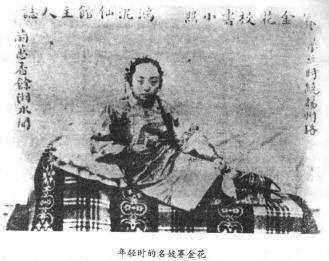 http://www.secretchina.com/news/articles/4/8/14/70203.html pointed out i) that the allied forces killed 1700 "boxers" at King Zhuang-wang's Residency; ii) that the French had driven a crowd of Chinese into an alley where they shot to kill for 15 continuous minutes; and iii) that the allied forces massacred the Chinese who were hired to bury the dead bodies. (Should not be a surprise at all to find such evil human nature among the allied forces, since wars are always a cruel killing game.)
In Peking, the allied forces swelled to a total of 100,000 as a result of the arrival of the German reinforcements.
German Emperor [Kaiser] Wilhelm II and Alfred Graf von Waldersee, in order to loot China further, declared that the war was not over with the fall of Peking.
On Aug 19th, 1900 (Gregorian), Alfred Graf von Waldersee departed Berlin, on Sept 18th (Gregorian), arrived in HK, and on Oct 17th (Gregorian), Alfred Graf von Waldersee entered Peking with a grand ceremony held by the allied force. Days earlier, while in Tientsin, Alfred Graf von Waldersee refused to see Manchu minister Li Hongzhang for the truce talks.
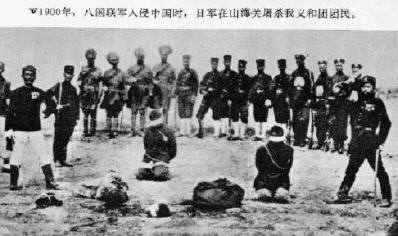 German Commander Alfred Graf von Waldersee, who was said by the Chinese lackey to have restrained the German army's pillage as a result of sleeping with 'distinguished prostitute' Sai Jinhua [Choi Gum Fa], organized some sweeping campaigns throughout the Peking outskirts, reaching as far as the Shanhaiguan (Mountain and Sea) Pass and Qinhuangdao to the northeast, the Baoding & Zhengding areas to the south,
and the Shanxi Province border areas to the west.
On Sept 30th, 1900 (Gregorian), Alfred Graf von Waldersee led the allied forces, mostly from his 20,000 German soldiers, to the Shanhaiguan Pass and Qinhuangdao for sake of frustrating the Russian ambition as well as securing the coastal city as a logistics center.
Near the Shanhaiguan Pass, the Germans and the Japanese were shot into photos in their executions of the Chinese "boxers".
In Tientsin, on Oct 12th (Gregorian), Alfred Graf von Waldersee mobilized the French, the British and the Italian armies for a campaign against Baoding to the south, and occupied Baoding 10 days later.
Alfred Graf von Waldersee ordered ransacking throughout the Baoding city, with pillaging extended to Zhengding, Wanxian, Yongqing, Laishui and Yizhou counties.
To the north, Alfred Graf von Waldersee organized the Austrian and Italian armies in campaigning against Zhangjiakou (Kalgan in today's Inner Mongolia), pillaging Zhangjiakou and through the counties of Changping, Huailai, Yan'qing, and Xuanhua for over 20 days.
To the west, Alfred Graf von Waldersee mounted a campaign against Shanxi Province in Jan-April (Gregorian) of 1901.
With the French participating, Alfred Graf von Waldersee attacked the areas of Guangchang, Wutai, Niangziguan and took over the two passes of Niangziguan and Gu'guan.
German Commander Alfred Graf von Waldersee, who was said by the Chinese lackey to have restrained the German army's pillage as a result of sleeping with 'distinguished prostitute' Sai Jinhua [Choi Gum Fa], organized some sweeping campaigns throughout the Peking outskirts, reaching as far as the Shanhaiguan (Mountain and Sea) Pass and Qinhuangdao to the northeast, the Baoding & Zhengding areas to the south,
and the Shanxi Province border areas to the west.
On Sept 30th, 1900 (Gregorian), Alfred Graf von Waldersee led the allied forces, mostly from his 20,000 German soldiers, to the Shanhaiguan Pass and Qinhuangdao for sake of frustrating the Russian ambition as well as securing the coastal city as a logistics center.
Near the Shanhaiguan Pass, the Germans and the Japanese were shot into photos in their executions of the Chinese "boxers".
In Tientsin, on Oct 12th (Gregorian), Alfred Graf von Waldersee mobilized the French, the British and the Italian armies for a campaign against Baoding to the south, and occupied Baoding 10 days later.
Alfred Graf von Waldersee ordered ransacking throughout the Baoding city, with pillaging extended to Zhengding, Wanxian, Yongqing, Laishui and Yizhou counties.
To the north, Alfred Graf von Waldersee organized the Austrian and Italian armies in campaigning against Zhangjiakou (Kalgan in today's Inner Mongolia), pillaging Zhangjiakou and through the counties of Changping, Huailai, Yan'qing, and Xuanhua for over 20 days.
To the west, Alfred Graf von Waldersee mounted a campaign against Shanxi Province in Jan-April (Gregorian) of 1901.
With the French participating, Alfred Graf von Waldersee attacked the areas of Guangchang, Wutai, Niangziguan and took over the two passes of Niangziguan and Gu'guan.
The Russian Invasion of Manchuria
Meanwhile, the Russians had dispatched six columns of cavalry troops through Manchuria since July, after the ethnic cleansing of sixty-four Chinese settlements to the north of the Amur River. Ethnic cleansing continued against the Chinese throughout the Russian Far East.
Alfred Graf von Waldersee, after weighing the Russian ambition for Manchuria, objected to the water-melon partitioning scheme as well as called off Kaiser Wilhelm II's original plan for securing coastal Yantai as the German sphere of influence.
German commander Alfred Graf von Waldersee was said to have quit the idea of conquering China after measuring the size of Chinese males going through a city gate to derive a conclusion that still too many physically-fit Chinese were available to cause trouble for the invasion forces.
Chinese lackies and traitors still cited prostitute Sai Jinhua [Choi Gum Fa] as a "patriotic" woman who dissuaded the German from partitioning China - without understanding the behind-the-back workings of the British career customs officers who recommended to the British and American government the policy of safeguarding the Open Door Policy, a policy that the new Japanese prime minister adopted in September 1900 -- which subsequently aborted the American secretary of state's order to have the Americans grab a port in Fujian as part of the planned partitioning scheme.
What is ludicrous will be the following:
http://www.beijingportal.com.cn/7838/2004/12/10/1820@2417055.htm reported that Chinese film maker, Huayi Brothers, planned to shoot "The Legend of Sai Jinhua" at a cost of 45 million U.S. dollars.)
Li Hongzhang relied upon the Russians in exerting pressure on the Germans.
On the night of April 17th (Gregorian), Alfred Graf von Waldersee and prostitute Sai Jinhua were said to have jumped out of their bed when a fire broke out in the Yiluan-dian Palace inside of the Forbidden City. Alfred Graf von Waldersee's attache tactician died inside of the asbestos-made mosquito tent during the fire per Cai Dongfan. Alternatively speaking, the Germans ransacked the palace and set it on fire to cover up the notoriety.
In May (Gregorian), Alfred Graf von Waldersee reported to Germany for a termination of the "allied force command center" as well as evacuation of the "German Relief Expedition Force".
Alfred Graf von Waldersee left Peking on June 3rd (Gregorian) and later died in Hanover three years later.
The Boxers' turmoil, concluded by the 'Xin Chou Treaty' or the 'Boxer Protocol of 1901' on Sept 7th of 1901 (Gregorian) with 11 (not 8) countries, would cause China a loss of 450,000,000 taels of silver which was to accrue to 982,000,000 taels with interests included throughout the scheduled installments for 39 years.
The damages to China's spirits unsurpassed in history, the Chinese people had to endure 39 years of hardship and disasters, only to endure another round of sufferings during the 1937-1945 Japanese Invasion.
The 'Boxer Protocol of 1901' also spelled out the terms of i) allowing the foreign military forces to be stationed in the capital and the coastal area; ii) prosecuting the Manchu government officials for their role in the Boxer rebellion; iii) suspending the arms imports into the country for two years; iv) dismantling the batteries at the Dagukou fort and the fortifications along the Tientsin-Peking line; v) suspending the imperial examinations for implicated ministries for five years; vi) dispatching the special emissaries to Japan and Germany for condoling on the deaths of legation personnel; vii) rebuilding the foreigners' tombs; viii) decreeing that no anti-foreign acts or speech be allowed.
The figure of 450,000,000 taels of silver was imposed on China by the allied powers to mean an insult: every one single Chinese, as a member of the 450,000,000 population, must pay one tael or ounce of silver.
(In 1943, the 'Boxer Protocol' was nullified after a total payment of 670 million taels of silver.)
Wu [no] Wang [forgetting] Zai [at] Ju [the Ju fort]
In Commemoration of China's Fall under the Alien Conquests in AD 1279,
AD 1644 & AD 1949
China was time and again invaded and raped by the "aliens" - whom this webmaster considered to be
i) the Mongols,
ii) the Manchus, and
iii) the Soviet proxies, consecutively.
For the future sons of China to read the following poem, see whether someone of you would revive the spirits of China,
and some day do some thing to reverse the fate of China, i.e., one billion coolies and slaves toiling to death for the multinational corporations and banksters under the supervision of the 'housekeeper' - the Chinese Communists or the former Soviet proxies.
(The Japanese invasion [AD 1931-1945], similar to the Jurchen invasion prior to the Mongol conquest, did not doom China as a whole as the Mongol conquest and the Soviet-ChiCom conquest subsequently did.)
The communists had conquered China owning to the key battle success in Manchuria, which was the result of treacheries on the part of Wei Lihuang, i.e., the government troops' commander-in-chief in Manchuria, a treachery that was comparable to Soong Dynasty prime minister Jia Sidao's abandoning to the Mongol the Xiangyang city [which was under siege for 4-5 years] and Ming Dynasty general Wu Sangui's betrayal of the Mountain and Sea Pass to the Manchus.
Wei Lihuang, with the communist mole by his side from the days of the resistance war, overrode General Wang Tiehan's proposal and made the government army into the sitting ducks in the isolated pockets and cities of Manchuria, for the communist army to attack.
Namely, Wei Lihuang allowed the communist army to take the transcendental secret manoeuvre to ship thousands of artillery to the foot of the Jinzhou city wall under the assistance of the Soviet railway army corps.
General Wang Tiehan suggested that the Changchun garrison troops could break out towards Mukden to the south as intelligence had shown that the communist army had disappeared along the trunk line of Changchun-Jirin-Mukden.
Only the 52nd Corps, that was hoodwinked by Wei Lihuang into attacking towards Shenyang [i.e., Mukden] as the relief troops but impeded by the communist army halfway for lack of coordination between Wei Lihuang and the communist army, managed to return to wrestle back the Yingkou port to escape the Manchurian battleground via sea.
A part of the Youth Army division, which broke out of the Mukden siege, fought its way along the Liao-xi Corridor to arrive at the Mountain and Sea Pass.
We don't need to remind the readers that the communist army was a motley group of mercenaries including about 250,000 ethnic-Korean Japanese Kwantung Army diehards per Kim Il-sun plus the Japanese 8th Route Army (i.e., the Japanese medical staff, airforce staff, officer corps, and tank and artillery operators), the ethnic-Taiwan Japanese Kwantung Army, the Outer Mongolian cavalry army, not counting the Soviet railway army corps.
According to the Soviets, the 'railway' tag was a guise for intervening in the Chinese civil wars, namely, the cloak of secrecy under which the Soviets orchestrated the historical Soviet conquest of China to fulfill Stalin's mantle that pro-Soviet regimes must be established in all territories that the Soviet Red Army ever stepped on, no matter Europe or Asia.
That is, Soviet military staff, not merely Soviet military advisers, fought the Chinese civil wars in Manchuria as the railway staff.
Ivan V. Kovalev, as Stalin and All-Union Communist Party (Bolsheviks)'s plenipotentiary to the Chinese Communist Party (CCP), was sent to China for directing the civil war as a railway czar.

George Kennan's Fallacious Disclaim of Soviet Instigation and Bankrupt 'Long' Containment View:
George Kennan
naively discounted
the Chinese communist revolution as "part of the Soviet system" and asserted its victory to be an
exception to the Soviet "military intimidation or invasion" and not a result that could be ascribed
"primarily to Soviet propaganda or instigation" (American Diplomacy, p. 119. The U of Chi Press 1951,
expanded edition).
George Kennan's bankrupt 'long' view as to communism was "a long-term, patient but firm and vigilant containment", which was to seek solutions in the "historical"
context, namely,
the "Russian or the oriental mind" of the "Russian-Asiatic world", something the communist China twin shared, that was
seemingly perceived as an innate matter that could not be overcome.
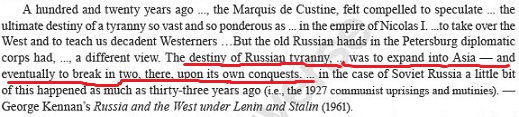
|
|
|
|
|
TEN TRAINS EQUIVALENT AMERICAN LEND-LEASE WEAPONS THAT STALIN & RUSSIANS GAVE TO MAO & CHINESE COMMUNISTS;
FORTY SHIPS EQUIVALENT QUANTITY OF TANKS & CANNONS, BOTH AMERICAN-MADE & JAPAN-MADE
3300 TONS OF PETROL FROM RUSSIANS IN 1947 ALONE; PLUS 2000 TONS OF DIESEL, 1000 TONS OF PLANE FUEL, 700 TONS OF EXPLOSIVES & 2000 TONS OF MACHINERY OIL
30000 TONS OF PETROL FROM RUSSIANS IN 1948; PLUS 1000 TONS OF PLANE FUEL, 5000 TONS OF KEROSINE, 3000 HEAVY WEIGHT TRUCKS & 150 ARTILLERY TRACTORS
DEATH OF MILLIONS OF YELLOW MEN, & POSSIBLY MORE IN THE FUTURE WAR AGAINST TAIWAN !!!!!
Reference: see the writing by James Perloff China Betrayed Into Communism on Friday, 24 July 2009 at
http://www.thenewamerican.com/index.php/history/world/1464
August Storm lend-lease weapons ended up in Mao's hands.
"At the Teheran and Yalta wartime conferences, however, Roosevelt asked Stalin if he would break his pact with Japan and enter the Far East war. Stalin agreed, but attached conditions. He demanded that America completely equip his Far Eastern Army for the expedition, with 3,000 tanks, 5,000 planes, plus all the other munitions, food, and fuel required for a 1,250,000-man army. Roosevelt accepted this demand, and 600 shiploads of Lend-Lease material were convoyed to the USSR for the venture. Stalin's Far Eastern Army swiftly received more than twice the supplies we gave Chiang Kai-shek during four years as our ally.
"General Douglas MacArthur protested after discovering that ships designated to supply his Pacific forces were being diverted to Russia. Major General Courtney Whitney wrote: 'One hundred of his transport ships were to be withdrawn immediately, to be used to carry munitions and supplies across the North Pacific to the Soviet forces in Vladivostok.... Later, of course, they were the basis of Soviet military support of North Korea and Red China.'
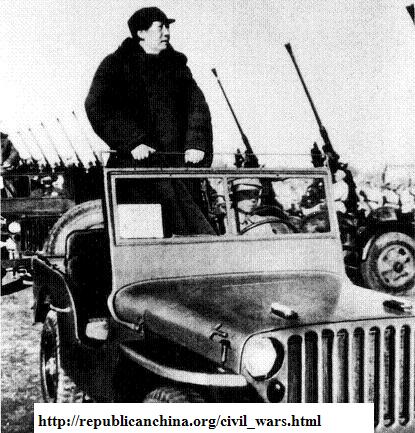
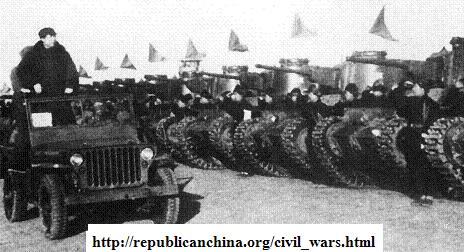
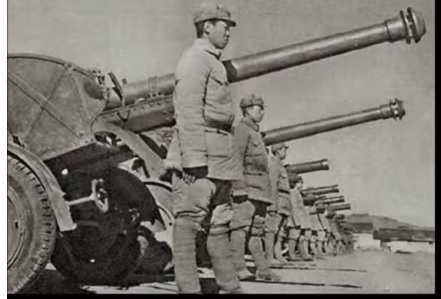
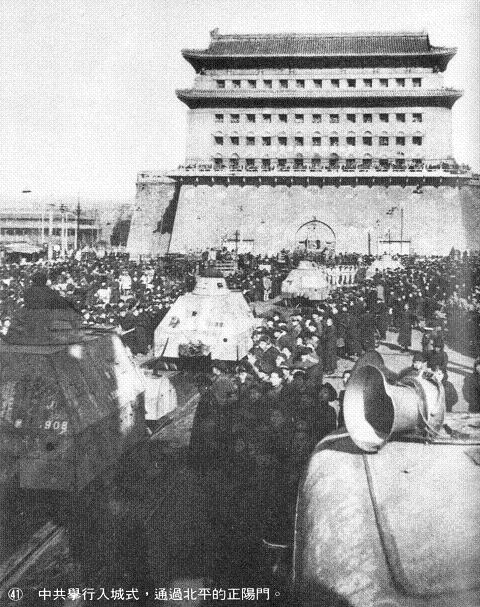
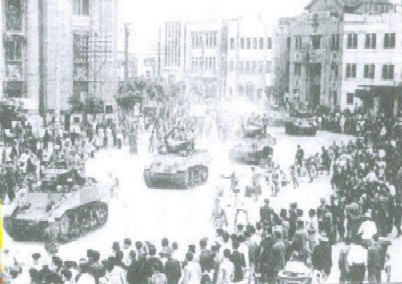
|
* In Commemoration of China's Fall under the Alien Conquests in AD 1279,
AD 1644 & AD 1949 *
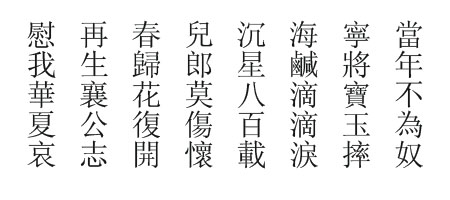
At the time [when China fell under the alien rule], refusing to be slaves,
[our ancestors] died as broken jades rather than being alive as an intact tile.
Tears, which tasted like the sea water, dripping down [the face] one by one,
For [China] the star [that fell from the sky] had been down [at the bottom of the sea] for 800 years.
Sons, please do not get saddened in the hearts,
For as the flowers did, they blossom when the spring returns.
When the [hegemony lord] Xianggong's swear is to be revived again,
The sorrow of the Flowery Xia Chinese would be soothed.
|
Written by Ah Xiang
|
|
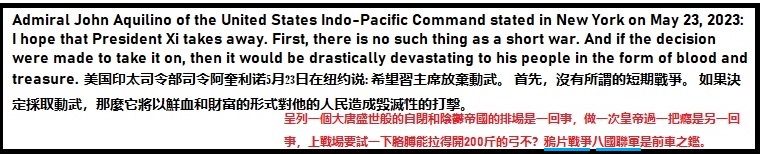
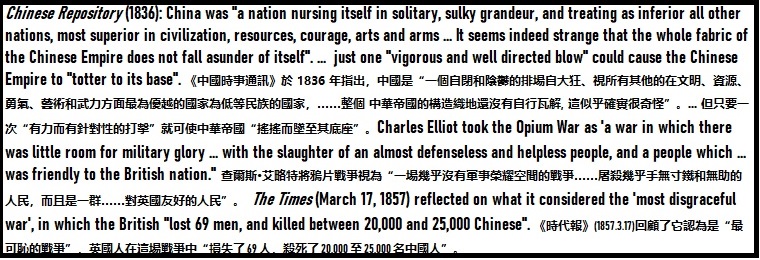

 ***
***


![Though, Anna Wang [Anneliese Martens], in her memoirs, expressed jealousy over Gong Peng by stating that the Anglo-American reporters had flattered the Chinese communists and the communist movement as a result of being entranced with the goldfish-eye'ed personal assistant of Zhou Enlai](GongPeng.jpg)