Sinitic Civilization-Book 1
Sinitic Civilization-Book 2

Tribute of Yu

Heavenly Questions
Zhou King Muwang's Travels

The Legends of Mountains & Seas
The Bamboo Annals - Book 1

The Scourge-of-God-Tetralogy:
From the Khitans to the Jurchens & Mongols: A History of Barbarians in Triangle Wars and Quartet Conflicts
(available at iUniverse;
Google;
Amazon;
B&N)
|
|
THE HUNS - PART II
Attila the Hun
The popular history account says
that the Western Huns pushed their way into Europe after being pressured by the Ruruan or Rouran (Juan-Juans).
http://www.fernweb.pwp.blueyonder.co.uk/mf/people.htm claimed that the Huns "went north-west in search of new homes. They found their way into the valley of the Volga and, in the second half of the 4th Century, attacked the Alans (a people related to the Sarmatians, who lived between the Volga and the Don). After routing the Alans, they then went on to conquer the Ostrogoths and drive the Visigoths westwards." (The Sarmatians, famous for the female warriors who had a tradition of ironing out one nipple of baby girls at birth, could be the so-called 'Nü Guo', i.e., the women statelet.)
The timing of the Hunnic western thrust in the 4th century A.D. does not conform to the Hunnic Empire splitting in 51 B.C. or 89 A.D., respectively.
In Han Emperor Wudi's times, the Huns, under the Chinese counterattack, lost the Ordos in 127 B.C., lost the Western Corridor in 121 B.C., and suffered a defeat at Langjuxu-shan Mountain in today's Outer Mongolia in 119 B.C.
Western history books said that the Hunnic empire split into two hordes in 51 B.C., with the Eastern Horde subject to China.
The western Huns they referred to here must belong to Hunnic 'Chanyu Zhizhi' who, around 53 BC, hearing
that 'Huhanye Chanyu' obtained the support of the Han Chinese, sent his son to the Han Court as a hostage as well. (Hunnic 'Chanyu Zhizhi' and Huhanye Chanyu divided the land north and south of the deserts in 57 B.C.)
Later, Zhizhi, being afraid of the Han Chinese for his killing the Han Dynasty emissary, relocated to the west,
namely, the ancient Jiankun Statelet.
This relocation also had to do with the request from the Kangju [more Bukhara than Samarkand] king who intended to attack the Wusun Statelet with Huns' assistance.
Then governor-general Gan Yanshou, in 36 B.C., answered the call from Wusun and sent 6 columns of armies to defeat Kangju and 'Zhizhi Chanyu'.
Zhizhi's descendants would later call themselves by the Kirghiz (Kyrgyz), a mutation in the pronunciation of 'Zhizhi'.
Huhanye Chanyu subsequently sought marriage with Lade Wang Zhaojun in 33 B.C. to make peace with China.
In A.D. 48, the new Hunnic Empire, which revived as a result of Wang Mang's usurpation of Western Han Dynasty, dissolved due to internal fights. In Chinese records, two groups of the Huns would be known again:
the Southern Huns under Huhanye's grandson and the Northern Huns.
In 85 and 88, the Xianbei attacked the Huns.
Around A.D. 89, General Dou Xian, under the order of his empress sister, led a huge army
comprising of mercenaries such as the Xianbei from today's Beijing area and the Southern Hunnic allies, departed Shuofang-jun to attack the Northern Huns, and had a decisive battle against the Northern Huns at the Jiluoshan Mountain.
The joint army was commanded by Geng Bing, Dou Xian and Deng Hong, together with an allied army of 30,000 Southern Huns.
The Han army chased the Huns deep into the northwestern territories, defeated 81 Hunnic tribes, and captured over 200 thousand Huns.
The History of Northern Dynasties recorded that Chanyu of the Northern Huns fled westward to the ancient Kang-chu Statelet,
while the remaining weak and elderly Huns relocated to the north of the Chouci [Qiuci] Statelet in today's Chinese Turkestan.
In spring 90, another campaign was launched against the Northern Huns with the assistance of the Southern Huns. The joint army killed 8000 Huns.
In A.D. 91, General Dou Xian mounted another deadly campaign against the Northern Huns. Geng Kui defeated and expelled chanyu of the Northern Huns. The Northern Huns hence began a migration that would lead to the chain reaction to the West.
Scholar Luo Xianglin stated that in A.D. 91 [i.e., the 3rd year of Emperor Hedi's Yonghe Era], General Dou Xian mounted another deadly campaign against the Northern Huns.
The Northern Huns hence began a migration that would lead to the chain reaction to the West.
The remnant Northern Huns selected a brother of chanyu, rightside Guli king Yu-chu-jian, as the new leader.
In 92, Wang Fu and Ren Shang attacked and defeated Yu-chu-jian. In 93, Wang Fu attacked Yu-chu-jian again.
The Northern Huns, being thoroughly defeated, sought asylum with the Southern Huns.
In 94, the Northern Huns rebelled and made a Southern Hun chieftain, Feng-hou, as the Northern Hun chanyu. Eastern Han Dynasty army, together with the Xianbei and Wuhuan, with a total army of 40,000, attacked Feng-hou, chasing him out of the Southern Hun territory. In 107, Feng-hou moved to control Chinese Turkestan by taking advantage of the Chinese abandoning the governor-office in the western territories. The Xianbei, who expanded to the Western Corridor area in the wake of the Hunnic decline, defeated Feng-hou in 118 and took over the Hun remnants.
From A.D. 91 to the 4th-5th centuries, the traces of the Western Huns were scarcely known to the Chinese.
On record would be the stories of Ruruan [Rou-ran] and Yue-ban (Nie-ban), as well as the Hunnic attack against Su-te (Sogdiana) and An-cai (Alans).
The Ruruans, in the eyes of the Tuoba, were like the Huns even though the Ruruan founder was related to the Tuoba, that is, more of the Xianbei heritage. The Yue-ban (Nie-ban) Huns, who dwelled further west than the Ruruans, plus those people the Ruruans pushed out to the west, were of course of Hunnic lineage. The Gao-che people, who were recorded to have almost the same language as the Huns, were even more authentic, apparently stayed behind to become ancestors of the Huihe (i.e., the Uygurs).
In the Turk/Uygur section, we covered the Ruruan origin and their absorbing the remnant Huns and the Gao-che people.
Western records showed the Attila Huns were extremely barbaric, unlike their Asian kinsmen who,
after hundreds of years of co-living with the Chinese and generations of inter-marriages with the Han Dynasty Chinese royals,
had become very much like the semi-sedentary, civilized and 'cooked' [against raw] quasi-Chinese.
Scholar Luo Xianglin stated that the Huns split into two groups: the Yeda [i.e., the so-called White Huns] and a western Hunnic offshoot,
with Ye-da [White Huns] posing threat to Sassanian Dynasty to the northeast of today's Iran,
and the Hunnic western offshoot moving to the south of the Ural Mountain.
Luo Xianglin further stated that the Western Huns, under Balamir, due to a famine, relocated towards Europe in A.D. 372, conquering the Eastern Goths and driving away the Western Goths. Balamir, after conquering the territories north of the Danube, received the tributes from Roman emperors. Balamir's son would be Attila who, with 700,000 army, campaigned against the East Roman Empire in A.D. 447
and attacked the Western Roman Empire in A.D. 450. (The Chain reaction: Western Roman Emperor Odoacer was driven off by the Goths in A.D. 476.)
In Bei Shi, there was a record to the effect that Su-te-guo, which was located to the west of the Pamirs, was the ancient An-cai (Yan-cai) statelet, with an alternative name of Wen-na-sha. They dwelled next to the big lake ("Da-ze", ? the Aral Sea or the Caspian further to the west), with locality to the northwest of Kang-ju (Samarkand). Both Bei Shi and Wei Shu further stated that the Huns killed their king and took over their country, with the 3rd generations Hunnic King carrying the name of Hu-ni; and at [Northern] Wei Emperor Gaozong's time, about A.D. 452, Hunnic King Hu-ni sent an emissary to Tuoba's [Northern] Wei Dynasty to pay ransom in exchange for the release of merchants who were caught by the Tuoba Wei Army which attacked and took over Guzang (Wuwei on the Western Corridor, to the west of the Yellow River).
Japanese scholar Shiratori Kurakichi, while accepting most of the accounts here, disputed the Chinese record as having possibly mixed up the two different countries of An-cai (Yan-cai) and Su-te.
What was most likely was that the terminology Su-te was generic, and while Su-te might originally designate the area that was known as Kang-ju (more Bhukara than Samarkand, or than Sogdiana of today's Tajikistan), An-cai came to be called by Su-te in later times. (Bei Shi was definite about the estimated distance of the two countries from "Dai", namely, the Tuoba's homeland in North China.)
Shi Ji, which had the oldest record on An-cai, stated that the lake it bordered must be the North Sea.
In Hou Han Shu, An-cai and Su-te were separately listed as two countries.
According to Hu Guang and Yan Shigu, An-cai was the same as He-su in Chen Tang Biography of Han Shu, which was equivalent to today's word Ossetia.
From 473 and later, the people from the former Su-te country came to China in the name of Ji-wan-jin (i.e., Kang-guo or Samarkand), while a separate Su-te country paid visits to China continuously from 437 to 479.
In the Chinese capital, as recorded by Yang Xuanzhi's "Luoyang Qielan (monasteries) Ji (records)", there were guesthouses set up for different ethnic groups, including those for Su-te merchants.
In Wei Lüe, it was recorded that An-cai, alternatively called Ah-lan, was formerly subordinate to Kang-ju. (Hou Han Shu stated that An-cai was also named Ah-lan-liao, typo-written as Ah-lan-qing in some cases, while San Guo Zhi stated that An-cai was also named Ah-lan, with a claim that it was then independent of Kang-ju.
Yang Xianyi took what Wei Lüe said about a Liao-guo state was what Hou Han Shu termed as the A-lan-liao state, which was a vassal to the Alans, stating that the Alans merged An-cai in the first century A.D. and named the An-cai country as A-lan.
Miao Yousun (1851-1894) in his Russia travelogue wrote the Alan country as A-lan-xi.)
Yue-ban (Nie-ban) Huns
The Southern Huns became a sedentary people who relocated to the northern Chinese prefectures where they multiplied into millions to pose a threat to Jinn Dynasty (AD 265-316) in the 3-4th centuries. The Hunnic-Xianbei rebellion against the Jinn Chinese led to the turmoil in northern China called the 'Sixteen Nations' or the 'Five Hu [Nomadic Groups] Ravaging China'. Ultimately, Tuoba assumed power in northern China after defeating the Xianbei and the Huns. The Ruruans, who were related to the Tuoba, were very much kin of the Huns who had fled to the Altai Mountains after losing the wars to the Tuoba -- since the Tuoba, as the westernmost Xianbei, very much shared the customs of the Huns [and the later Turks] as far as the hair style was concerned [whereas the Xianbei and Wuhuan were recorded to have cut hair]. There is no reference to the Hunnic thrust towards the west in the Chinese history.
In the west, descendants of those Huns set up a country called Yue-ban (Nie-ban) (a word that was used for Nirvana in Buddhism),
in the ancient Kang-chu [or Kang-ju] territory which was to the northwest of the ancient Wusun Statelet.
To the northwest of Kang-ju, the Huns would take over another statelet called Su'te (Sogdiana, i.e., what we discussed earlier to be the ancient statelet of An-cai that had the alternative name of Ah-lan [the Alans]).
The Wusun Statelet would later relocate into the Pamir Mountains under the Ruruan attacks.
The interesting thing to point out is that the Chinese chronicles had apparently adopted Buddhist-inclined names for various barbarian statelets to the west, including the Nie-na or Nirvana Statelet.
The Buddhism, having spread across Central Asia and towards China with the Yuezhi & Kushan facilitation, would die out with the emergence of the Turks and their conversion to Islam centuries later.
The Yue-ban (Nie-ban) Huns despised the Ruruans for their hygiene. The Huns thought they were much more civilized than the Ruruan. This is especially true of the Southern Huns who had relocated to the Hetao Areas or the Ordos Plains and further to today's Shanxi Province and became semi-civilized and semi-Sinicized.
Further, the records state that the Yue-ban (Nie-ban) Huns had 200 thousand people, and the customs were similar to the Gaoche Statelet. They liked tidiness and would brush teeth and bathe three times a day prior to eating foods, and they cut their hair to the level of eyebrows. They knew how to get powder out of the 'fire stones'. The Yue-ban (Nie-ban) people befriended the later Ruruans. At one time, the Yue-ban (Nie-ban) King led about 1000 people on a pilgrimage to see the Ruruan Khan, but he cancelled his trip after going into the Ruruan territories to see that the Ruruans did not cut hair nor wash hands and that the Ruruan women used tongue to lick food. The Ruruan Khan, hearing the cancellation of the trip, chased the Yue-ban (Nie-ban) Chanyu, and hence they became feuds.
In light of the above record, we would have to say that the Huns did not sound like those barbarians under Attila at all.
The so-called 'Western Huns' invaded Europe from the Central Asian steppe. http://www.fernweb.pwp.blueyonder.co.uk/mf/people.htm has an excellent account of the Dark Age in Europe, covering the barbarians of the Alamanni, the Anglo-Saxons, the Franks, the Gepids, the Goths, the Lombards and the Vandals as well as the Huns and the Avars.
They were said to have invaded the lower Volga valley c.372 A.D. and advanced westward, pushing the Germanic Ostrogoths and Visigoths before them. They drove the Visigoths across the Danube into the Roman Empire and caused the chain reaction that led to the defeat of the Roman army under the Emperor Valens at Adrianople in 378 AD. Attila the Hun (circa 406-53), king of the Huns (circa 433-53), killed his brother and then embarked on attacks in all directions. An unsuccessful campaign in Persia was followed in A.D. 441 by an invasion of the Eastern Roman Empire, i.e., the Byzantium Empire. He raided Thrace in A.D. 442. In A.D. 447, he advanced through Illyria and devastated the region between the Black Sea and the Mediterranean Sea, and defeated Theodosius II, the Byzantine emperor, who fell dead from the horseback.
When Rome refused in A.D. 450 to make further tribute payments, Attila attacked the West. He crossed the Rhine, fought the Battle of Châlons in Gaul in 451 AD, but was defeated. He then rerouted towards Italy in 452 AD, crossed over the Alps, swept through Milan and northern Italy, only to retreat after a pleading from Pope Leo I. After Attila's death in 453, their later movements are little known; some speculated that they disappeared into today's Hungary and that's why the name Hungary came from. Some historian said that the name Hungary was derived from the Magyars who were treated as just like the Huns. Some accounts said the remaining Huns were absorbed into the later Avar Empire of the 6-9th centuries. The Avars were known to the Chinese as the Ruruans or the Juan-Juan. The Ruruan Empire was destroyed by the Turks around A.D. 546-553.
The Hunnic remnants may also be left in the name of some German mercenary army, too. During the invasion of Peking by the Eight Allied Nations in 1900, the German soldiers were instructed to crack down on the Boxers like the 'Huns'.
Atilla's Huns are not pure Huns as many historians said. He had all tribes of people conquered work under him, and his army had comprised of the Slavs and other Germanic tribes.
In Byzantium and the Balkans, Attila's Huns were constantly referred to as the Scyths (Scythians), a group of Eurasian nomads who pillaged Persia and Greece thousand years earlier.
The Roman Legions Under the Huns & Living In China
Charles Hucker claimed in China's Imperial Past (page 129) that some Roman legionaries could be found in the ranks of the Zhizhi Chanyu Huns who relocated to the Jiankun Statelet in 51 BC. I had received inquiries from various readers who are interested in authentication. Many years ago, I did read about citation of descendants of the Roman legionaries in western China. A good source will be linked at http://dawning.iist.unu.edu/china/bjreview/98Nov/bjr98-46-13.html.
http://www.epochtimes.com/gb/2/6/10/n195575.htm (link to be periodically purged by the host) carried an article written by Zang Yongwen in regards to descendants of the Roman legionaries in 'Zhe Lai Village', Yongchang County, Gansu Province. It mentioned that the discovery of the Roman descendants was first reported on July 23rd, 1999, by a newspaper called Xin Min Wan Bao (i.e., New People Evening Paper of Shanghai). China's CCTV had a special report on those Roman descendants in year 2002. DNA studies conducted by China's Science Academy had confirmed that those villagers did possess the Caucasoid heritage.
Zang Yongwen stated that Han Dynasty had altogether three cities named after foreign countries and that Lijian, taken as equivalent to Alexandria of Egypt, was one of the three. Zang Yongwen further cited the research by modern historian Guan Yiquan of Nanking University in using the comments on Han Shu by Tang Dynasty's Yan Shigu and the comments on Han Shu by Qing Dynasty's Hui Dong. The [speculative] conclusion is that the Lijian people of Gansu were Roman mercenaries relocated to Yongchang County by Han Dynasty.
(After reading Zang Yongwen's writing, I went back to Ban Gu's history, Han Shu, and located one sentence, about six Chinese characters, stating that "Lijian, [Usurper Emperor] Wang Mang called it Jie-lu." This was buried in the paragraph on Zhangye Commandery, a land taken over from Hunnic King Hunye, in the book on Geography.)
The historical context of the Roman-Parthia Wars:
http://www.parthia.com/parthia_history.htm#Roman_Contact
had descriptions of the Roman wars with Parthia. The speculation is:
Marcus Licinius Crassus (60-53 B.C., member of the 1st Triumvirate, co-ruler with Pompey and Caesar), who led the 45,000 strong army, was executed by his captivators after losing the battle at Carrhae against the Parthians. His son, Publius Licinius Crassus (Moneyer, c. 55 B.C.), in charge of a cavalry, might have broken through the Parthian line with a remnant army of about 6000, and they fled to the Yuezhi people for asylum and worked for the Yuezhi as mercenaries. Some of those Roman legionaries ended up in Zhizhi Chanyu's Huns. In 36 BC, a Han general by the name of Chen Tang, who originally served under Governor-General Gan Yanshou, took the initiative in attacking Zhizhi Chanyu Huns at a place close to present Dzhambul in Kazakhstan. History writer, Cai Dongfan, also mentioned the similar records in regards to Chen Tang, stating that Zhizhi Chanyu Huns had defended the city with a tactic called 'Yu Lin Zhen', namely, "the soldiers were drilling with their round shields to form a defensive screen in such a way as to appear like the scales of fish." This strange army had surrounded the castle with huge logs which was also a Roman tactic.
(To attribute the 'Yu Lin Zhen' tactic to the Roman army would be simplistic. In ancient China of the 1st millennium B.C., as recorded in Zuo Zhuan, there was wide usage of the 'yu [fish] li [?scale] zhen [position]' for the infantry and chariot armies.)
The Hunnic Split of 51 B.C. had to do with five Hunnic chanyu competing with each other. During the reign of Emperor Yuandi, 48-32 BC, one of the Hunnic kings, 'Huhanye Chanyu', surrendered to the Chinese. (In 33 BC, 'Huhanye Chanyu', came to the Han capital for the second time and was married with lady Wang Zhaojun, a court maid of honour.)
Zhizhi Chanyu, afraid of the collusion of Huhanye Chanyu and Han China, decided to relocate westward to the Jiankun Statelet when the Kang-ju king invited Zhizhi for sake of countering the Wusun rival. Zhizhi Chanyu and the Kang-ju King exchanged their daughters for wives of the opposite parties, and in a matter of years, grew in strength, posing a threat to Wusun (Ili) and Dayuan [Dawan] (Fergana). At the request of the Wu'sun King, Chen Tang organized 6 columns of armies by calling on the Chinese farming soldiers in the west and the Wusun allies. Chen Tang totally defeated Zhizhi Chanyu and killed the chanyu. Chen Tang further burnt down the citadel that Zhizhi Chanyu built on a river bank. ('Zhizhi Chanyu' descendants, namely, the Kirghiz, would stage a comeback in the 9th century and replaced the Uygurs of Mongolia around 840s AD.)
Chen Tang, for taking the military action without consulting with the Han emperor, was not recommended for promotion till much later. In his article to the emperor, Chen Tang made the famous statement: "Whoever offended the powerful Grand Han Dynasty would be caught and executed no matter how far and away you fled."
The speculation is that those Roman mercenaries serving under Zhizhi were taken prisoners of war and then relocated to China's Gansu Province, i.e., to the Zhelaizhai Village, Yongchang County, Gansu Province.
where they remained for two thousand years. Possibly 1,500 prisoners were brought back to China, with the actual survivors of the 'yu-lin-zhen' infantry defenders much less than the total number of 1,500, of course.
Han Emperor Yuandi (75-33 B.C.; reign 49-33 B.C.) ordered that a separate county named Lijian be set up. Sui Emperor Wendi of Sui Dynasty (AD 581-618) ordered the merger of Lijian with Fanmu County 612 years later.
The above even seemed to coincide with Han Emperor Yuandi's reign years.
Though, the name 'Lijian' was more widely adopted in Central Asia for hundreds of years.
This meant that the 'Lijian' designation was kind of universal, across Central Asia and in western China.
In the ensuing hundreds of years, China recorded a term for a group of mercenaries called by 'Qin-hu' or literally speaking, the Qin[-Dynasty]-titled Hu barbarians.
Since China was called by Qin China and the Roman Empire was called by 'Da Qin' or Qin the Great, there are people who speculated that the Qin-hu mercenaries were actually the Roman legionaries.
While the 'Qin-ren' refugees were recorded to have reached Central Asia, where they helped to dig wells and contribute towards the water irrigation projects, the 'Qin-hu' cavalry mercenaries were speculated to be some 'Lijian' [Roman/Alexandria Roman] legionaries who came to China from Central Asia.
More on this in the future.
Distinction From The Turks & Uygurs
The Turks are recorded to be a group of iron smith or iron slaves working for the Ruruans in the Altai Mountains. The Ruruans were very much kin of the Huns who had fled to the Altai Mountains after losing the wars to the Tobas in China, and in another sense, we could call the Ruruans a third group of the Huns in addition to the Western Huns who invaded Europe and the Eastern Huns who served in Toba's army as well as rebelled against the Toba Wei Dynasty. The Ruruans called the Turks by 'tie nu' (namely, the iron slaves) because the Turks took mining as the main occupation under the rule of the Ruruans. According to the mythic Chinese records, the ancestor of the Turks would be someone with wolf's heritage. It is said that a boy of mixed Hu ethnicity in the Western China prefectures of Ping-Liang was the only survivor of his tribe, with both arms and legs cut off by the feuds. A wolf was responsible for saving the boy. Further, the boy and the wolf had bred 10 children. When the enemies found out about the boy, they killed the boy, but the pregnant wolf fled to the west and born the ancestor of the Turks. The History of the North Dynasties did give two more accounts of Turks' origin. It said the Turks could be the 500 families who fled to the Ruruans when Toba Wei Emperor Daowudi (reign 386-409) defeated the Hunnic Statelet of Juqu in today's Gansu Province. It also said that the Turks could have their origin from a statelet called Suo-guo which was situated to the north of the Huns.
The Turks rebelled against the Ruruans in A.D. 546-553, and they defeated the Ruruans and forced the Ruruan khan into seeking refuge inside of Western Wei. The Turks would succeed the Ruruans in controlling the vast land west and northwest of China. This Turkic empire would be called the Turkic Khaganate (552-744 A.D.), alternatively called Kok Turk. (The Turks could also mean a loosely grouped peoples speaking the same Turkic language, and they could include the Khazars, Pechenegs, Cumans, Sabirs, Saragurs, Kuturgurs, Barsils and Seljuks etc.). The Turks united east and west in A.D. 593, and it would officially end when Huihe (i.e., ancestors of the Uygurs) defeated the Turks and set up the Uygur Kingdom in A.D. 744.
By late time period of Tobas' Northern Wei Dynasty (A.D. 386-533), in A.D. 534, Northern Wei split into Eastern and Western Wei Dynasties. The Turks had, earlier in A.D. 546, helped the Ruruans by cracking down on the Tiele Tribes and absorbing about 50,000 households. Then, the Turks proposed to the Ruruan Khan for a marriage with the princess. The Ruruans cursed the Turks about the marriage, and the Turks killed the Ruruan messenger and cut off relations with their Ruruan master. The Turks then proposed for marriage with Western Wei Dynasty and obtained Princess Changle of Toba-Wei's royal family, certainly with the nodding approval of the forthcoming founder of Northern Zhou Dynasty. The Turks then attacked the Ruruans and forced the Ruruan khan into seeking refuge inside of Western Wei (AD 535-557). The Turks would control the vast land west and northwest of China. The two Wei dynasties would be usurped by Northern Qi Dynasty (A.D. 550-577) and
Northern Zhou Dynasty (A.D. 557-581),
separately. The Turks would force Northern Zhou into handing over the Ruruan
khan whose royal family, numbering 3000, were slaughtered while still inside
the boundary of Northern Zhou. The Turks played Northern Qi and Northern Zhou
against each other for tributes. Northern Zhou, located to the west of
China's central plains, used the Han Chinese "intermarriage" strategy in marrying
their princesses to the Turks, with one princess remarried to the successor
Turk kings three more times. At one time, the Turks and Northern Zhou combined
their forces in attacking Northern Qi, but they were defeated by the Qi army. In the
east of the Gobi, the Turks also defeated the Khitans (said to be descendants of Xianbei, a branch of the Eastern Hu nomads). By the time Sui Dynasty (AD 581-618) usurped Northern Zhou, the Turks, at the request of the queen (previously princess of Northern Zhou) sought revenge by attacking Sui (AD
581-618). After defeating the Turks, Sui pacified the Turks
by promising continuous "intermarriage" with the Turks. When founder Li Yuan of Tang Dynasty
(AD 618-907) rebelled against Sui, he,
in exchange for two thousand horses and five hundred Turk cavalry, would
collude with the Turks by promising the Turks all the gold and women in
the Sui capital after it was to be sacked. Hundred years later, Tang emperor
would request for aid from the Uygur Turks again in quelling the internal rebellion.
In the east, in A.D. 627, the Tiele Tribes, including Xueyantuo, Huihe and Bayegu (Baiyrku), rebelled against the Turks. Turkic Khan Xieli accused Khan Tuli of failing to quell the Tiele rebellion. Being attacked by Khan Xieli, Khan Tuli requested for help with Tang Emperor Taizong in A.D. 628. The next year, A.D. 629, the Xueyantuo tribe proclaimed themselves as a khan and sought alliance with Tang Dynasty. Other Tiele Tribes, like Bayegu, Tongluo and Pugu, also paid pilgrimage to Tang.
The Eastern Khanate experienced a famine and internal revolts broke out. Khan Xieli (grandson of Qimin Khan) was dissatisfied with Tuli's performance in quelling the rebellion, and had a quarrel with Tuli. Khan Xieli arrested Tuli and did not release Tuli for a long time. Later, Tuli surrendered to Tang.
Taking advantage of the Turkic strife, Tang Emperor Taizong sent a huge expedition and defeated the Eastern Turks.
In the west, the Khazar Turks and the Sassanians of Persia first allied to destroy the Hephthalite Empire of the White Huns in 553-68.
The Western Turkic Khanate was dispersed by Tang's westward expansion in 651 AD. The Tibetans would compete with the Tang Chinese for the control of this area. In this area, there would exist Turkic tribes like the Turgesh and the Karlaks (Qarluk), which were more related to the Nine Tiele Tribes. A good understanding of the relationship between the Turks and the Tiele Tribes would be essential to untangling the riddles of the Western Turks who included the so-called Oguz in the east and Ogur in the west.
http://sophistikatedkids.com/turkic/13%20Oguz%20and%20Ogur/OguzesEn.htm had a good exploration into the issues of OGUZ & OGUR, and it claimed:
1) that Uch-Oguzes would be "3 Oguz" or Karluks;
2) that the word Turk was a "political name";
3) that "in the documents of the period of rule Tang (after 618, annual chronicles Tang-Sy and Kiu Tand Shu with four different translations), the Nine Tribes, called in the inscriptions 'Nine Oguzes', sometimes 'Nine Türkic Tribes (Kok-Türks)' are mentioned as 'Türks of Nine Tribes (Kok -Türks)', and sometimes as 'Nine Toles Tribes', Nine Toles Oguzes means the same, as Nine Kok-Türk Oguzes. The roots of Kok-Türks are The Oguz tribes";
4) that "in 630, in the area of the rivers Tolga and Selenga, Oguzes jointed into a union, creating a Nine-Oguzes Khanate. Oguzes, defeated by Ilterish in 682 (in the war on the Cow lake) were in this status. Later, at tomb of Ilterish-Khagan, was installed the monument (balbal) to Baz - Khagan, the ruler of the Oguz state, who died in this battle ... 682 Concerned with Kutlug progress, Oguzes, living on coast of Selenga, made an attempt of cooperation with Chinese and Kitans ... 682 The attack, initiated on the advice of Tonyukuk, on a coast of the Cow lake, was successful and has removed the Oguz threat ... In 6-9 centuries Oguzes lived in the area of the river Selenga ... 691 In the beginning of the Uigur Khanaate the Uigur leader, Moen-Chur, still being a 'Tegin', was in the head of the Oguzes. A bit later the Oguzes rose against the Uigur Khanaate. This time they were a part of the Eight Oguzes. In Burgu and on the bank of Selenga Moen-Chur subjugated Oguzes, who joined with Otuz-Tatars, 'Thirty Tatars'. Oguzes, crossing Selenga, retreated. After that there is no sufficient information on the destiny of Oguzes in their native land. Certainly they resettled to the west in mass ...
716 Revolt of Nine Oguzes and death of Qapagan Khagan";
5) that "in 775 the Oguzes came to the vicinity of Maverannahr, according to Ibnul-Esir who dated this event to the times of the Caliph el-Mekhdi (775- 785)... The members of the Oguz tribal union relocated in great numbers from the Orkhon area to the vicinity of Talas, and then to Syr Darya. The Oguz dialect separated from the Eastern Türkic dialect ... before the 9-th century, and by the 11-th century the Oguz language of Syr Darya differs from Eastern Türkic language in the lexicon and pronunciation".
A good approach to untangling the riddle here would be to analyze the political structures of the Turks versus the Tiele Tribes.
The Turks, after absorbing about 50,000 households of the Tiele Tribes, had certainly become a unifying force among Turkic speaking tribes.
However, the Tiele Tribes frequently rebelled against the Turks.
The Turks had at one time invited major chieftains of the Xueyantuo clan (the largest clan under Tiele Tribes) and killed them all.
The Bayegu clan of the Tiele Tribes had certainly been responsible for killing Khan Muchuo of the Orchon Turks
(i.e., the Eastern Turks or the purportedly named Blue Turks).
I will take the title of 'sijin' (tegin?), equivalent to governor, as a good entry. The New History Of Tang Dynasty said
that the Khitans possessed eight tribes and they were subject to the Turks, with the Khitan chieftains conferred the title of 'Sijin' by the Turks.
Similarly, major clans of the Tiele Tribes all enjoyed the title of 'sijin'. In this way, the Turks treated the Tiele Tribes the same way as they did to the Khitans. The relationship of a vassalage is clear: Tiele Tribes, like Khitans, were the vassals of the Turks, not the equals.
The Turks had mixed up with Tiele Tribes in the east but retained the "Ten Family Names" structure in Central Asia till the Tibetan invasion.
The confusion appeared to be to the east, only.
On basis of Chinese records, after the demise of the Ashina Turks in the east, i.e., the demise of Khan Muchuo of the Orchon Turks,
the Chinese court frequently received the joint delegations composed of i) the Huihe and ii) the "Nine Names" tribes.
Tang Shu claimed that prime minister Dunmuohegan, after failing to persuade Huihe Khan Mouyu into invading Tang China,
killed the Huihe Khan, the khan's family and the families of the "Nine Names".
Hence, the joint delegation of the Huihe and the "Nine Names" stayed on in Tang China's capital.
The conclusion here is that the Huihe and the "Turkic Nine Names" [excluding the interrupted Ashina line]
were continuing allies in the east.
The relationship between the Turks and the Tiele Tribes would be essential to untangling the riddles about the Turks. The confusion appeared to be to the east, only. Liao Shi (history of the Liao dynasty) had multiple entries about nine Da-dan4 tribes – a name the Mongols changed to Zu-bu according to Wang Guowei but was more likely changed by the Khitans themselves (who were of the same family as the later Mongols) for differentiation from their barbarian cousins of the Mongol stock [which was ethnically different from the Turkic/Uygur/Kirghiz stock to the west and geographically different from the Tungusic stock in Manchuria]. The Huihu (Uygurs), according to the Bayanchur Qaghan (Yao-luo-ge Tu-li-shi/Gele [or Gelei, meaning black] Khan, r. A.D. 747-759) Stele, or the Tariat inscription, originally possessed 'Shi-xing Huihe' (ten [internal] Huihe clans) and Jiu-xing Wugusi (nine-surname Oghuz). Bayanchur Qaghan, or Yao-luo-ge Moyanchuo, claimed that he defeated the rebellion of the rest eight-surname Oghuz tribes which, taking advantage of his campaign against the Turks and the Karluks [who fled west into the Ten Western Turkic tribes’ territory in A.D. 747], colluded with the Nine-surname Da-da2 people of the east. The 'black' was a tag used by the Turks for the Ten Western Turkic tribes (i.e., ten arrows) and the Nine-surname Oghuz tribes, similar to the ancient Chinese’ designation of commoners as 'dark[-skinned] heads'. The Nine-surname Oghuz tribes were alternatively called the Eleven-surname Oghuz tribes with inclusion of the Basmyl and Karluks.
The Uygur
The Huihe would be a more correct name for the ancestors of the Uygurs. Interestingly, the nationalist Uygurs had produced two lineages of eastern and western Hunnic kings on their website dating back to the Before Christ era. The Uygurs claimed they descended from 'Chunwei', son of Jie, the last Xia Dynasty lord. The Uygur Turks could be partially correct. The Hunnic successors will include the Ruruans, the Gaoche, the Tiele Tribes and the Turks etc. New History of the Tang Dynasty, written by Song Dynasty's Ouyang Xiu, mentioned that the ancestors of Huihe were Hunnic, and they were called Gaoche because of their custom of riding in high-wheeled carts. The statelet of 'Gaoche' had long existed in the Han times. They were alternatively called 'Chile' which was to mutate into 'Tiele'. The Tiele or Chile people at one time came into North China during the Sixteen Nation time period. History of the Northern Dynasties mentioned that the Gaoche people could be descendants of the Chi Di or Red Di people who once resided in the Shanxi areas. New History of the Tang Dynasty said that the Gaoche people were alternatively called 'Chile' which was to mutate into 'Tiele'. History records from the Toba Wei period contain many references to the 'Tiele' or 'Chilie' tribes and their rebellions against the Tobas.
Chinese history put Gaoche (descendants of the Chidi or Red Di people, also known as Dingling, who once resided in central China during the Zhou Dynasty time period), in a different category from the dozens of tribal states in Chinese Turkistan. Chidi once dwelled in Hetao and should belong to the earlier Rong-di Rongs. The Rongdi had intermarriage with the Zhou court in the 8th-7th centuries B.C.E., and Chidi had intermarriage with the Jinn Principality. Chidi first was called Dili, and then Gaoche and Dingling, consecutively. They were recorded to have similar language to the Huns.
Gao-che
Record showed that the Gaoche people had similar traits as the early Huns and they were nephews of the Huns. Among the Gaoche would be clans like Hulü, Di(2), Yuanhe, Jiepi, Hugu, and Yiqijin. Twelve family names could be found: Qifuli, Tulu, Dalian, Dabo, A'lun, Muoyun, Sifen, Fufuluo, Qiyuan, and Youshupei etc. The words Gao-che mean "high wheeled carts" which was to point to the fact that the Gaoche people liked to ride in high-wheeled carts. The high-wheeled carts were said to have lots of radius shafts. I have noticed that some Uygur website had adopted the Yuanhe clan of the Gaoche people as their ancestors.
http://www.factmonster.com/ce6/society/A0849917.html
had mentioned that the Uygurs (Uigurs) were the Yue-che in ancient Chinese records. This should be either a typo of the Yuanhe clan or a mistaken identity of the Yuezhi people.
http://ignca.nic.in/pb0013.htm
corroborated the phrase of Yue-che or Yueche as nothing other than a mutated form of spelling for the Yuezhi or Yueh-chih people who relocated to Bactria from Gansu.
The Tiele Tribes
According to History of the Toba Wei Dynasty, the Uygurs originated from the Tiele Tribes while the Tiele Tribes were derived from Gao-che, i.e., the nephews of the Huns. The Tiele Tribes would be a generic name pointing to the dozens of tribal states across the northern belt of today's western China and/or northern Chinese Turkistan. These peoples were subject either to the Eastern Turks or to the Western Turks by the time of Sui Dynasty.
There were two distinct groups of people in Western China, the Huns and the Yüeh-chih. The Yüeh-chih dwelled to the west of Chinese, in today's Gansu Province. After a defeat by the Huns, purportedly about 500,000 Yüeh-chih migrated to the Afghanistan. The Yüeh-chih tribal affiliates also fled to the west and set up satellite Yüeh-chih kingdoms, like Kangju or Kang-chu. Those Yüeh-chih statelets were said to have invariably used the city name of 'Zhaowu' of Gansu Province as their royal family names.
A good speculation will be to link the Tiele Tribes to the mixed group of people between the Huns and the Yüeh-chih. Please bear in mind that the Huns and the Yüeh-chih were feuds. The later White Huns or Ye-tai were also of the Yüeh-chih family according to Chinese history. Chinese history said that Ye-tai was a family name of Yüeh-chih but also mentioned Gao-che as another point.
During the early Toba period, Toba Wei Emperor Daowudi (reign 386-409), launched numerous campaigns against the Ruruans. Chinese history also put Gaoche in a different category from the dozens of tribal states in Chinese Turkistan and recorded that the Gaoche people had similar traits as the early Huns. Gaoche were said to be descendants of Chidi or Red Di people who once resides in central China during the Zhou Dynasty time period, and they were also known as Dingling. While Gaoche were at odds with the Ruruans, they raided into Toba Wei as well. Emperor Daowudi personally led several campaigns against Gaoche and quelled their tribes. The Gaoche people were frequently mentioned as an ally in the war against the Ruruans. The early Gaoche people had different names from the later Tiele Tribes. There is an often-mentioned name called 'Hulü' among Gaoche and in Toba Wei Dynasty, quite a few generals bearing this name were in existence. One Gaoche lord, Hulü Beihouli, fled to Toba Wei after being defeated by the Ruruans, and he was conferred the title of Duke Mengdu. Daowudi relocated the Gaoche people to the south of the desert and the Gaoche people began to learn cultivation. Gaoche posesssed 12 family names, and they were enslaved by the Ruruans mostly. The Gaoche rebelled against the Ruruans frequently. Gaoche were also subject to attacks from Ye-tai.
By the late Toba Wei's Northern Wei Dynasty, a new alliance of people called the Tiele would emerge. The Tiele Tribes, descendants of the Huns, with many of later familiar Huihe family names, were recorded to have spread everywhere, i.e., north of the Luo River (e.g., Tongluo, Bayegu), west of Yiwu & north of Yanqi, southwest of the Altai Mountains (e.g., Xueyanto or Sheyanto), and north of the ancient Kangju Statelet (e.g., Ye-tai), numbering tens of thousands in each direction. History said the Tiele people in the west were good at cultivation and they had more buffalos and less horses. The Tiele people would now include the Ye-tai, with a strong hint that the composition would be both Yüeh-chih and Hunnic.
The Huihu
The Huihe was comprised of four of the dozen Tiele tribes, including Pugu, Tongluo, Bayegu and Weiqi. According to Old History of the Five Dynasties, the Huihe people sent an emissary to the Tang court in A.D. 809 and claimed that they changed their name to Huihu by which they meant for a kind of eagle called 'hu' flying rotatingly in the skies. (The character for 'hu' could also be pronounced as 'gu' for a different bird called 'gu zhou', and could be pronounced as 'he' when combined with character 'hui'. Character 'hui' means percolating, a word used today for designating anything related to the Islamic.)
The Huihu (Uygurs), according to the Bayanchur Qaghan (Yao-luo-ge Tu-li-shi/Gele [or Gelei, meaning black] Khan, r. A.D. 747-759) Stele, or the Tariat inscription, originally possessed 'Shi-xing Huihe' (ten [internal] Huihe clans) and Jiu-xing Wugusi (nine-surname Oghuz). Bayanchur Qaghan, or Yao-luo-ge Moyanchuo, claimed that he defeated the rebellion of the rest eight-surname Oghuz tribes which, taking advantage of his campaign against the Turks and the Karluks [who fled west into the Ten Western Turkic tribes’ territory in A.D. 747], colluded with the Nine-surname Da-da2 people of the east. The 'black' was a tag used by the Turks for the Ten Western Turkic tribes (i.e., ten arrows) and the Nine-surname Oghuz tribes, similar to the ancient Chinese’ designation of commoners as 'dark[-skinned] heads'. The Nine-surname Oghuz tribes were alternatively called the Eleven-surname Oghuz tribes with inclusion of the Basmyl and Karluks.
It is a bit unscientific to use the names of Uygur and Huihe/Huihu interchangeably here. The above historic literature points to the Uygur's ancestor being the Huihe peoples. The name 'Uygur' was probably a mutation of Huihu. In Ming Dynasty's records, the name Wei-wu-er ['Uygur'] was widely cited in the descriptions about their tributaries. I will come back to this naming in the section on Ming Dynasty.
Reading though history, two conclusions could be reached, i.e., that the tribal states of Loulan (Rongjiang), Cheshi (Gaochang), Qiuci (Guqa or Kuqa), Yanqi, Yutian (Hotan), Shule (Kashi) had been in continuous existence though the actual inhabitants of those states might have changed over the course of history, and that both the Huns and the Turks had appeared to be an outsider force that preyed upon those tribal states from the northern altitude of the Altai Mountains and Mongolia. More, according to Ban Gu, the tribal states of Loulan (Rongjiang), Cheshi (Jushi, Gaochang), Qiuci (Guqa or Kuqa), Yanqi, Yutian (Hotan), Shule (Kashi) are recorded to have city-walls and cultivation, while the Huns or later Turks did not possess those features.
The Huihe people had once ranked second to the Xueyantuo tribe among the eleven Turkic tribes who had helped Tang in defeating the Eastern Turkic Khanate in A.D. 630-640. For almost a hundred years, they would assert control over north Mongolia with the remaining Turks who re-established the Eastern Khanate in A.D. 682/683 in Mongolia and the Turkic Khanate in the Tarim Basin in A.D. 691.
The Huihe people would come into prominence during the Tang times. Around A.D. 640, the Uygurs helped Tang army in quelling the rebellion of another Turkic tribe 'Xueyantuo' which took advantage of emperor Taizong's first Korean expedition in attacking Tang south of the Yellow River. Tribes of the Huihe killed the khan of the
Xueyantuo tribe and hence controlled north Mongolia where the Turkic tribe Xueyantuo once held.
The Uygurs hence relocated to Mongolia and they ultimately set up the Uygur Kingdom in A.D. 744/45 after defeating the remnant Turks in the area. (The 'Sakiz Oghuz' tribe is said to have some remnants left in Mongolia. When the Kirghiz Turks defeated the Uygurs in A.D. 840 and took over northern Mongolia, there was a group of people called the Naimans who remained in their homelands in the Altai Mountains and attached themselves to the Kirghiz. The Naimans is said to be a Mongol name for a group of the Turkic tribe called 'Sakiz Oghuz'. The authentic Oghuz Turks would find their way to Anatolia, separately.)
The Uygurs & Karlaks vs Orkhon Turks
Emperor Xuanzong, in A.D. 712, defeated Khan Muocho of the Eastern Turk (Orhkon Turks) and won over the defection of Muchuo's brother-in-law.
History said the Tang Chinese conspired to have the Uygurs and the Karlaks attack the Orkhon Turks under Khan Muchuo (Mo-ch'o). To check the Orkhon Turks, the Tang Chinese also allied with the Western Turks called Turgesh who were situated in today's Ili, between the Arabs and the Chinese, from A.D. 716 to A.D. 733. After Khan Mochuo was killed by their own tribesmen, the Orkhon Turks came to term with the Chinese, and their successors were said to have erected a stone monument cursing the Chinese for the treachery and their tribesmen for betrayal. The Orkhon Khanate would end in the hands of the Uygurs and the Karluks.
The Turgesh Turks [i.e., Tiele Tribe more exactly speaking] rebelled against the Chinese in A.D. 739 and were defeated. In A.D. 741, General Gao Xianzhi [Kao Hsien-chih] led the troops into Turkistan. In A.D. 744/45, the Uygurs defeated the Turks in Mongolia and established the first Uygur Statelet and made the city of Karabalgasun on the banks of the Orkhun River as its capital.
In A.D. 747, General Gao defeated the Tibetans near Gilgit in the Hindu Kush mountains and checked the expansion of the Arabs over the passes of the Pamirs to the upper valley of the Amu-darya. In A.D. 747-749, General Gao also defeated the Karluks who had replaced the Turgesh Turks as a power in the area. In A.D. 748, the Chinese invaded the Ferghana Valley where Kazakhstan, Uzbekistan, Kyrgyzstan, and Tajikistan converge. (Turkmenistan is to the west of the Ferghana Valley).
In A.D. 750, General Gao's crushing of the Tashkent Kingdom led to a Turkic rebellion.
In A.D. 751, the Tang Chinese army of 30 thousand, led by general Gao, were defeated by the alliance of the Arabs and the Karluks. Hence the Karluks controlled today's western China while the Uygurs controlled Mongolia and the Gobi.
The Uygurs vs the Kirghiz
The Uygur nationalists claimed that "in A.D. 840, Tang Chinese emperor, in order to get rid of the encroachment of the Uygur (who were earlier invited by Tang emperor to come to Tang capital to quell rebellion) and wipe out the humiliation, had incited the Kirghiz in attacking and replacing the Uyghurs in Mongolia. The Uygurs fled to Kansu province, south and north of Khan Tengri (Tianshan Mountains) and established three separate successive
Uygur kingdoms."
According to New History of the Five Dynasties, the Kirghiz belonged to the ancient 'Jiankun' Statelet which was located to the western-most of the Huns. They should be to the west of the Yiwu Statelet and to the north of the Yanqi Statelet. Hunnic Chanyu Zhizhi destroyed Jiankun and ex-Han General Li Ling, who surrendered to the Huns, was assigned to the land of Jiankun as King of Youxianwang, namely, the rightside virtuous king, with an army of 80,000. New History of the Five Dynasties said that the Kirghiz possessed lighter skin, red hair, green eyes and taller height, and that those Kirghiz with black hair must be the descendants of Li Ling.
At one time, during Tang Emperor Suzong's reign of A.D. 758-760, the Huihu (Uygur) conquered the Jiankun Statelet of the Kirghiz.
The Kirghiz allied themselves with the Tibetans, Arabs and Karlaks.
The Kirghiz, with the help of a defecting Huihu (Uygur) general and combining a cavalry forces of 100000, defeated the Huihu (Uygur)
and killed the Huihu khan around A.D. 840s.
Kirghiz Khan Ah Ri earlier retrieved Tang Princess Taihe from the Huihu (Uygur) and sent her on the way to Tang China.
But the new khan of Huihu (Uygur), Wujie, killed the Kirghiz emissary and brought Princess Taihe back to their court.
The Kirghiz claimed that they shared the same last name as the Tang emperors, i.e., Li.
They claimed to be descendants of Han Dynasty General Li Ling from 800 years earlier.
They sent another emissary to Tang, and it took the emissary three years to reach Tang China to see Emperor Wuzong.
Later, the Kirghiz sent another emissary and made a proposal to attack the Huihu (Uygur) together.
It would be in A.D. 859 that Tang Emperor Xuandi decided to confer onto the Kirghiz the title of Khan Bravery-Intelligence.
New History of the Five Dynasties said the Kirghiz paid three more pilgrimages during A.D. 860-875,
but they failed to exterminate the Huihu (Uygur).
Chinese history was very concise in its descriptions. It said Tang emperors did not intend to support the Kirghiz as a replacement for the Uygurs, for fear that someday the Kirghiz would pose a threat to Tang China as in the case of the former. It said that the Uygurs relocated to the Tian'de and Zhenwu areas where they were attacked by Shi Xiong and Liu Mian. Governor-General Zhang Zhongwu attacked the Uygurs again, and the rest of the Uygurs fled westward to seek protection with the Tibetans. The Tibetans assigned the Uygurs to the Ganzhou Prefecture. Chinese history did not mention anything about the Uygur kingdoms in Khan Tengri (Tianshan Mountains) at all. On record would be those Uygurs who went to the Karlaks for asylum.
During the Soong dynasty, there were records of the Tanguts attacking the Western Corridor against the remnant Tang dynasty satrap offices, that involved attacks against the Huihe (Uygur) people.
The sequence of events implied that the Huihe (Uygur) people, under the attacks of the Tanguts, retreated westward to the Hami area in today's Chinese Turkestan as well as relocated to south of the Qilianshan Mountain.
In the 13th century, when
the Mongols, at the same time of campaign against the Tanguts, sent
Subetei across the Qilian-shan mountains for attacking the Chaidamu (Tsaidam, Qaidam) basin and
the Yellow River Winding Area, on which occasion the Mongols attacked the Turkic tribes bearing the name of yellow heads.
Today's Uygurs could be distinguished into three main groups, those in southern Chinese Turkistan who are more closely related to Indo-Iranian speaking people, those in the land of old Kanchou (Ganzhou) Uygur Kingdom who exhibited more Chinese features, and those in northern Chinese Turkistan who are more Turkic than Chinese or Persian.
The so-called Yellow Uygurs of Ganzhou retained the most authentic original
Uygur language, just like the Dzungarian Manchus (Hsi-bo and So-lun) who
retained authentic Manchu language while the Manchurian Manchus had largely
become a symbolic ethnic title in today's China.
The Scourges-of-God Tetralogy
would be divided into four volumes covering
Hsiung-nu (Huns), Hsien-pi (Xianbei), Tavghach
(Tuoba), Juan-juan (Ruruans), Avars, Tu-chueh (Turks), Uygurs (Huihe), Khitans, Kirghiz, Tibetans, Tanguts, Jurchens, Mongols and Manchus and
southern barbarians.
Book I of the tetralogy would extract the contents on the Huns from
The Sinitic Civilization-Book II,
which rectified the Han dynasty founder-emperor's war with the Huns on mount Baideng-shan to A.D. 201 in observance of the Qin-Han dynasties' Zhuanxu-li calendar.
Book II of the Tetralogy would cover the Turks and Uygurs.
And
Book IV would be about the Manchu conquest of China.
From the Khitans to the Jurchens & Mongols: A History of Barbarians in Triangle Wars and Quartet Conflicts
, i.e., Book III of
the Scourge-of-God-Tetralogy,
focused on the Khitans, Jurchens and Mongols, as well as provided the annalistic history on the Sui and Tang dynasties, the
Five Dynasties & Ten Kingdoms, and the two Soong dynasties.
Similar to this webmaster' trailblazing work in rectifying the Han dynasty founder-emperor's war with the Huns to 201 B.C. in The Sinitic Civilization - Book II,
this Book III of the Scourge-of-God-Tetralogy
collated
the missing one-year history of the Mongols' Central Asia campaigns and restituted the
unheard-of Mongol campaign in North Africa.
|
The Scourges of God: A Debunked History of the Barbarians" - available at iUniverse|Google|Amazon|B&N
From the Khitans to the Jurchens & Mongols: A History of Barbarians in Triangle Wars and Quartet Conflicts
(The Barbarians' Tetralogy - Book III)
Epigraph,
Preface,
Introduction,
Table of Contents,
Afterword,
Bibliography,
References,
Index
|
|
Table of Contents
(From the Khitans to the Jurchens & Mongols: A History of Barbarians in Triangle Wars and Quartet Conflicts)
Section One: The Barbarians of the Steppes
Chapter I: The Hu (Huns) & Eastern Hu Barbarians ............................................1
The Huns .............................................................................................................3
The Eastern Hu (Dong-hu) Barbarians: Xianbei & Wuhuan ....................................7
The Duan, Murong & Yuwen Xianbei Clans, and the Tuoba Xianbei ..................... 13
The Khitans, Xi, Kuzhen-xi, Shi-wei & Malgal ......................................................15
Section Two: The Sui & Tang Dynasties
Chapter III: The Turks vs. the Sui Dynasty .............................................................25
Chapter IX: The Shatuo Turks ..............................................................................106
Origin of the Shatuo ..............................................................................................106
Shatuo Mercenaries Serving the Tang Dynasty .......................................................109
Shatuo Quelling the Rebellion of Pang Xun, Wang Xianzhi & Huang Chao ............. 110
The Khitans, the Shatuo, the Tanguts vs. the Five Dynasties ..................................170
Chapter XXII: The Mongol Attacks on the Tatars, Naimans, Keraits, Tanguts,
Jurchens, Khitans in Manchuria & Kara-Khitay (from A.D. 1202
to 1219) ....................403
Chapter XXIII: The Mongol Campaigns Against Semiryechye & Central Asia
(A.D. 1216-1224) ................423
The Mongol Campaign against Kuchlug's Kara-Khitay (A.D. 1218) ........................425
|
|
Distinction From "White Huns (Ye-tai or Hephthalites)"
The Turkish website said proudly that their ancestors comprised of Huns, plus the White Huns. White Huns (Ye-tai or Hephthalites) are a people of "obscure origins", possibly of Tibetan or Turkish stock(?), according to http://kids.infoplease.com/ce5/CE055655.html. They were called Ephthalites (Hephthalites) by the Greeks, and Hunas by the Indians, and later known in the West as the Avars
Avar is a much wider designation since many other nomads are called the Avars, too.
Note that Avar could be construed as ancient characters of [ah] [hua] to mean that this group of people could have something to do with Hua or Xia people, i.e., original Chinese inhabitants in southern Shanxi Prov. Per Wang Guowei etc., later Tu-huo-luo could be construed
as a mutation of the same ancient character of [hua]: tu -> da [great], huo -> hua [Xia Chinese], luo -> intonation sound.
Though, the soundex approach was fallacious in light of the fact that there was no chance
that Qi Lord Huan'gong had ever crossed the Kumtag Desert to fight the Yu-shi (misnomer Yuzhi) tribe while the Yu-shi tribe dwelled most likely next to the East Yellow River Bend.
At the time of Zhou Dynasty King Muwang, what was recorded about the people living along today's West Yellow River Bend and North Yellow River Bend
were people belong to descendants of the exiled San-miao from the mid-Yangtze area, and the remnants of Shang Dynasty loyalists who acted as the Yellow River guardian.
Note that there were two points of contact between the west and the east, once around the 2000 BCE, and another time in the 3rd century BCE.
The demarcation point of the 3rd century B.C. was important in determining the second point of contact between the Mongoloid and the Caucasoid,
after the first Mongoloid-Caucasoid mummy contact around 2000 BCE near today's
Tianshan or the Heavenly Mountain, known as Bei-shan or the Northern [Turkestan] Mountain at Han Emperor Wudi's timeframe.
It would be in the 3rd century BCE that Shi-zi first wrote down the sentence speculating that 2300 years earlier, at the time of the
Yellow Overlord [Huangdi (l. B.C. 2697 - 2599 ?)], there were deep-eyesocket people living to the north.
This brilliant piece of work by Shi-zi apparently adopted some then-current information available as of the 3rd century BCE, in a similar fashion to
the later forgery Guan-zi which, relying on the then-current information available as of the 1st century AD, claimed that
Qi Hegemony Lord Huan'gong had crossed the Kumtag Desert to conquer the Yu-shi [or misnomer Yuezhi] people.
Previously, we mentioned that the Sino-Tibetan Qiangic SanMiao people first reached the Corridor to the west of the West Yellow River Bend about 4000 years ago, i.e., in the mid-3rd millennium BCE, and then onward to the Khotan area of southern Chinese Turkistan.
There should be no dispute as to the influence of the Qiangic people in the Khotan area since ancient classics stated clearly
that the Khotan people looked similar to the Hua-Xia Chinese.
The practice of polyandry, said to be Iranian customs by most scholars, including the website http://spotlightongames.com/variant/maharaja/eph.html, was in fact a common practice among today's Tibetans. (Tibetans, per traveler Ah Dong, practiced polyandry for possibly two reasons: 1) high plateau's side effect in inhibiting male sexuality; 2) Tibetans' poverty in subsisting a family.) It should not be a surprise to find Ye-tai, who dwelled close to Khotan/Tibet areas, to be in common ground with Tibetans as far as polyandry is concerned.
History Of the Northern Dynasties mentioned that the Ye-tai people lived to the south of the Altai Mountains and to the west of the ancient Yu-Tian or Khotan Statelet. (Yu-Tian Statelet was recorded to be the only statelet in the west where the people looked similar to the Chinese. Yu-tian was about 200 li away from the Altai Mountains.) About 30 statelets, including Kang-ju, Shu-le and Yu-tian, submitted to the Ye-tai rule. The Ye-tai had inter-marriage with the Ruruan. From A.D. 455 onward, Ye-tai sent emissaries to Toba Wei Dynasty, and in A.D. 553 to Western Wei of the Tobas.
They visited southern China as well. On Southern Liang Dynasty [AD 502-557] tribute pictorial, i.e., Liang chih-kung-t'u, "Hua-guo" statelet was on number one spot.
In A.D. 558, they paid tribute to Northern Zhou, but later they were defeated by the Turks. Around A.D. 610s, Ye-tai sent emissary to Sui Dynasty.
I read a bit into History of the Toba Wei Dynasty and it said that the White Huns or Ye-tai people were a branch of the Yüeh-chih (Yuezhi). History of the Northern Dynasties also mentioned that the Ye-tai people could be either of the same origin as the Yüeh-chih or they could be of the same family as the ancient Gaoche Statelet. The History Of Jinn Dynasty mentioned that Ye-tai was just a family name of the Yüeh-chih people. Repeated citations of the Yuezhi connection in Chinese history should not be easily discounted.
By late Toba Wei's Northern Wei Dynasty, a new alliance of people called Tiele (Toles) would emerge. The Tiele Tribes, descendants of the Huns, with many of later familiar Huihe clan names, were recorded to have spread everywhere, i.e., north of the Luo River (e.g., clans like Tongluo, Bayegu, Pugu, Weihe, Fuluo, carrying names of Mengchen, Tuluhe, Sijie, Hun, Huxie), west of Yiwu & north of Yanqi (clans like Qibi, Boluozhi, Subo, Nahe, Wuhu, Hegu, Yunihu), southwest of the Altai Mountains (e.g., Xueyanto or Sheyanto, Shiban, Daqi), north of ancient Kangju Statelet (e.g., Ye-tai, Hejie, Bahu, Bigan, Juhai, Hebeiji, Bayemo), east and west of Nihai (?) Sea (Sulujie, Sahu), south of Beihai Sea (Dubo), and east of Byzantium (Eng'qu, A'lan, Beiru, Qiuli), numbering tens of thousands in each direction. History said the Tiele people in the west were good at cultivation and they had more buffalos and less horses. The Tiele people would now include the Ye-tai, with a strong hint that the composition would be both Yüeh-chih and Hunnic.
Hephthalites (White Huns or Ye-tai) crossed the Syr Darya (Jaxartes) River in A.D. 425, invaded Persia, conquered Kabul's Kushans.
The timing of the Hun migration to Europe in A.D. 370 and the White Hun in A.D. 440 to Transoxiana,
Bactria, Khurasan, and eastern Persia is pretty close; however, the directions
of movement are not the same. "There is no definite evidence that they
(i.e., White Huns) are related to the Huns. The White Huns were an agricultural
people with a developed set of laws. According to Chinese records, this group of people were called "Ye-tai" who lost the wars to the Turks. History of the Toba Wei Dynasty also mentioned the existence of Turkic tents in the 4th century, much earlier than the Turkic rebellion against the Ruruans. The Ye-tai people were first mentioned by the Chinese, who described them (A.D. 125) as living in Dzungaria.
Earlier, after the decline of the Huns, Tobas took over northern China and pressed the Ruruans westward. The Ruruans, in turn, pressured the Huns (?) into invading Europe in A.D. 370 around. I would stress again that the Ruruans were more Hunnic than those they drove off towards Europe.
The Ye-dai conquered Transoxiana and Khorasan about A.D. 425. They crossed (AD 425) the Syr Darya (Jaxartes) River and invaded Persia." In c. A.D. 460, the Ye-tais or the Hephthalites conquered the Kushans and invaded India.
Turks rebelled against the Ruruans in A.D. 546-553. In Asia Minor, the Turks allied with Sassanian Persians (Chosroes of Persia) in A.D. 565, dividing Ephthalite empire of the White Huns. Some people claimed that the remaining Hephthalites (White Huns) moved west to the Russian steppe to form the Avar Khanate late 6th cent, and some people also claimed that the earlier Ruruans had fled westward to form the Avars. In 576, another group of Turks invaded the Caucasus and established the Khazar Khanate.
Yüeh-chih, Scythians, & Ye-tai (White Huns)
The discussions of Transoxiana and Syr Darya (Jaxartes) River would inevitably bring up the topics of Scythians and the Yüeh-chih. While Scythians were the categorical designation for the nomads who pillaged Persia and today's Middle East, the Yüeh-chih or Yuezhi people were in fact driven away from Western China by the Huns.
From the Han dynasty onward, the Chinese annals began to have records on the Scythians. The
Scythians were called ‘Sai’ (aka ‘Sai Ren’ or ‘Sai Zhong’). This group of people was described to be
located to the west of the Yuezhi and Wusun people. There are numerous discoveries of the Scythian
tombs in the Caucasus and the Central Asia, with artifacts including 1500 B.C. bronze axes in Siberia,
1200 B.C. Cimmerian bronze north of the Black Sea, and 800 B.C. Scythian gold artifacts north of
the Caspian.
The Scythians, whose artistic influence was seen
to have pushed to the east from the Caspian in the 7th century B.C. and reached the Altaic Mountain
around the 5th century B.C. and near the Ordos in the 3rd century B.C., carried another abstract motif of
griffin to the east, i.e., the winged lion with an eagle head. Ancient Chinese who were engaged in the
trade with the steppe people, on basis of the griffin prototype, manufactured a series of the variation
artifacts, such as in the shape of the bird head, the deer horns and the horse body, a style Lin Meicun
categorized as belonging to the Assyrian civilization (2500-7th century B.C.).
The possible reason that this motif was found closer to China in the 3rd century
B.C., however, had to do with the Hun-Yuezhi War that saw the Yuezhi being pushed west, who in turn
attacked the Wusun and the Scythians. Boris Piotrovskyof the State Hermitage Museum, Leningrad,
had a summary of the Scythian culture in the article Early Cultures of the Lands of the Scythians.
The Scythians (i.e., Saka or 'Sai Ren' In Chinese), Sarmatians and Alans were speculated to be related to the
Andronovo culture.
In Chinese records, there were two groups of Yuezhi or Yüeh-chih, the Yüeh-chih Major and the Yüeh-chih Minor. By Yüeh-chih Minor, the Later Han Dynasty was referring to the remaining couples of thousands of Yüeh-chih people in the Qinghai-Gansu areas who had occasionally aided Chinese emperors in fighting the other nomads.
After being defeated by the Huns in today’s
Hami area, the Yuezhi first migrated to today’s Ili area. The Yuezhi, in turn, attacked the Scythians
in today’s Ili River area, hence dwelling at the Ili River and the Chu-he River [from the Ili River and
Chu-he River basins in the east to the Sir (Syr Darya) River valley].
The Yuezhi people were driven away from the Scythian land by the Wusun. Under the
attack of the Wusun, the Yuezhi migrated southwest in about 141-128 B.C. to the Oxus Valley, i.e., the
Fergana area, pushing out the Scythians again. This touched off another wave of chain reactions. The
Scythians went to take over the Greco-Bactria kingdom.
The Scythians, under the pressure of the Yuezhi, entered India after
135 B.C. and finished the last remaining Greeks there.
In 141-128 BC, the Yüeh-chih Major migrated southwest to the Oxus (the modern Amu Darya) Valley after being defeated by the Huns in 174-161 BC. Yüeh-chih overrun the Greco-Bactrian kingdom, which is renamed Tocharistan. In c. A.D. 50, Kujula Kadphises united the five Yüeh-chih tribes to establish the Kushan Empire, stretching from Persia to Transoxiana to the Upper Indus. This Kushan Empire had its base in modern Afghanistan and Pakistan and it had continued for hundreds of years till the Hephthalites (White Huns) or the Ye-tais came along. In A.D. 226, the Sassanians overthrow the Parthians in Persia.
In the 4th cent., the Ruruan (Juan-Juan) Empire was formed in Mongolia. In A.D. 440, the Hephthalites (White Huns, later known in the West as the Avars) moved south from the Altai region to occupy Transoxiana, Bactria, Khurasan, and eastern Persia. In c. 460, the Hephthalites or the Ye-tais conquered the Kushans and invaded India. In A.D. 552, the Turks rebelled against the Ruruan masters in the mines of the Altai Mountains, destroyed the Ruruan (Juan-Juan) Empire and established the Turkic Khaganate which later split into Western and Eastern Khanates. The Ruruan khan fled to the Western Wei Dynasty, while some other Ruruan royal family members fled south to Hephthalites. The Turks and the Sassanians collaborated in attacking the Hephthalites or the Ye-tais. In India, the White Huns dealt a blow to the Gupta empire but were defeated in A.D. 528 by a Hindu coalition. In A.D. 553-68, the Turks and Sassanians in today's Iran allied to destroy the Hephthalite Empire. Late in the 6th cent, the Hephthalites were said to have moved west to the Russian steppe to form the Avar Khanate.
To be noted will be that Chinese records showed that the Ye-tai name being of Yue-zhi family, the Ye-tai people were of miscellaneous compositions.
http://www.best.com/~heli/wargame/variant/maharaja/eph.txt mentioned that in A.D. 522, the time of the apex of Ephthalite power, some Ruruan (Juan-Juan) chief fled to the Ephthalites for protection. In A.D. 552, the Turks, after overthrowing the Ruruans, began conflicts with the Ephthalites (White Huns). Turkic Khan Muchu (Mugan/Muqan) defeated the Ye-tai (Yeda/Yida/Yanda/Yitian) in the west, the Khitans in the east, and the Qigu (Jiegu/Jiankun/Xiajiasi/Kirghiz) in the north, hence expanding the Turks’ territory from the Caspian Sea in Central Asia to the Liao-hai in Manchuria, and from the Amu Darya River in the south to Lake Baikal in the north. Alternatively speaking, it was Muchu Khan’s uncle Ashina Shidianmi (Istemi Kagan) who defeated the Ye-tai (Yeda/Yida/Yanda/ Yitian). Before the Turks defeated the Ye-tai (Ye-da), the Ye-tai (Ye-da) for about 250 years controlled the area of today’s Central Asia and Chinese Turkestan, more than what the later Khwarazm empire of the 12th-13th centuries had achieved. Ye-tai was taken to be Yandaiyilituo or the Hephthalites, who were speculated to be descendants of the Kushan Yuezhi; or speculated to be mutation of ‘Hua’ for chieftain San-hua of the first century A.D. Though, between the Kushan Yuezhi (which was equated to the Gandhara state by monk Xuan-zang of the 7th century A.D.) and the Ye-tai (Hephthalites) of the 5th century A.D. there was the Sassanid Empire (A.D. 224-651) invasion of Gandhara of the 3rd century, and after the successive rule of the Sassanians and the Hephthalites, today’s Afghanistan, where the Kushan Yuezhi used to be, was renamed back to Du-huo-luo (Tukhara/Tochari) in the 7th century A.D. Bei Shi (history of the northern dynasties) specifically name King Ji-duo-luo (Kidarite King Kidara I, circa 350-386 C.E.) as belonging to the Yuezhi Major people with capital at Shengyanshi-cheng (Sheng-Jianshi, i.e., Balkh) and bordering with the Ruruan in the north but made a confusing second entry about Yuezhi Minor’s descent as from a son of King Ji-duo-luo and its conflict with the Huns as if living in the 3rd and 2nd centuries B.C, five hundred years prior. Namely, Bei Shi could have mixed up historical records in both entries on Yuezhi, with Kidarite King Kidara not related to the Yuezhi but actually the very Huns who warred with the Ruruans of the Eastern Hu origin and conquered the descendants of the Kushan Yuezhi from the A.D. 430s onward.
|
|
|
|
|
|
|
Sovereigns & Thearchs;
Xia-Shang-Zhou dynasties;
Zhou dynasty's vassalage lords;
Lu Principality lords;
Han dynasty's reign years
(Sexagenary year conversion table-2698B.C.-A.D.2018; 247B.C.-A.D.85)
|
|
The Sinitic Civilization - Book I is
available now on
iUniverse,
Barnes & Noble,
Amazon,
Google Play|Books
and
Nook.
The Sinitic Civilization - Book II is
available at
iUniverse,
Amazon and Barnes & Noble.
Check out the 2nd edition preface that realigned the Han dynasty's reign years strictly observing the Zhuanxu-li calendar of October of a prior lunar year to September of the following lunar year, and the 3rd edition introduction that had an overview of Sinitic China's divinatory history of 8000 years.
The 2nd edition preface had an overview of the epact adjustment of the quarter remainder calendars of the Qin and Han dynasties, and the 3rd edition introduction had an overview of Sinitic China's divinatory history of 8000 years.
The 2nd edition realigned the Han dynasty's reign years strictly observing the Zhuanxu-li calendar of October of a prior lunar year to September of the following lunar year.
Stayed tuned for Book III that is to cover the years of A.D. 86-1279, i.e., the Mongol conquest of China, that caused a loss of 80% of China's population and broke the Sinitic nation's spine.
Preview of annalistic histories of the Sui and Tang dynasties, the
Five Dynasties, and the two Soong dynasties
could be seen in
From the Khitans to the Jurchens & Mongols: A History of Barbarians in Triangle Wars and Quartet Conflicts
(The Barbarians' Tetralogy - Book III: available at iUniverse;
Google Play|Books;
Amazon;
B&N).
(A final update of the civilization series is scheduled for October of 2022, that would put back the table of the Lu Principality ruling lords' reign years, that was inadvertently dropped from Book I during the 2nd update.)
|
|
Now, the Scourge-of-God-Tetralogy.
Book III of
The Barbarian Tetralogy, i.e., this webmaster's barbarism series, is released in October of 2022 by iUniverse. This barbarism series would be divided into four volumes covering the Huns, the Xianbei, the Turks, the Uygurs, the Khitans, the Tanguts, the Jurchens, the Mongols and the Manchus.
Book I of the tetralogy would extract the contents on the Huns from
The Sinitic Civilization-Book II,
which rectified the Han dynasty founder-emperor's war with the Huns on mount Baideng-shan to A.D. 201 in observance of the Qin-Han dynasties' Zhuanxu-li calendar.
Book II of the Tetralogy would cover the Turks and Uygurs.
And
Book IV would be about the Manchu conquest of China.
From the Khitans to the Jurchens & Mongols: A History of Barbarians in Triangle Wars and Quartet Conflicts
, i.e., Book III of
the Scourge-of-God-Tetralogy,
focused on the Khitans, Jurchens and Mongols, with the missing one-year history of the Mongols' Central Asia campaigns rectified.
This webmaster, other than the contribution to the Sinology studies in rectifying the Huns' war to 201 B.C., and realigned the missing one-year history of the Mongol Central Asia war, had one more important accomplishment, i.e., the correction of one year error in the Zhou dynasty's interregnum (841-828 B.C. per Shi-ji/840-827 per Zhang Wenyu) in
The Sinitic Civilization-Book I, a cornerstone of China's dynastic history.
|
The Scourges of God: A Debunked History of the Barbarians (available at iUniverse|Google Play|Google Books|Amazon|B&N)
From the Khitans to the Jurchens & Mongols: A History of Barbarians in Triangle Wars and Quartet Conflicts
(The Barbarians' Tetralogy - Book III)
Epigraph,
Preface,
Introduction,
Table of Contents,
Afterword,
Bibliography,
References,
Index
|
|
Written by Ah Xiang
|
|

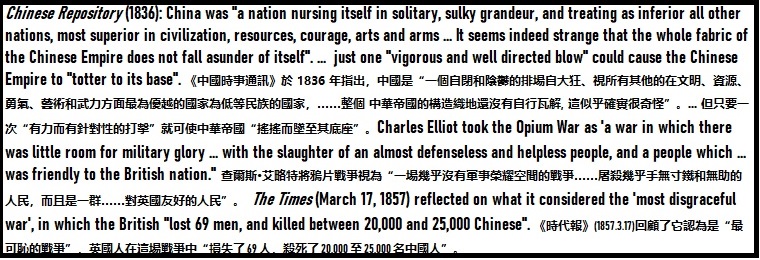

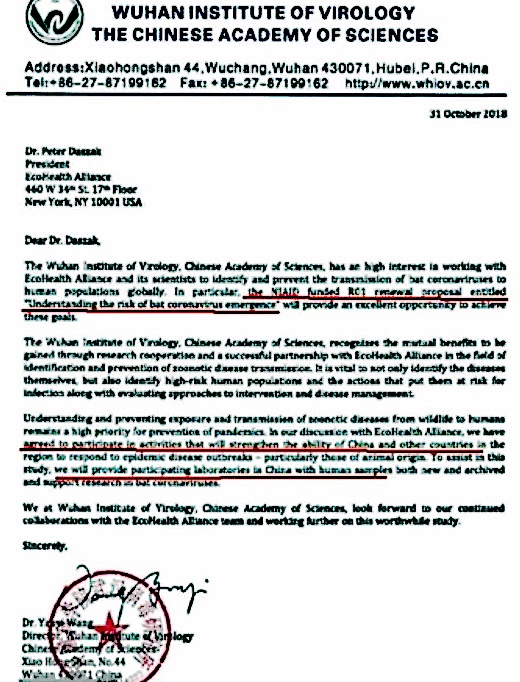





 ***
***



![Though, Anna Wang [Anneliese Martens], in her memoirs, expressed jealousy over Gong Peng by stating that the Anglo-American reporters had flattered the Chinese communists and the communist movement as a result of being entranced with the goldfish-eye'ed personal assistant of Zhou Enlai](GongPeng.jpg)